marble vs tiles: A Luxury Buyer’s Guide to Timeless Surfaces
Posted on by The Quarry
We usually know how this conversation starts.
You’re planning a luxury home. You’ve gone through layouts, elevations and lighting plans. Somewhere along the way, surfaces come up. Floors, walls and large planes that will sit quietly behind everything else. Then the question appears. Almost casually, like an afterthought.
Marble or tiles?
It sounds like a practical choice. But it rarely is. When we speak to homeowners who are building once and building well, the marble vs tiles discussion is never really about finishes. It’s about permanence. About how much you want embedded in the home from the start.
At The Quarry, we’ve had this conversation many times. Enough to know that the decision usually becomes clear once you stop looking at samples and start thinking about living with the material.
Understanding the Materials.
Before comparing marble vs tiles, it helps to be honest about what each material actually brings to a home.
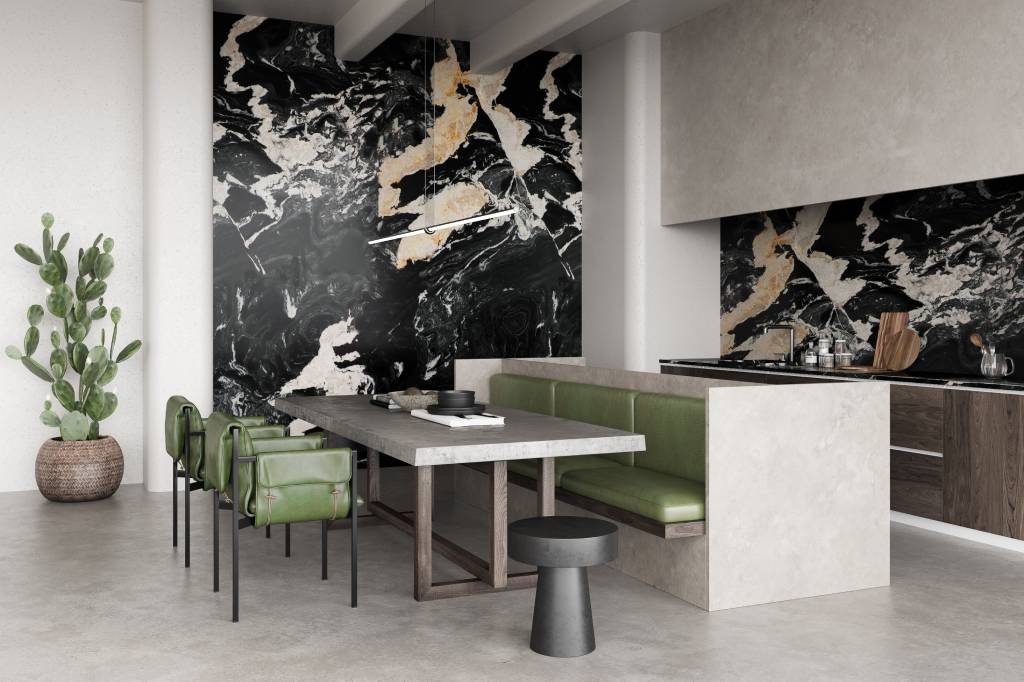
Marble is a natural stone. It is formed over millions of years, shaped by pressure and time. No two slabs are the same, even when they come from the same quarry. The veining runs through the natural stone, not across the surface. What you see is not applied. It exists because it always has.
Tiles are manufactured surfaces. They are designed for consistency. Patterns repeat. Finishes are controlled. That uniformity is deliberate and useful in certain contexts.
In luxury homes, though, materials are rarely chosen for predictability alone. They are chosen for how they feel once the novelty wears off. This is where the difference between marble vs tiles starts to matter.
How We Look at Marble.
Our relationship with marble doesn’t begin at a catalogue or a factory floor.
We curate natural stone slabs from 179 quarries across 31 countries. Each slab is handpicked for balance, depth and integrity. Once selected, it is finished entirely in Italy, from cutting and reinforcement to calibration and polishing, to a world-standard 20 mm thickness.
We do this because marble behaves differently when it is treated with precision and care. It stops being decorative and starts performing as a vital part of the architecture. Floors feel grounded. Walls feel intentional. Transitions make sense.
When clients look at marble vs tiles through this lens, the comparison shifts. One material is shaped by time and refined by craft. The other is produced for efficiency.
Living With Marble.
The one thing we always talk about is time.
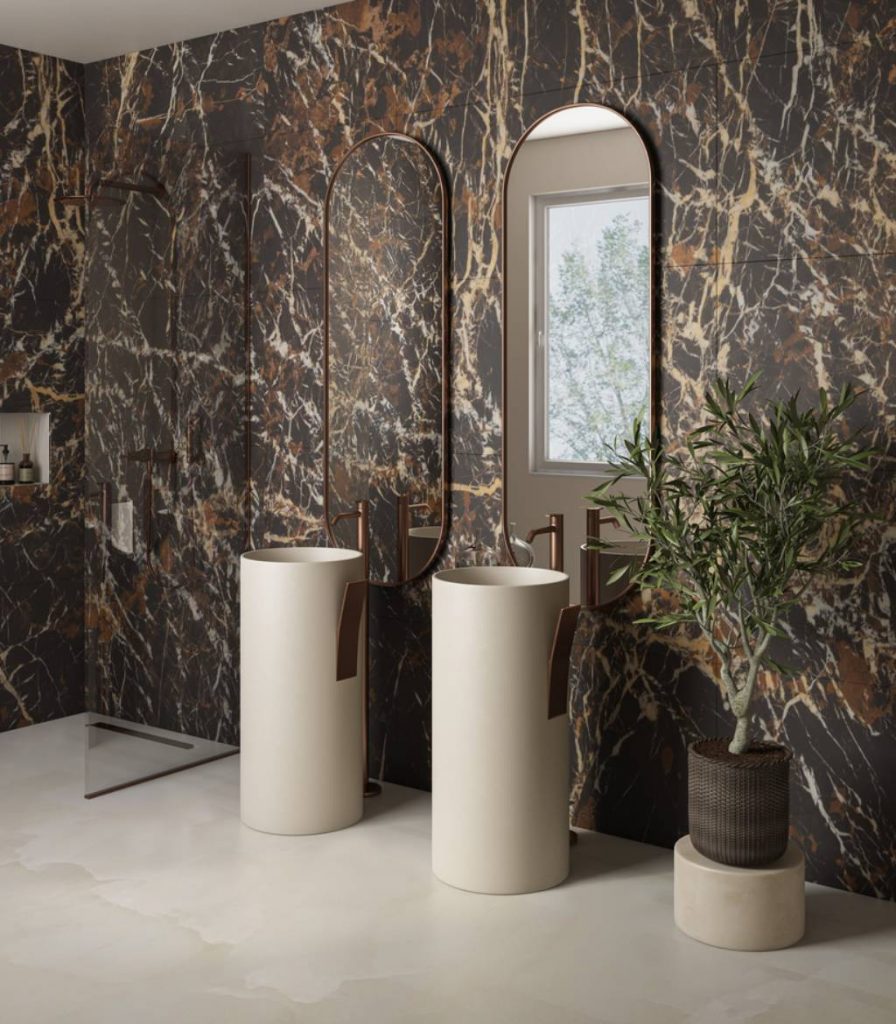
Marble changes. Slowly. Almost imperceptibly. A patina develops. The surface softens. Light moves differently across it than it did on day one. This isn’t damage done over time. This is what gives the natural stone character.
Tiles are designed to avoid this. They aim to look the same year after year. That can feel reassuring at first, but it also means the surface never really becomes part of the home’s story.
If you’re building a luxury home you plan to live in for years, this difference becomes important. In most long-term homes, the decision about marble vs tiles is made here.
Scale and Continuity.
Luxury homes are rarely small and scale changes everything.
Marble slabs allow surfaces to read as one continuous plane. Fewer joints. Less visual interruption. Even natural stones with strong movement feel calm when they’re allowed to flow.
Tiles, by nature, introduce breaks. Joints repeat. Patterns restart. In compact spaces, that may not matter. In large homes, you begin to notice it over time.
This is why we always encourage experiencing marble at slab scale. Seeing natural stone as a full surface, not a small sample, changes how you understand its role in a space. It’s often the point where the marble vs tiles question answers itself.
Thickness and Presence.
Thickness is something people don’t always think about, but they feel it.
Our slabs are finished to a consistent 20 mm world standard. That thickness gives marble presence. Edges feel considered. Floors feel substantial underfoot. The natural stone doesn’t feel like a layer added on later.
Tiles are thinner by design. They need to be. But that thinness changes how a surface sits within a space, even if you can’t immediately articulate why.
In homes where materials are meant to anchor the architecture, this detail matters more than most people expect.
Performance in Real Homes.
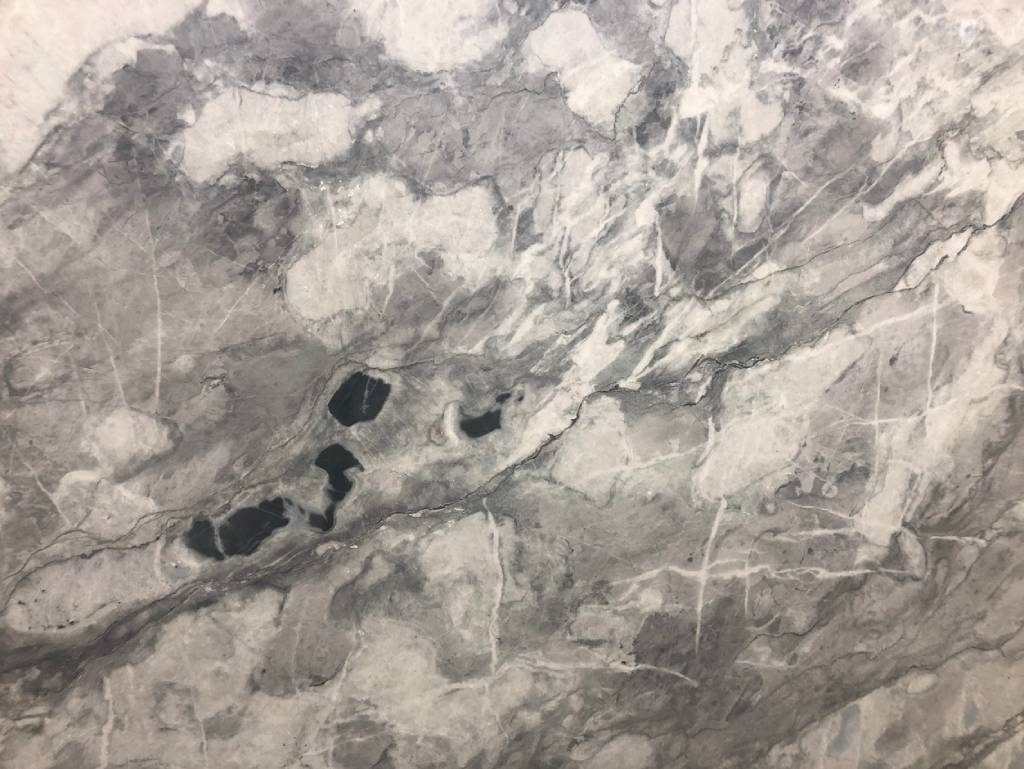
Maintenance always comes up in the marble vs tiles conversation. In our experience, well-curated and well-finished marble performs reliably in residential settings. It does require care, but so do wood floors, leather furniture and metal finishes. These are materials chosen because they offer something richer in return.
Tiles require less attention, but they also offer a more neutral experience. They sit quietly in the background. Marble participates. It responds to light, touch and time.
For many homeowners, that difference only becomes clear after living with the material.
Where Tiles Fit.
Tiles have their place. Commercial environments. Temporary residences. Spaces where uniformity and easy replacement are priorities.
Luxury homes are built differently. They are meant to feel personal, grounded and considered. In these spaces, marble continues to hold relevance once the comparison is fully understood.
This is why the marble vs tiles discussion is rarely about which material is better overall. It’s about which material aligns with how you intend to live.
Experiencing Luxury Natural Stone Slabs With the Quarry.
Choosing between marble vs tiles isn’t something that happens over email or through catalogues.
This is why our gallery experience is appointment-led. When you visit The Quarry Gallery in Mumbai, you experience natural stone at scale. You see how it behaves across large surfaces. You understand how finishes change its character. You take the time you need to fully appreciate how marble works.
For homes where materials truly matter, this step is a game changer.
Choosing With Confidence.
When people ask us to help them decide between marble or tiles, we rarely start with specifications. We talk about how you plan to live in the home. How long do you intend to stay? What do you expect your materials to give back over time?
For homes designed to last, marble offers depth, warmth and a quiet sense of permanence. When curated with care and finished with precision, it performs as beautifully as it looks.
Quartz in Luxury Kitchens?
Quartz is often considered for luxury kitchens because of its consistency and ease of use. As an engineered surface made from natural Quartz crystals combined with binders and pigments, it offers a uniform appearance, predictable finishes and relatively low maintenance. For homeowners seeking visual consistency across large surfaces, Quartz can feel reassuring and controlled.
That said, Quartz behaves differently from natural stone. Because it is manufactured, its patterns are designed rather than formed and its surface lacks the natural variation that develops over time in marble, Granite, or Onyx. In luxury homes where material authenticity and architectural depth play a central role, this distinction becomes important.
Quartz performs well from a functional standpoint but it does not evolve or respond to light, touch and age in the way natural stone does. Its strength lies in uniformity, whereas natural stone brings individuality. This is why, at The Quarry, the emphasis remains on 100% natural stone surfaces that offer both performance and a sense of character that cannot be replicated.
Marble vs. Quartz: A Luxury Perspective
When comparing marble vs. Quartz, the real difference lies in experience.
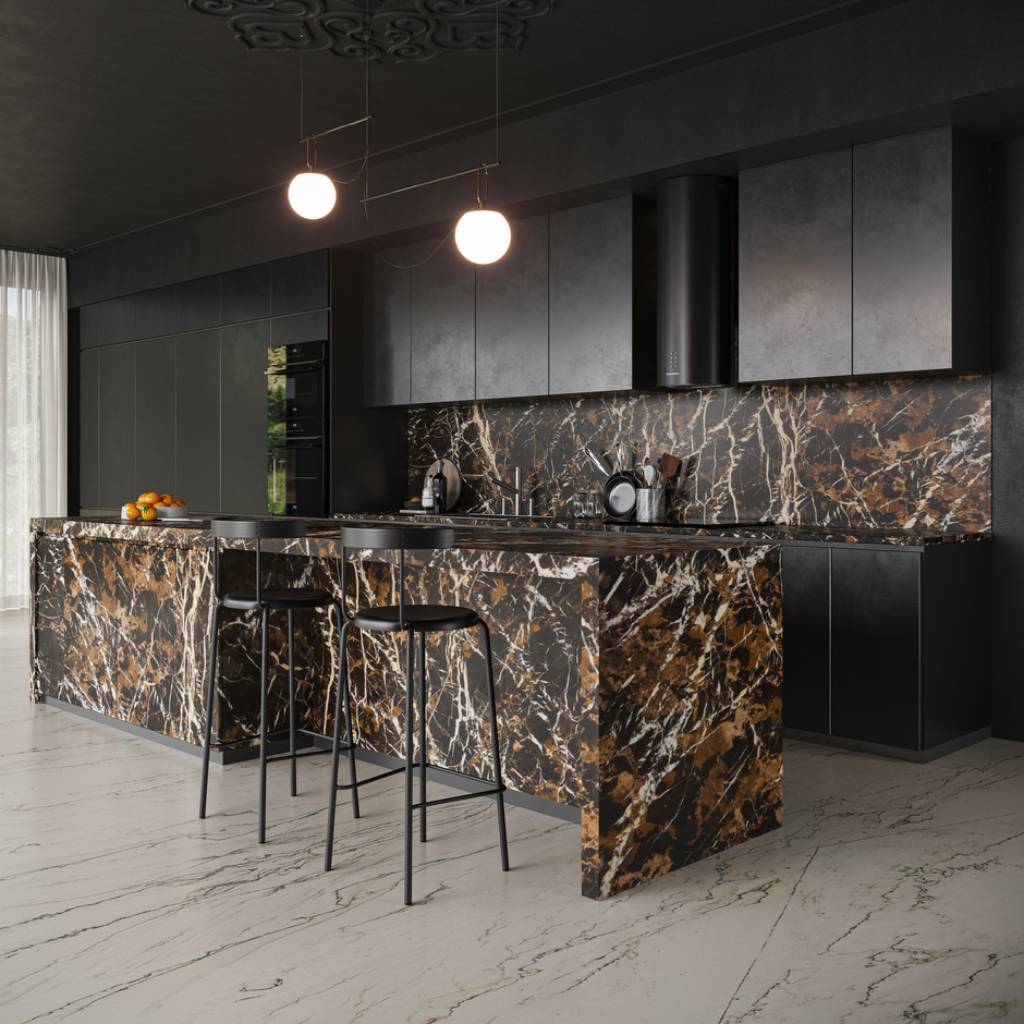
Marble offers variation, softness and a sense of permanence. Quartz offers uniformity and predictability. In luxury kitchen countertops in India, marble remains the preferred material among those who value material character over convenience.
The Quarry curated marble collection brings together Italian marble slabs finished with precision and restraint. These surfaces are chosen not just for beauty but for how they respond to light, touch and time. Quartz may suit fast-paced environments. Marble suits homes designed to endure.
If you are weighing engineered quartz against natural surfaces, see The Quarry’s guide to quartz versus quartzite countertops.
FAQ's
Natural marble elevates value by introducing uniqueness and material honesty. Each slab is distinct and its use at scale creates visual continuity across spaces. This contributes to both experiential quality and perceived exclusivity over time.
For luxury interiors that emphasise depth, scale and long-term relevance, marble is often considered better. Tiles perform well functionally, but do not offer the same material character or architectural presence.
Tiles are generally cheaper upfront. Marble involves a higher initial cost but offers greater long-term value in homes designed for permanence rather than frequent replacement.
Natural marble requires more care than tiles, but it is not difficult to maintain with proper sealing and mindful use. Its maintenance is comparable to other premium natural materials used in luxury homes.
Marble requires mindful use and periodic care. It is more sensitive to staining and surface changes than manufactured tiles. Over time, it develops a patina, which some may consider a disadvantage, though this ageing is often valued in luxury interiors.
The main difference lies in origin and behaviour. Marble is a natural stone formed over millions of years and evolves with use. Tiles are manufactured surfaces designed to remain visually consistent.
When selected and finished correctly, marble can last for decades and even centuries. Tiles are durable but are more often replaced as finishes or design preferences change.
HNIs often prioritise authenticity, individuality and longevity. Authentic marble offers natural variation, large slab applications and a sense of permanence that aligns with homes built as long-term residences rather than short-term solutions.
Authentic marble is considered more premium because it is naturally formed, unique and refined through skilled craftsmanship. It offers depth, variation and longevity that manufactured tiles cannot replicate.