Beyond Marble Trends: What Will Define Exceptional Natural Stone Interiors in 2027
Posted on by The Quarry
The interiors people remember years after they are built often have one thing in common. The stone feels as though it belongs there. It does not feel chosen simply because it was beautiful or fashionable at the time. It feels right for the space, the light and the scale.
That comes from understanding the material and giving it a place in the design, rather than choosing it because it happens to be current.
Here is what that means in practice.
Stone Has a Memory
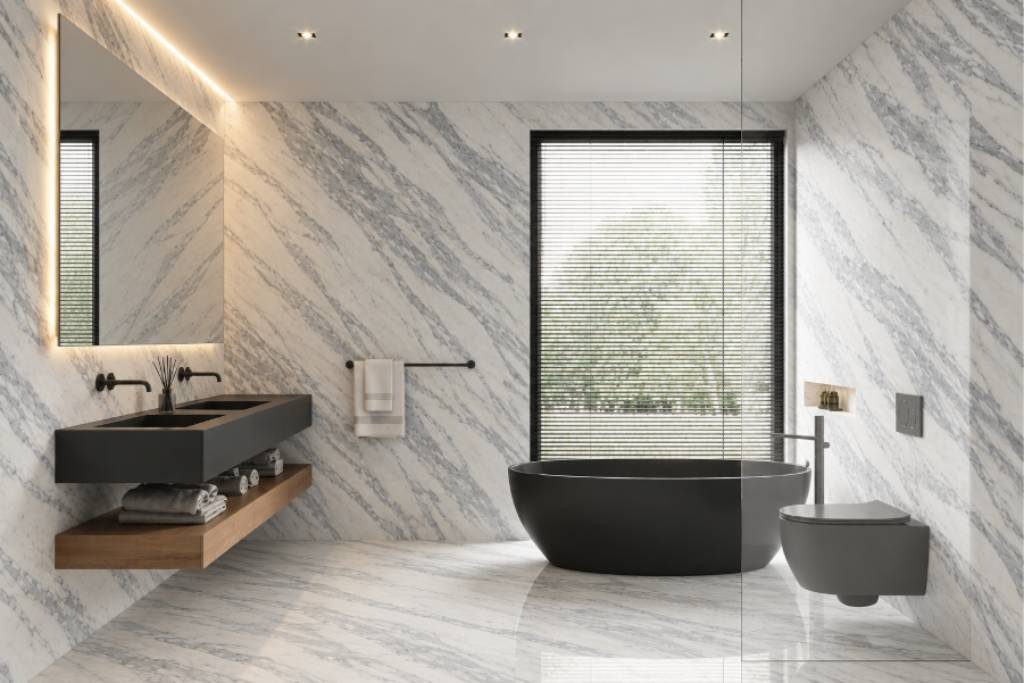
Every slab of natural stone carries traces of where it came from. The veins in a Calacatta are the result of minerals moving through limestone under pressure. The layers in quartzite speak to material that was compressed over millions of years. The soft, almost cloud-like patterns in onyx were formed under conditions that cannot simply be recreated.
When stone is chosen for these qualities, it brings something more to a space. A wall stops feeling like a surface that has been covered and starts feeling like part of the architecture. There is depth to it, and a sense of permanence.
You may not always be able to explain why a particular room stays with you. Sometimes, the answer is simply in the stone.
Warmth Does More Than We Think
Some rooms feel comfortable the moment you enter them. That feeling is difficult to capture in a photograph, but material plays a large part in it.
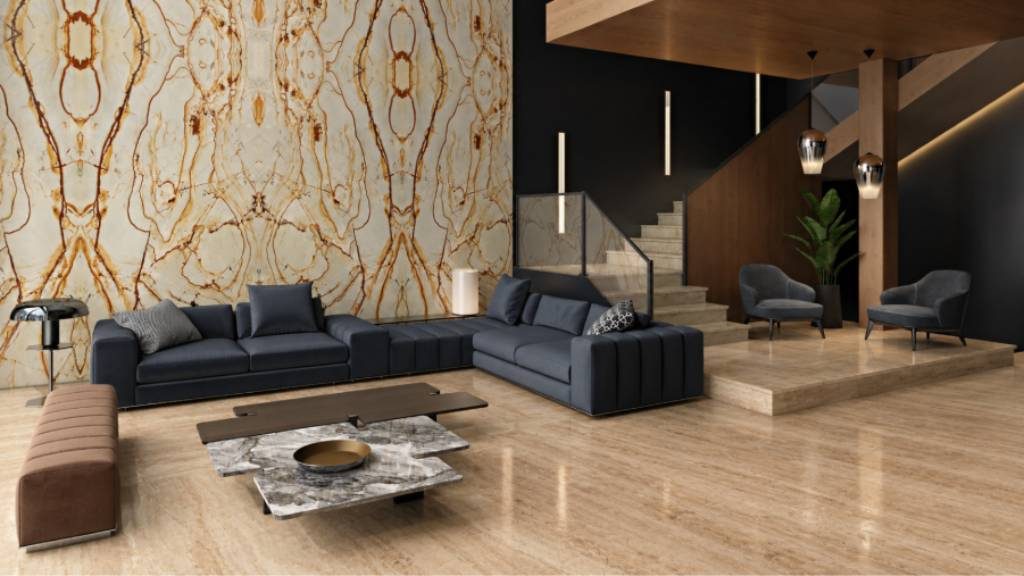
Travertine in cream and caramel, granite with traces of gold, or limestone that moves between blush and sand can bring a natural warmth to an interior. It is not something added through styling. It is already part of the stone.
This is why spaces built around warm natural materials tend to feel lived in rather than put together. They settle into the architecture and continue to feel right as the space ages.
Finish Should Be Considered Early
The same stone can feel completely different depending on its finish. A leathered quartzite under evening light has a very different character from the same slab when polished. Honed marble has a quieter, softer quality, while brushed granite can feel almost textile-like from a distance.
Finish affects how a stone catches light, how it feels to the touch and how it sits within the room. It is not something to leave until the end of the selection process.
The right finish is the one that works with the way the space will be used, not simply the one that looks best when the project is photographed.
The Best Stone Interiors Have a Logic
In a well-resolved stone interior, the materials do not necessarily match. They relate to one another.
One stone may establish the character of the space, while the others pick up on something within it. It could be a similar tone, a mineral detail, a shared warmth or even a contrasting finish.
This approach gives the interior a sense of continuity without making every room look the same. Each material has its own identity, but together they feel considered. There is a point of view running through the project.
Light Changes Everything
Stone can reveal a completely different side of itself once it is placed in the right light.
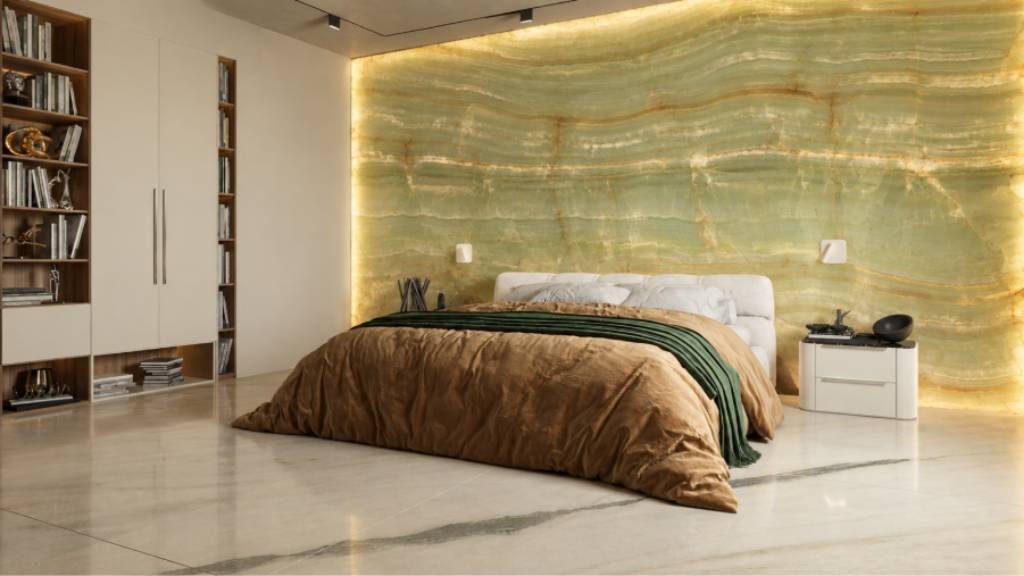
Onyx that appears restrained in a showroom can become striking when light passes through it. Limestone can move from warm to cool through the course of a day. Even a familiar marble can look different under morning sunlight, evening light or artificial illumination.
This is why seeing the stone in the conditions of the space matters. The showroom gives you the material. The actual space tells you what that material will become.
That is where selection becomes design.
What Lasts Was Never Chasing the Moment
Natural stone is one of the few materials that becomes more personal with time. A honed marble develops its own character. Travertine softens with use. Onyx continues to reveal its depth as the years pass.
Geological character, warmth, finish, continuity and light are what make that possible. They take the specification decision beyond what looks good in the moment and towards what will continue to feel right long after the project is complete. The most memorable interiors are the ones where the stone still feels right years later.
Stone chosen with this kind of intention is not something you stumble upon. It is sourced quietly, curated carefully and presented to those who know what they are looking for. At The Quarry, Mumbai, we have built our collection around exactly that kind of stone. We invite you to experience the collection at The Quarry Gallery, by appointment.
FAQs
Significantly. A stone that looks cool and subtle in a showroom can feel warmer and more layered under the natural light of your space. It is worth seeing shortlisted stones in the actual light before making a decision.
The right finish depends on how the space will be used, rather than how it looks in photographs. Honed or leathered finishes can work well in high-use areas, while polished finishes bring more drama where practicality is less of a concern.
Think of one stone as the anchor and let the others relate to it through a shared tone, mineral quality or finish. They do not have to match. What matters is that there is a sense of continuity across the project.
Yes, when it is specified correctly. The right stone, finish and application can make natural stone a highly durable choice for everyday use. Its long history in architecture is a good indication of how well it can stand the test of time.
Natural stone develops character with age and becomes more personal to the space over time. Engineered stone tends to show wear more plainly. After ten or fifteen years of daily use, that difference can become quite noticeable.