15 Kitchen Marble Design Ideas (2026) Modern, Elegant & Practical Guide
Posted on by The Quarry
A well-designed kitchen has to do a lot without looking like it is trying too hard. It needs to handle everyday cooking, quick breakfasts, long conversations, festive meals and the small rituals that make a home feel lived in. This is why kitchen marble design continues to hold such a strong place in luxury interiors in 2026.
Marble brings a certain discipline to a kitchen. The surface feels cool, the veining brings movement and the finish can shift beautifully with natural and artificial light. Good kitchen marble design ideas are never only about making the room look grand. They help the kitchen feel balanced, practical and considered.
From compact apartments to larger villa kitchens, the right kitchen slab marble design can change how the entire room is read. A countertop can become the visual anchor. A backsplash can create continuity. A marble island can turn a working kitchen into a space where people naturally gather. This guide looks at the styles, finishes and planning details that define a modern luxury marble kitchen in 2026.
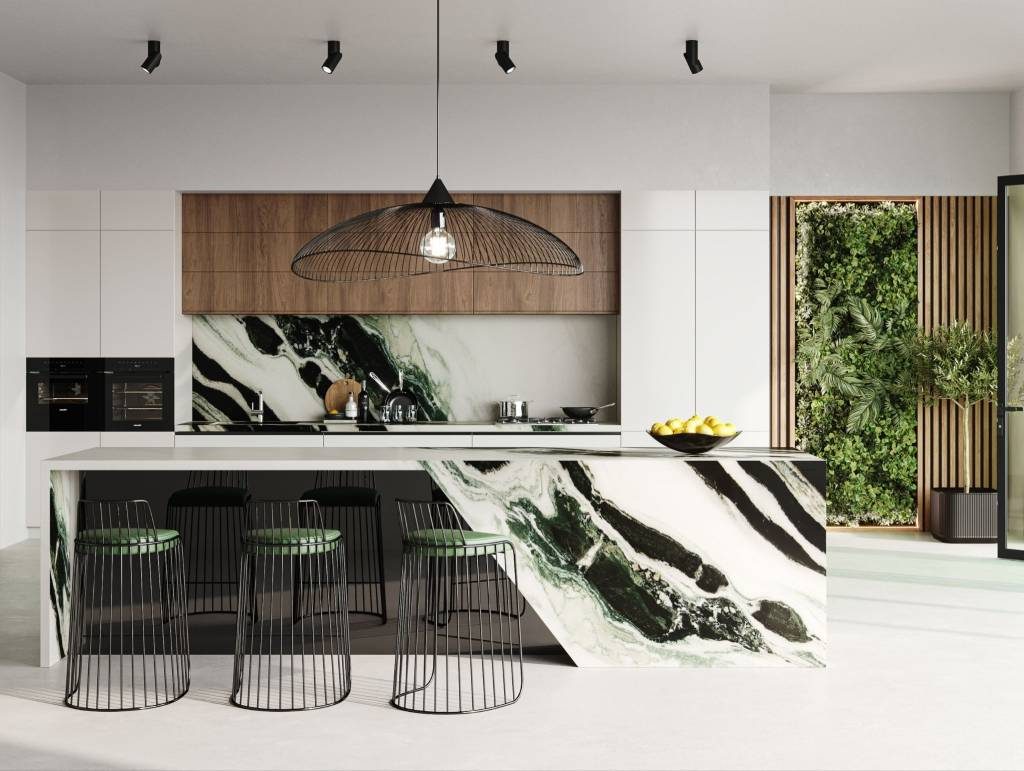
Key Elements of Kitchen Marble Design You Should Know
A successful kitchen marble design is not limited to the countertop. Marble works best when each surface has a purpose and the overall palette feels connected.
Countertops
The countertop is usually the first marble surface people notice. A premium marble kitchen slab design brings elegance into the room while giving you a smooth, durable workspace for daily use. The colour, grain, thickness and vein movement decide the first impression, so the slab should be selected in full, not from a small sample alone.
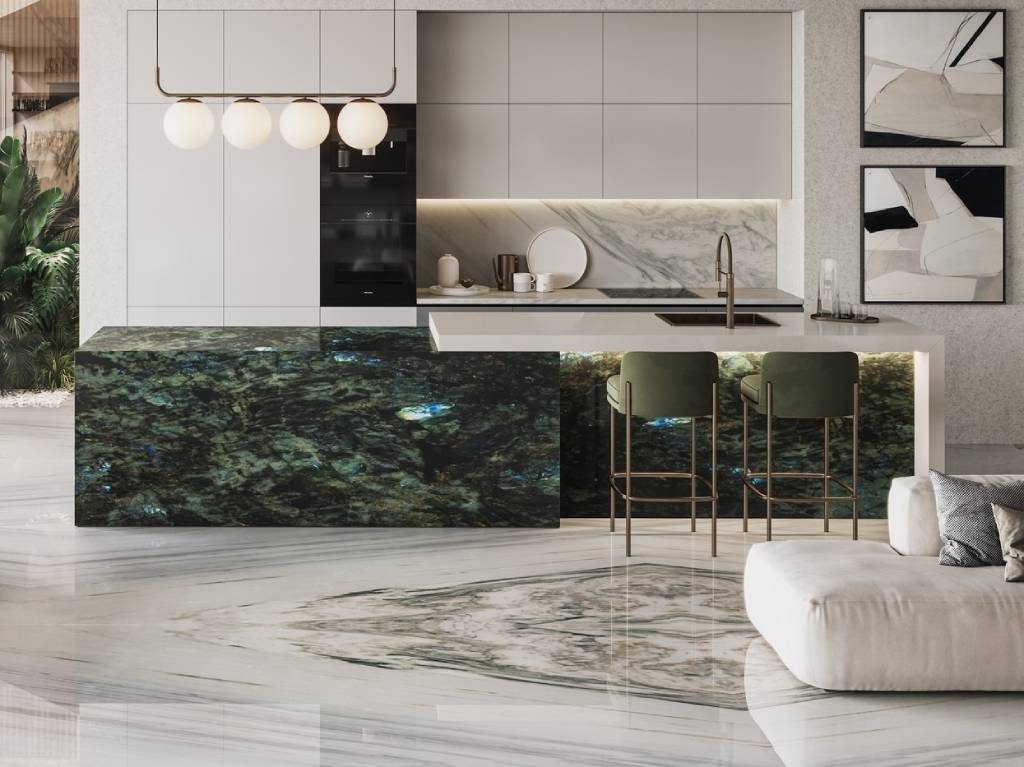
Backsplashes
A full-height marble backsplash creates a clean, continuous look. When the veining moves naturally from the counter to the wall, the kitchen feels more refined and less visually busy. It also reduces grout lines, which helps around cooking zones.
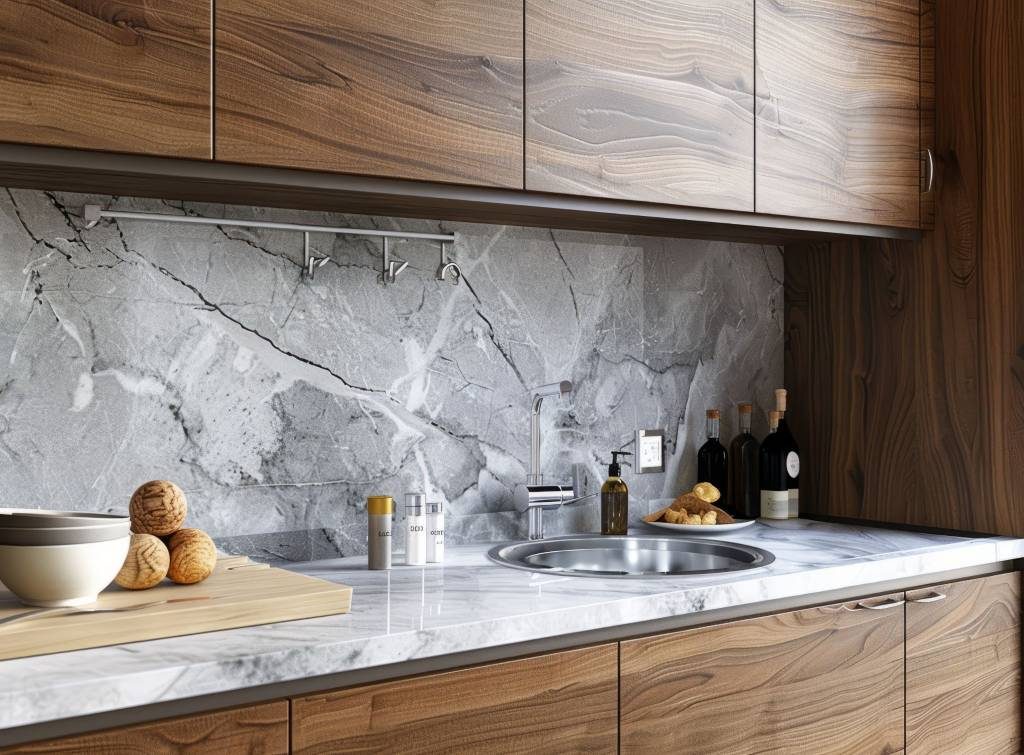
Kitchen Islands
A marble island gives the kitchen a strong centre. With waterfall edges or bookmatched slabs, it can feel sculptural while still serving a very practical role. In many Indian luxury homes, this is where a luxury marble kitchen finds its most memorable design moment.
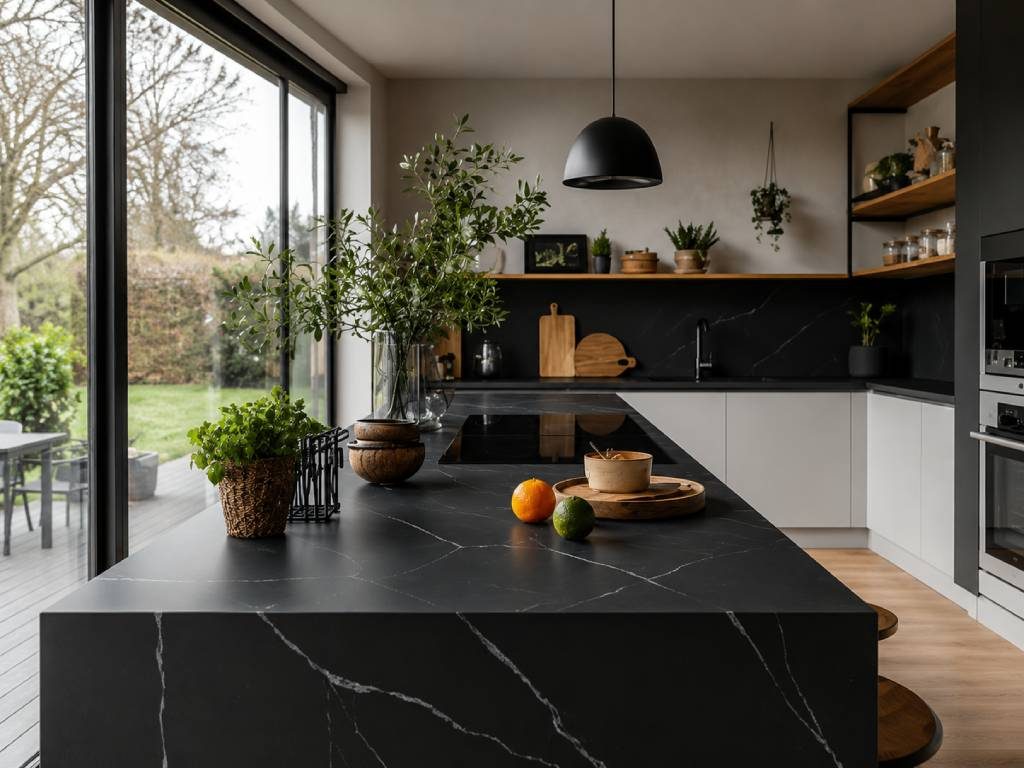
Flooring
A well-planned kitchen floor marble design can brighten the room and make it feel more spacious. In open layouts, it also helps connect the kitchen with the dining or living area. The finish matters here because floors need to handle daily movement, cleaning and the occasional spills.
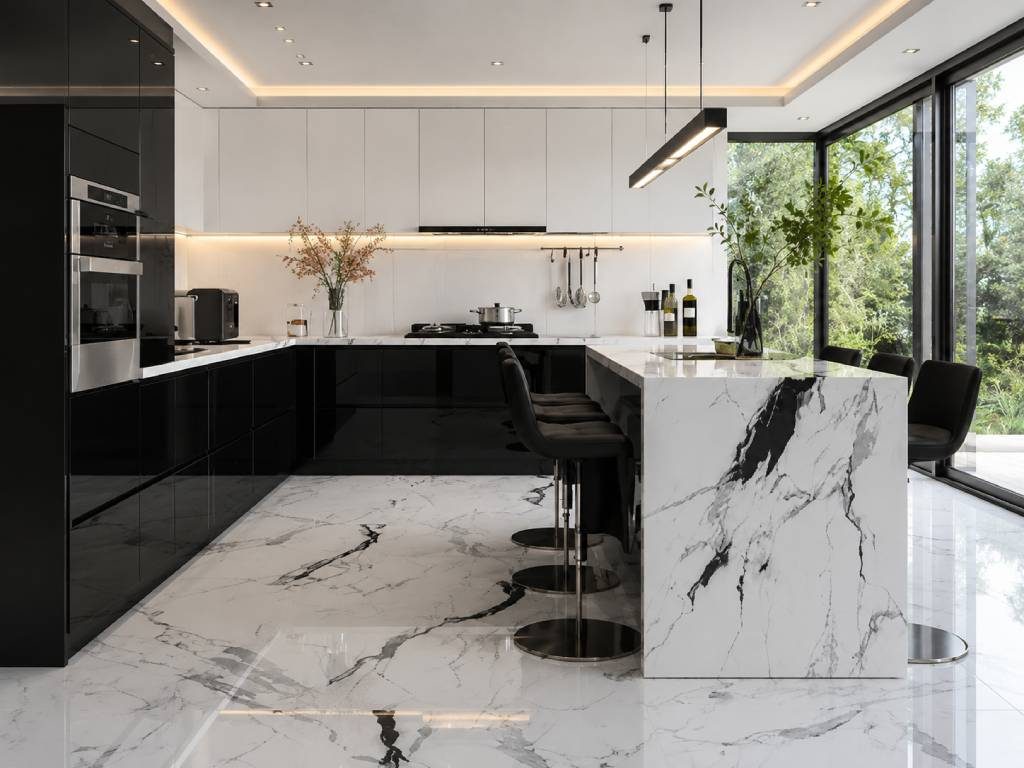
Wall Cladding
Marble-clad walls add depth, especially in open kitchens where the space is visible from the living or dining area. Used selectively, marble on a wall can create a refined backdrop for cabinetry, lighting or a breakfast counter.
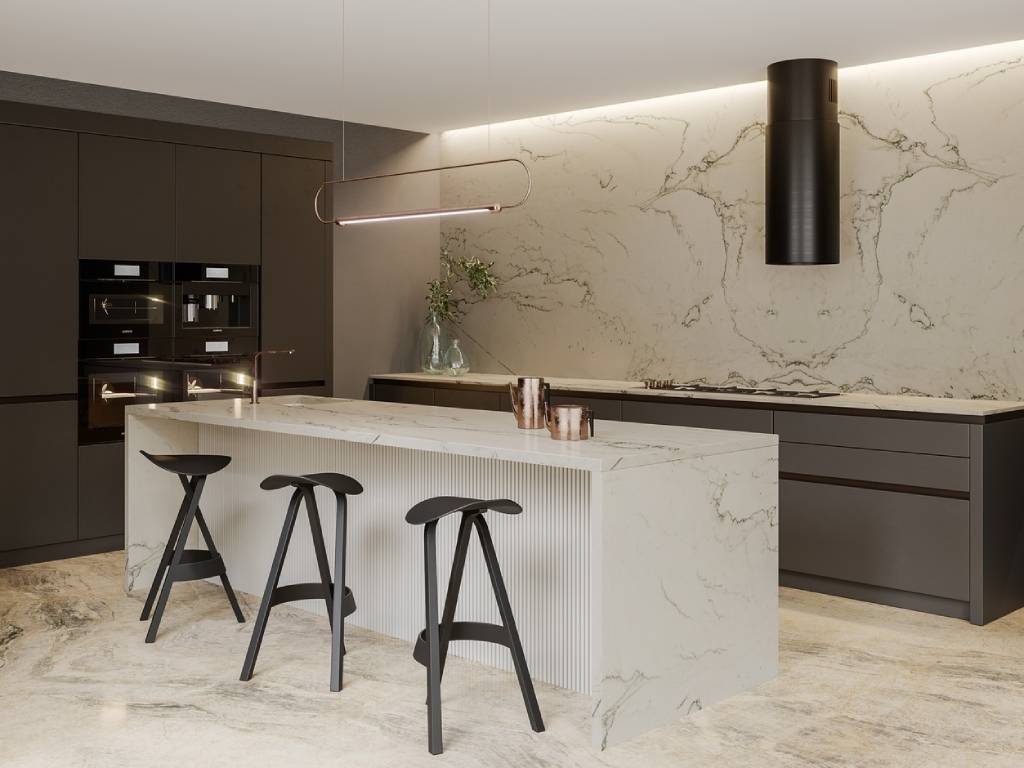
Sink Areas
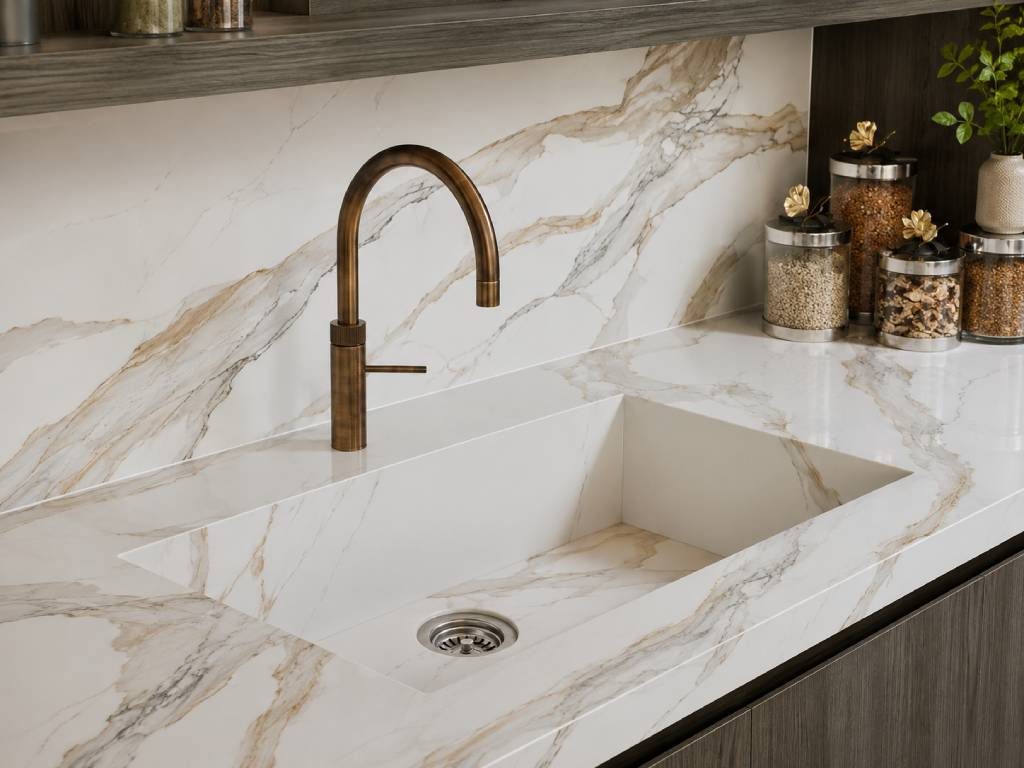
The kitchen sink marble design may feel like a small detail, but it can change how polished the kitchen looks up close. Integrated edges, neat drain grooves, coordinated counters and careful sealing around the sink help the space feel sharper and easier to maintain
If you're still deciding on a surface material, comparing marble vs quartz vs granite for kitchens can help you choose the option that best matches your cooking habits, maintenance expectations and design preferences.
Popular Types of Kitchen Marble Designs (Style-Based Ideas)
Modern homeowners are looking for kitchen marble design ideas that feel elegant, practical and personal. Here are the leading styles shaping kitchens in 2026.
1. Modern Kitchen Marble Design
Modern kitchens are leaning towards clean lines, concealed storage and surfaces that feel calm rather than crowded. A modern kitchen marble design usually works best with neutral tones, subtle veining and cabinetry that allows the stone to stand out naturally.
White, grey and beige marble remain especially popular because they make the kitchen feel open and composed. Waterfall counters, handle-less shutters, integrated appliances and warm under-cabinet lighting complete the look.
The latest kitchen marble design trends for luxury interiors are all about restraint. The marble becomes the main visual element, while everything around it supports the mood through proportion, finish and lighting.
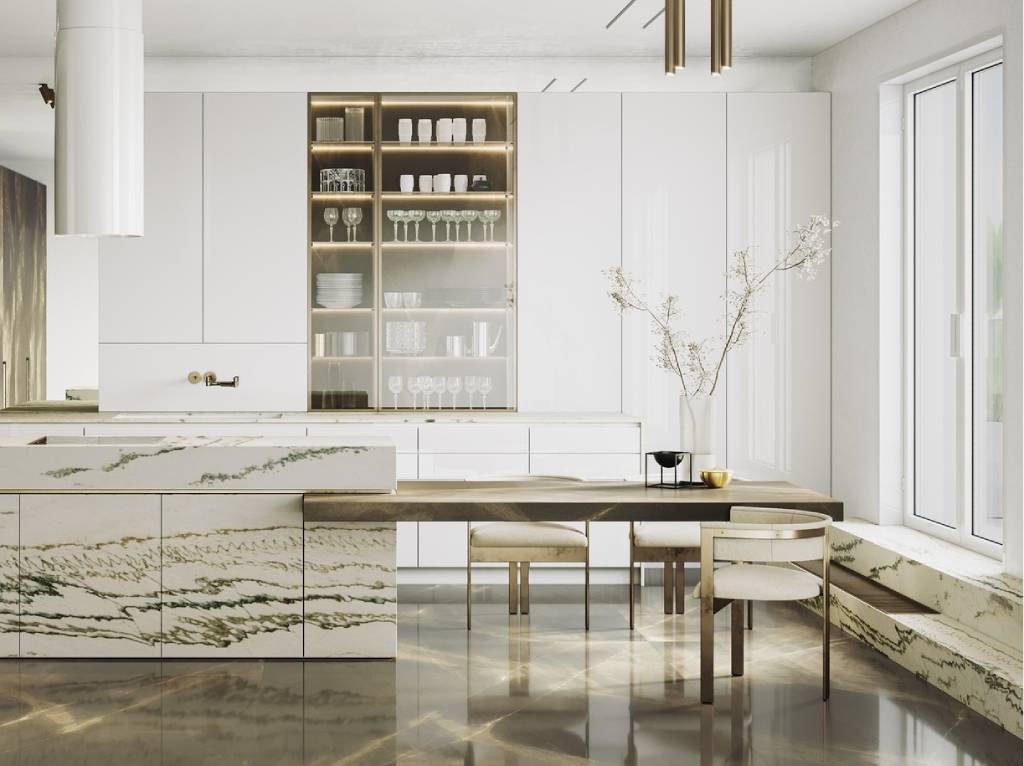
2. Classic White Marble Kitchen Design
White marble has a timeless softness that works beautifully in kitchens. It reflects light, brightens the room and brings an elegant finish without making the space feel heavy.
A classic white kitchen often includes brass hardware, pendant lights, soft grey veining and polished counters. Carrara, Statuario and Calacatta remain preferred choices because they offer visual depth while keeping the room light.
For homeowners wondering what is the best marble design for kitchen countertops, white marble remains one of the most admired answers. It works across compact kitchens, large islands and open homes, provided it is sealed well and cared for with everyday discipline.
3. Black Marble Kitchen Design for Bold Interiors
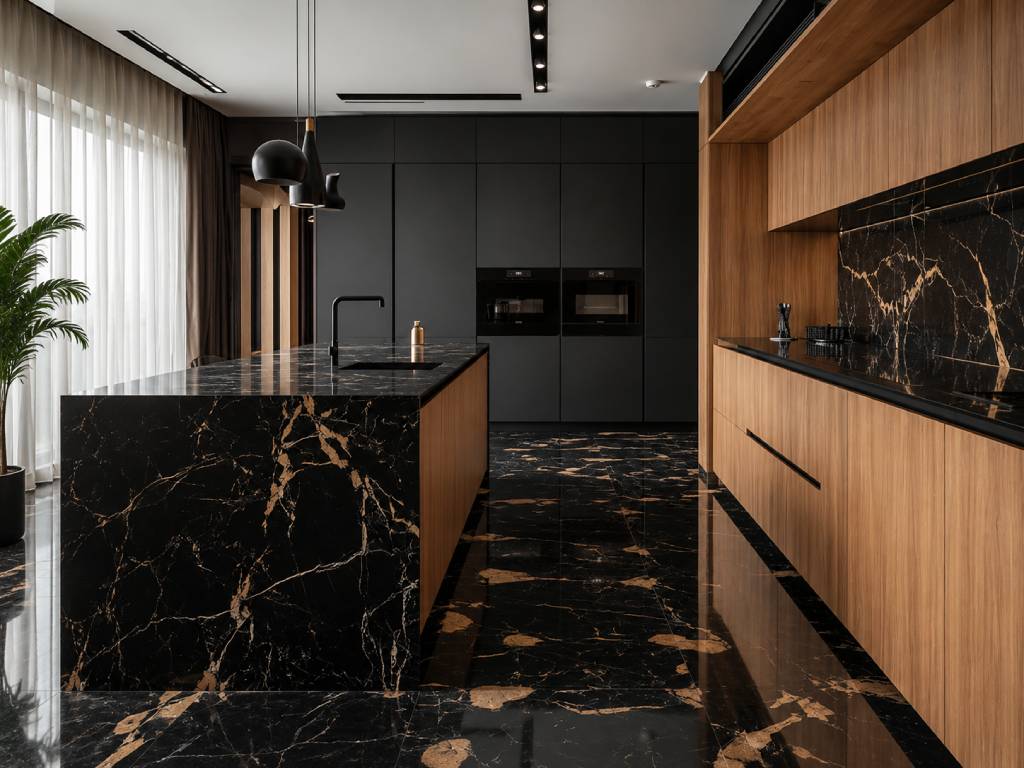
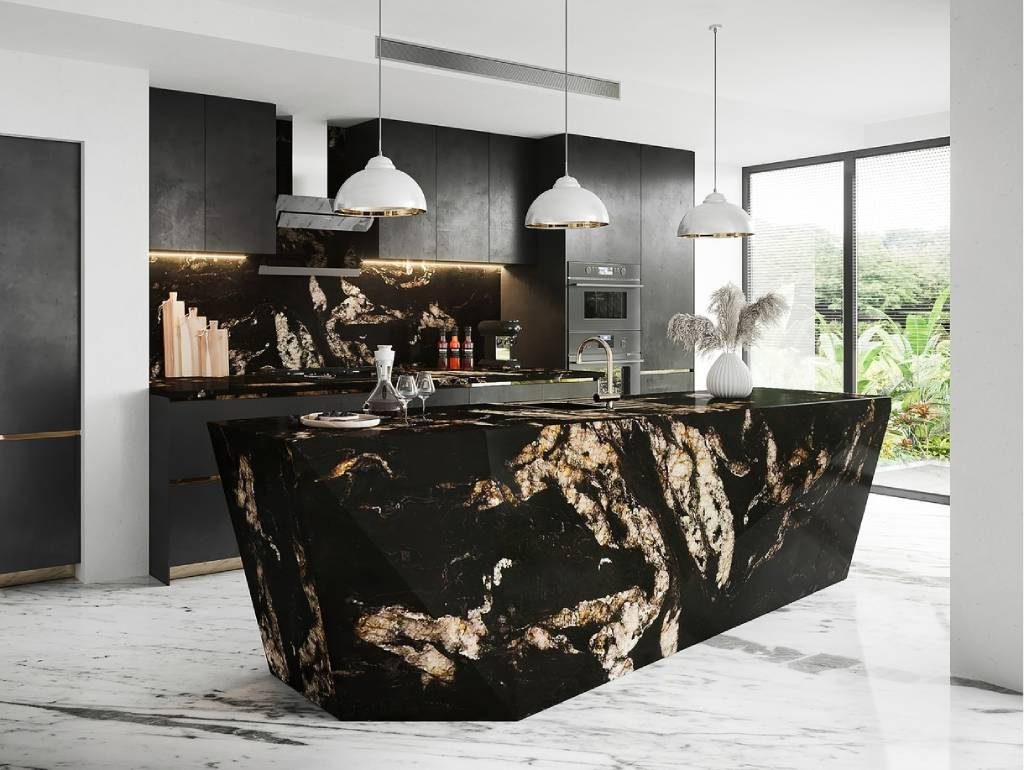
Black marble brings a deeper, more confident mood into the kitchen. It works beautifully on islands, counters and backsplashes, especially when balanced with lighter cabinetry, warm lighting or metal accents.
This style suits homeowners who want the kitchen to feel strong and architectural. Black marble with white or gold veining can look especially refined against walnut wood, champagne brass, smoked glass or matte beige cabinetry.
The key is balance. When the surrounding palette stays measured, the stone has enough room to be noticed without making the kitchen feel visually heavy.
4. Marble Kitchen Island Design
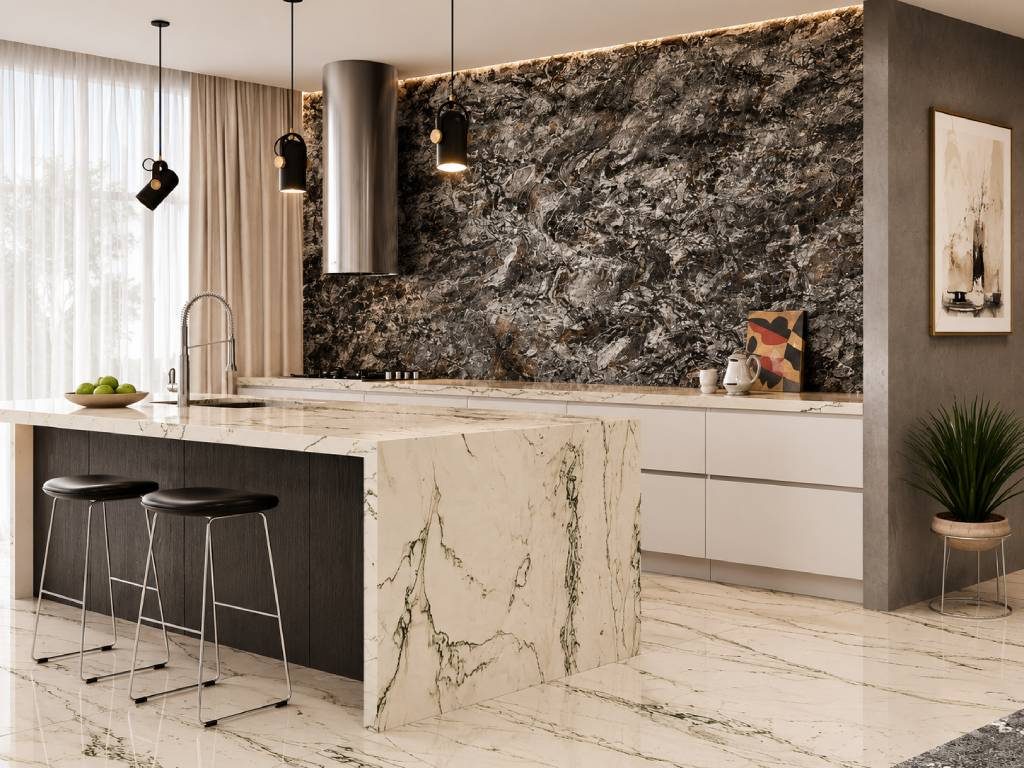
A marble island featuring Statement Marbles is one of the most desired features in contemporary kitchens. It creates a centre for preparation, serving food, informal meals and everyday conversation.
Waterfall islands are especially popular because the marble continues down the sides, creating one uninterrupted visual line. Large-format slabs work beautifully here because fewer joints make the design feel more seamless.
A strong island gives the kitchen presence and function without needing too many extra details. For larger Indian homes and villas, it also works well as a bridge between the cooking area and the dining or living space.
5. Marble Backsplash Design Ideas
Backsplashes are no longer treated as background surfaces. In premium kitchens, they have become part of the main design story.
Full-height marble slabs, vein-matched surfaces and bookmatched patterns create flow from the countertop to the wall. This approach makes the kitchen feel cleaner and more spacious.
It is practical too. Fewer grout lines mean easier cleaning, especially around cooking areas. For Indian kitchens, where oil, spices and heat are part of daily cooking, sealing and regular wiping are important.
6. Grey Marble Kitchen Design for Subtle Elegance
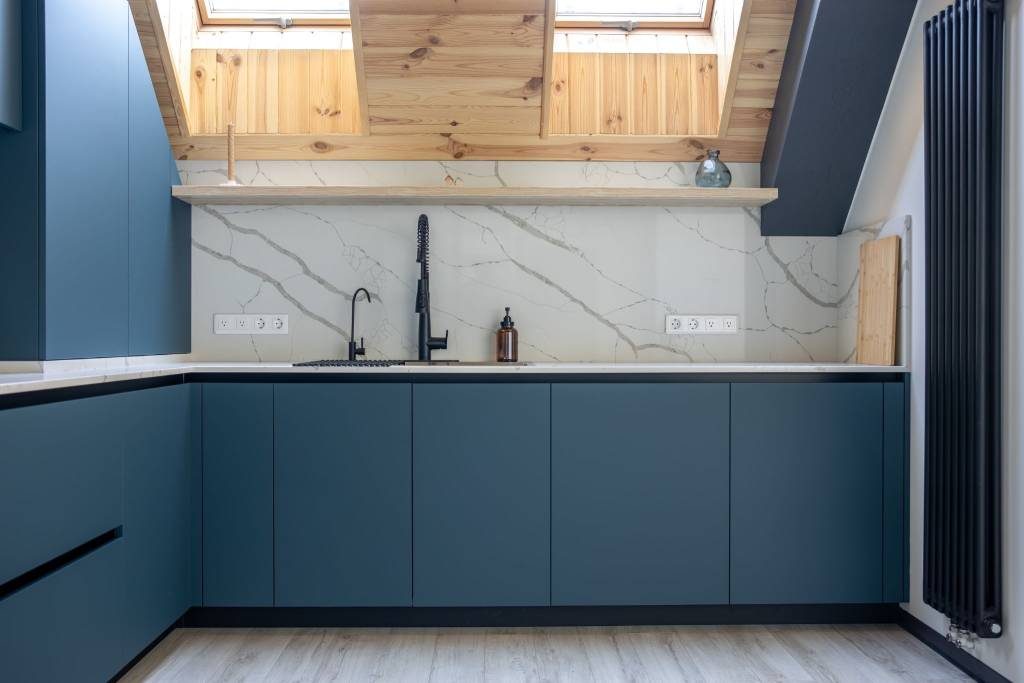
Grey marble sits comfortably between classic and contemporary. It has enough character to be noticed, but it does not demand constant attention.
A grey kitchen slab marble design pairs well with wooden cabinetry, matte black fittings, brushed steel and white walls. It adds structure to the room while keeping the mood soft and easy to live with.
For kitchen marble design recommendations for high traffic kitchens, grey marble with a honed or leathered finish is a smart choice. It is more forgiving than very light surfaces and can handle the rhythm of a busy family kitchen with the right care.
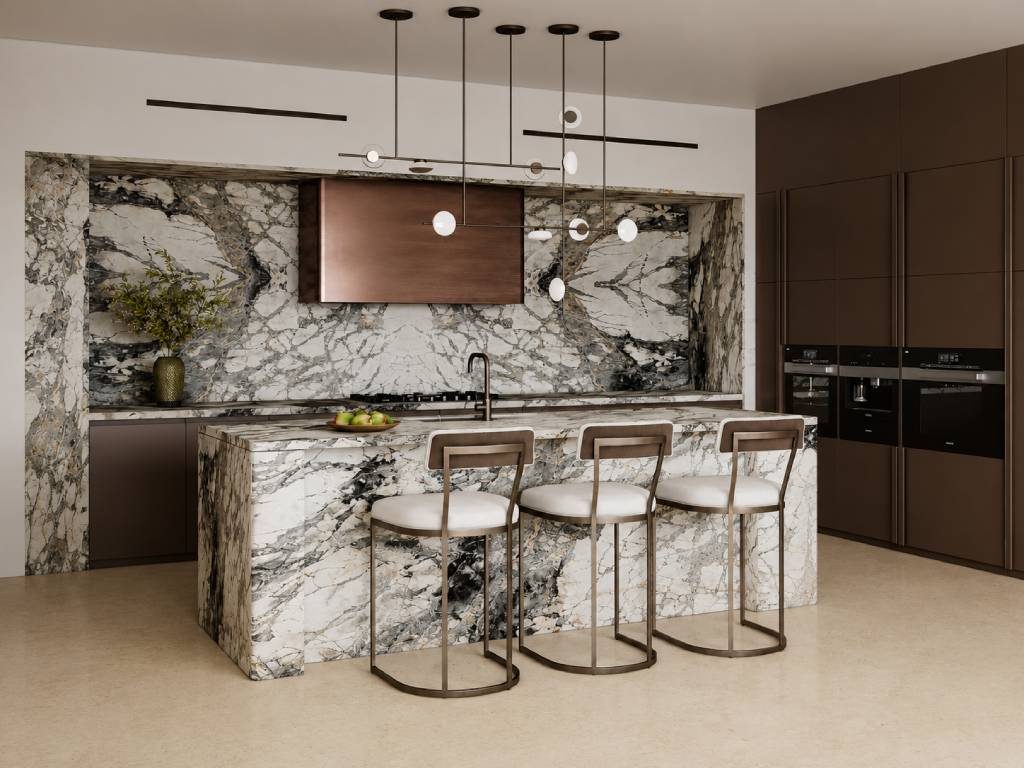
7. Beige & Cream Marble Kitchen Design
Beige and cream options like Flaunt Marbles bring warmth into the kitchen.. They create a softer mood and work beautifully with wooden cabinets, warm lighting, textured finishes and neutral palettes.
Among kitchen marble design ideas for warm neutral interiors, beige marble feels especially dependable. It creates a kitchen that looks graceful and feels comfortable to spend time in.
This style suits Indian homes because it works naturally with brass, bronze, wood, cane, earthy wall colours and warm white lighting. It is also easier to blend with adjoining dining and living areas.
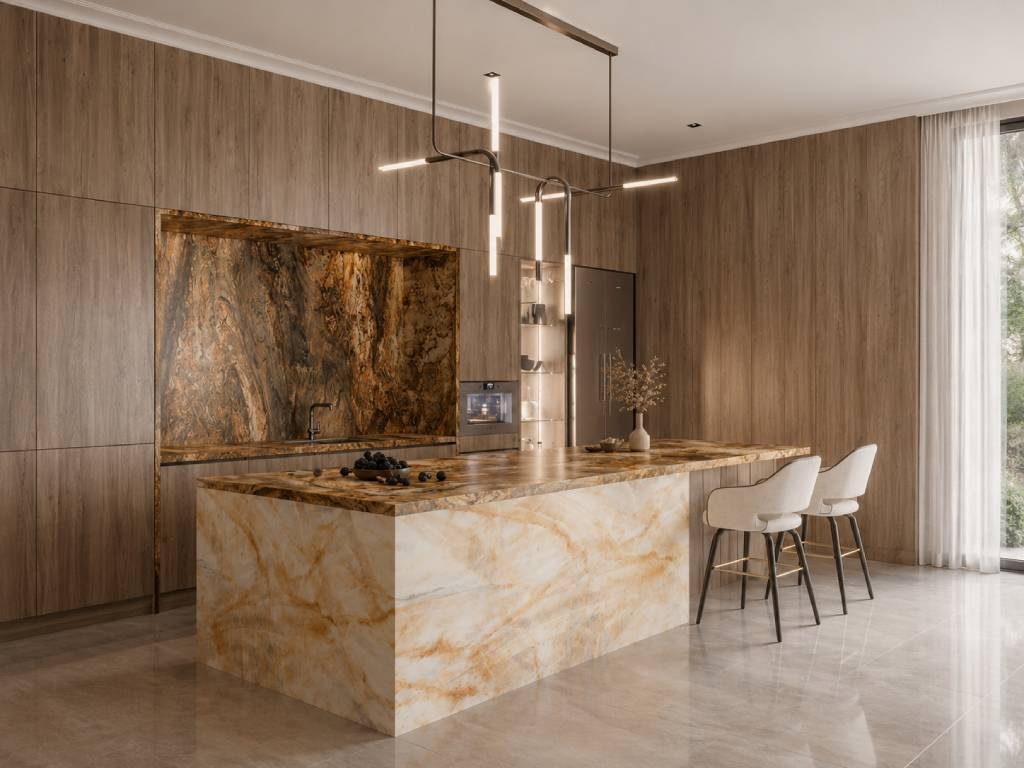
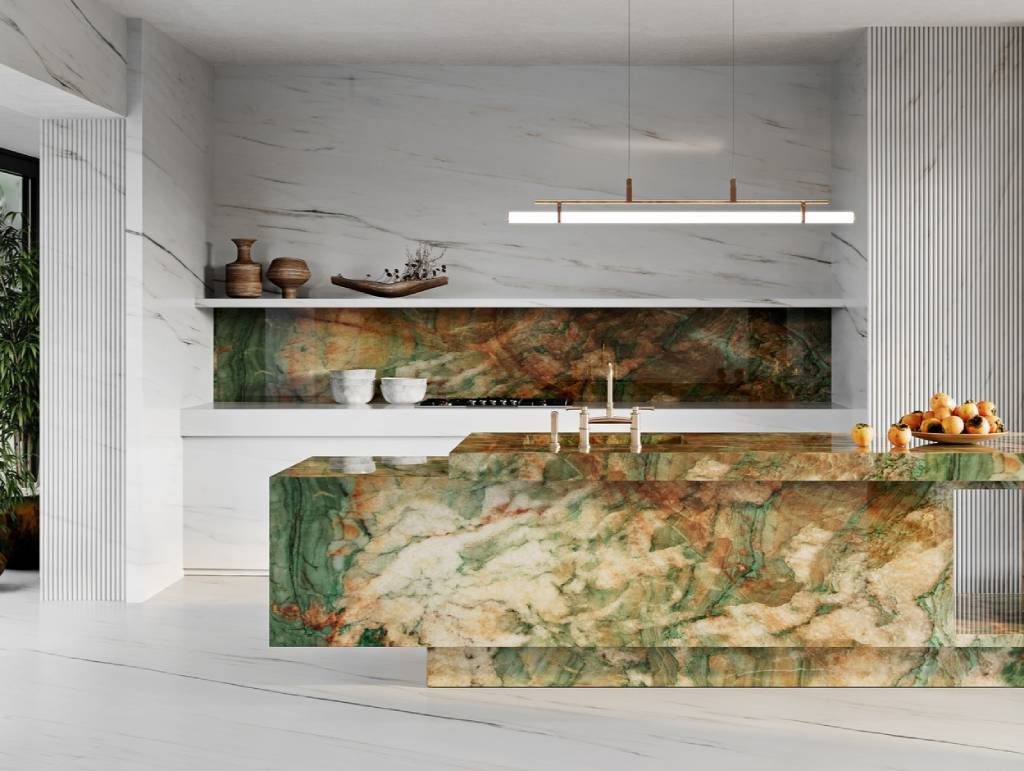
8. Green Marble Kitchen Design (Luxury Trend 2026)
Green marble is one of the more expressive luxury trends in 2026. It adds depth and movement and a natural richness to the kitchen.
Designers tend to use green marble in little doses in places such as an island, backsplash or accent wall. This retains the polished kitchen feeling but still lets the stone have a strong presence.
It works well with muted cabinets, gold accents, soft beige tones and warm timber. In the appropriate location it can bring an artistic touch to the kitchen without compromising its day-to-day usefulness.
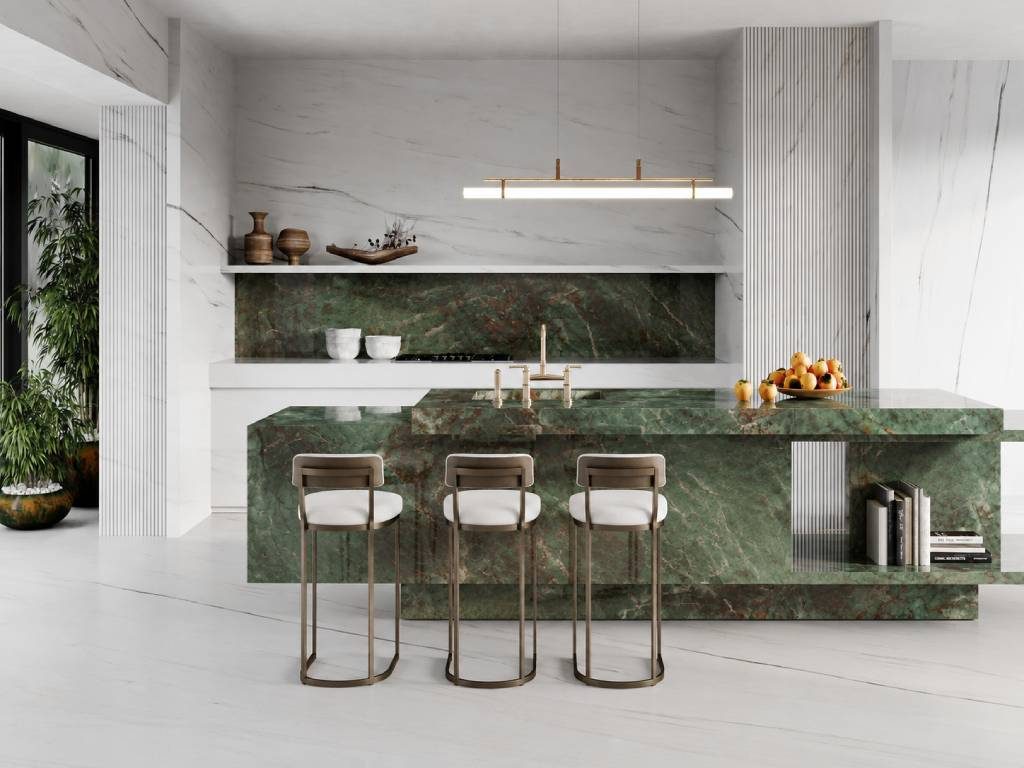
9. Marble Flooring Design for Kitchen
A well thought out kitchen floor marble design can change the feel of the entire kitchen. Large slabs offer a clean, expansive look, while polished finishes reflect light and make the room brighter.
In warmer Indian cities, marble flooring also brings a natural coolness underfoot. For busy kitchens, honed finishes and softer vein patterns are easier to maintain because they are more forgiving of daily movement.
Flooring should look elegant, but it should also withstand cleaning, spills and regular use. The right finish, sealing and installation matter as much as the stone itself.
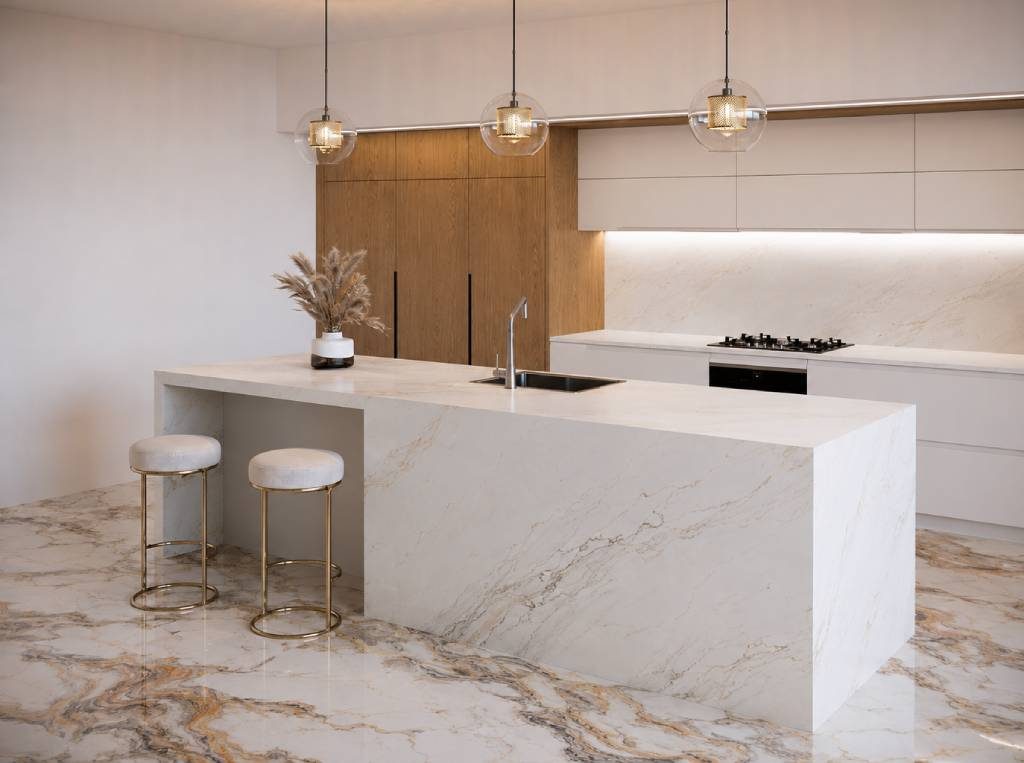
10. Full Marble Kitchen Design (Seamless Look)
In a full marble kitchen, the stone is used for worktops, backsplashes, islands and even wall cladding. When the choice of the slab is appropriate, the product feels immersive and elegantly unified.
Bookmatching can create a visual rhythm when natural veins line up between surfaces. This works well in bigger kitchens with room for the marble to breathe.
The trick is to not overdo it. Even a whole marble kitchen should have moments of relief in cabinetry, lighting or metal finishes so the space feels rich, not crowded.
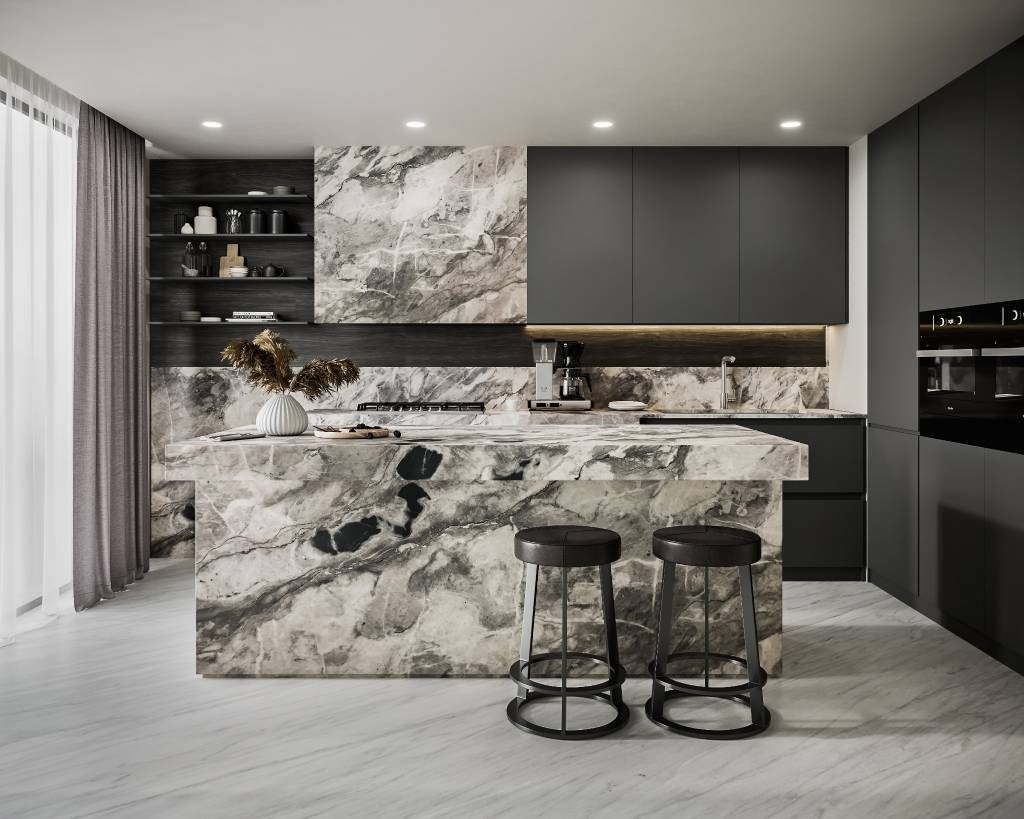
11. Two-Tone Marble Kitchen Design Ideas
Two-tone marble kitchens add visual depth without making the space feel cluttered. You can pair white with black, beige with brown, or grey with white.
A lighter counter with a darker island can help define zones in open-plan homes. This is useful when the kitchen connects directly to the dining or living area.
&Nbsp;
The stones should feel related through tone, movement or finish. When the pairing is considered, two-tone kitchens feel layered, refined and easy to live with.
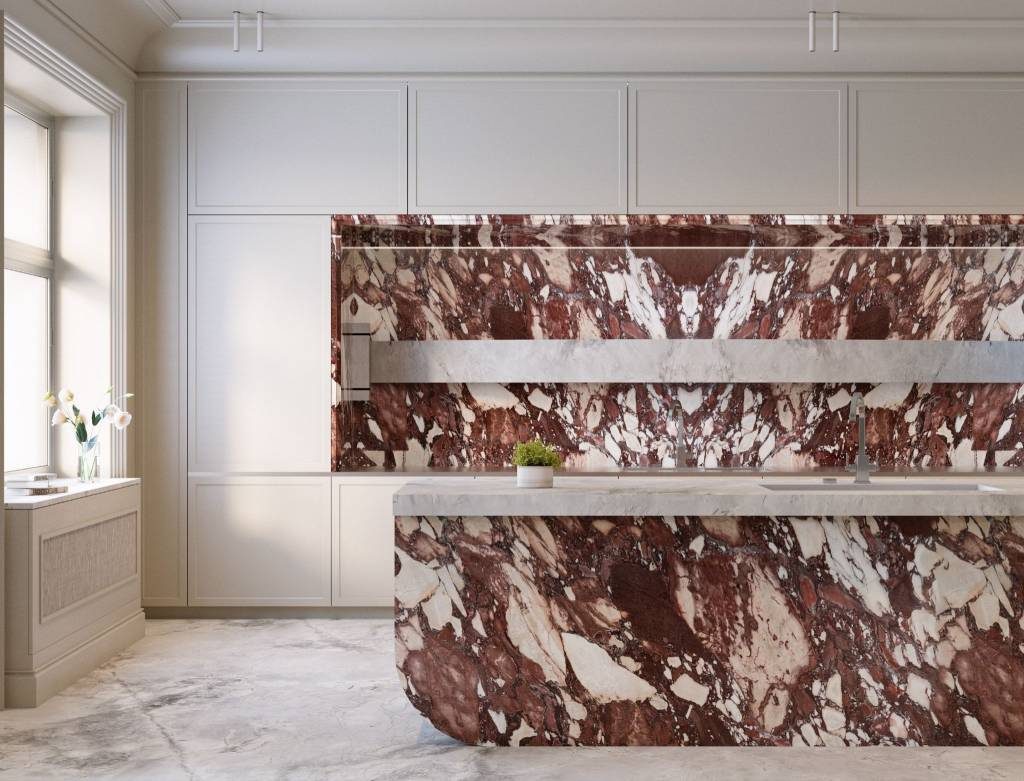
12. Minimalist Marble Kitchen Design
Minimalist kitchens rely on proportion, clean surfaces and careful detailing. Here, marble works best through subtle veins, soft texture and a disciplined palette.
Handle-free cabinetry, integrated appliances and simple lighting suit this style beautifully. A soft white, beige or grey marble keeps the kitchen calm, especially in compact urban homes where visual flow matters.
The detailing has to be precise. Edges, joints, sink cut-outs and lighting placement all influence how finished the kitchen feels.
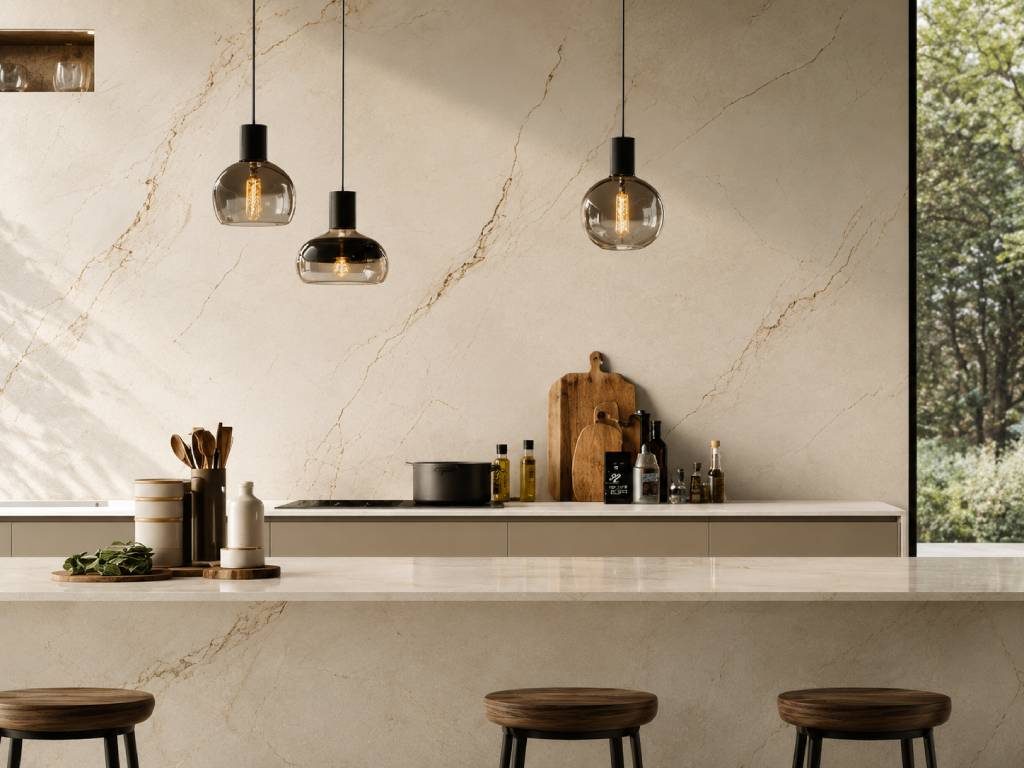
13. Luxury Italian Marble Kitchen Design
Premium collections such as Celebrity Marbles bring a very specific refinement into the kitchen Statuario, Calacatta and Carrara are often used for statement islands, premium countertops and seamless backsplashes.
The vein flow, finish and slab quality matter deeply because they decide how polished the kitchen feels. For larger homes, bookmatched Italian marble can create a strong design feature without needing extra ornamentation.
If you are a homeowner wondering about heat resistant marble for kitchen countertop design in India, dense Italian marble can perform well when sealed properly and cared for with simple habits such as using trivets, wiping spills quickly and avoiding harsh cleaners.
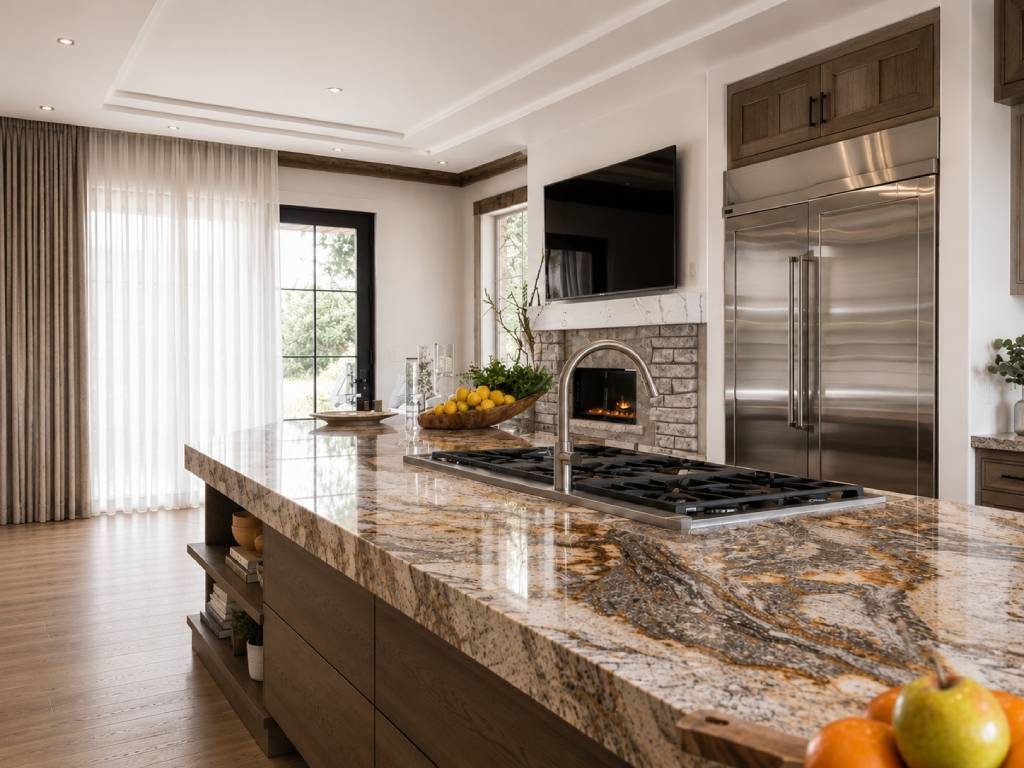
14. Indian Marble Kitchen Design
Indian marble still remains a viable alternative for property owners who are looking for elegance with easier availability. It is available in a range of tones and is more affordable, making it ideal for small kitchens, utility kitchens and homes that prefer practical luxury.
Still, the right finish can make Indian marble feel premium. Lighter tints offer relaxation, while softer tones add lightness to the kitchen. A good result depends on choosing, cutting, polishing and installation.
If you’re a homeowner considering your alternatives, Indian marble is something to think about for its durability, availability and price friendliness. For statement counters or islands, you can opt for imported marble.
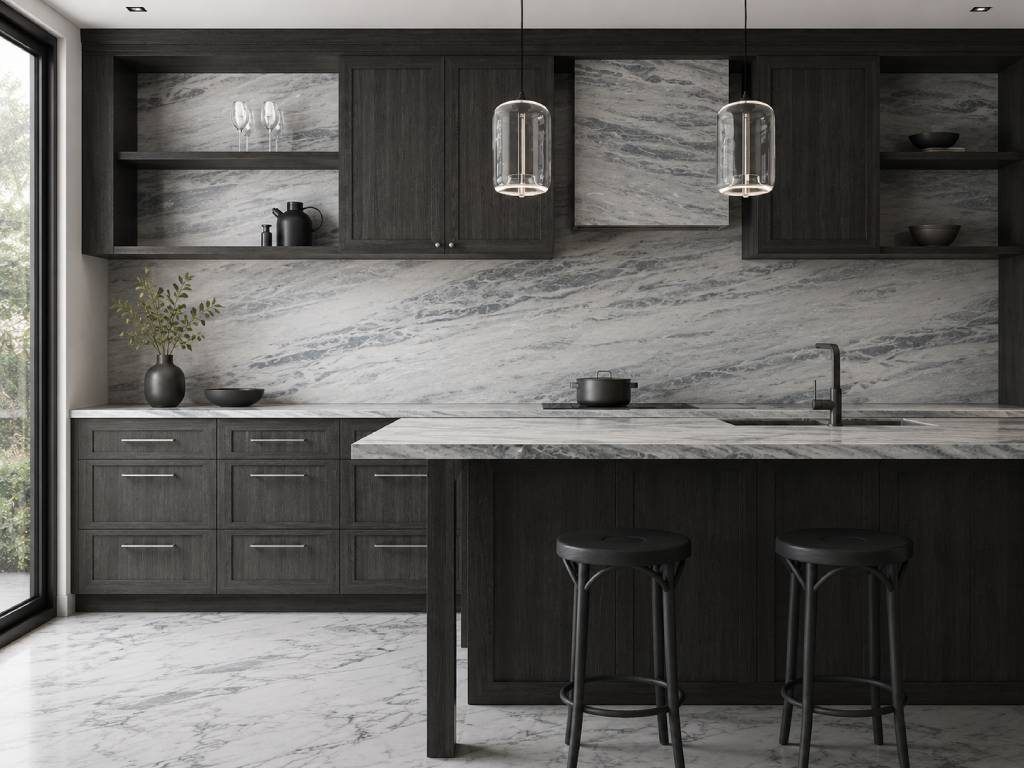
15. Marble + Wood Combination Kitchen Design
Marble and wood are one of the best combos for contemporary homes. Marble gives lustre and newness, wood brings warmth and tactility. Together, they provide a kitchen that feels polished yet welcoming.
This combination works with marble counters and walnut cabinets, oak panels with marble backsplashes or hardwood islands covered with stone. Wood adds warmth to the coolness of marble and makes the area feel more grounded in Indian houses.
It works particularly well in open-plan kitchens, where the kitchen should feel connected to the living or dining space, rather than being overtly functional.
Kitchen Marble Design: Cost, Installation & Budget Planning
The budget for kitchen marble design depends on the marble type, slab size, thickness, finish, edge profile and the complexity of the layout. A simple countertop will be planned very differently from a bookmatched island, waterfall edge, full-height backsplash or kitchen where the same marble continues across multiple surfaces.
| Budget Factor | What it Influences |
| Marble type and rarity | Imported, rare or highly veined slabs usually carry a higher value because of sourcing, availability and visual character. |
| Slab size and thickness | Larger slabs and thicker profiles reduce visible joints, but need more careful handling, cutting and installation. |
| Fabrication complexity | Sink cut-outs, hob areas, drain grooves, curved counters and vein matching require skilled workmanship. |
| Edge profiles | Simple edges are easier to execute, while bevelled, rounded or waterfall edges need more precision. |
| Installation requirements | A level base, planned joints, sealing and experienced labour all affect the final finish and long-term performance. |
It also helps to account for polishing, edge finishing, transport, labour, installation, wastage and future maintenance. In a luxury kitchen, the final result depends as much on planning and craftsmanship as it does on the marble itself. When the slab is selected in full, cut with care and sealed properly, the kitchen looks more refined and performs better through everyday use.
How to Maintain Kitchen Marble for Long-Term Shine
Marble kitchens may still be gorgeous when upkeep is part of everyday use. A good kitchen marble design should be elegant but also allow for everyday cooking, cleaning and movement.
- Seal the surface from time to time notably around counter tops, backsplashes, sinks and kitchen zones. This helps to preserve the marble against moisture, oil and staining.
- For routine cleaning use mild, pH neutral cleaners. Do not use vinegar, lemon cleaners, acidic items, bleach and abrasive powders as these will harm the marble finish over a period of time.
- Immediately wipe spills, especially tea, coffee, wine, citrus, oil and turmeric-based stains. Quick clean-up prevents liquids from soaking into the stone.
- Use trivets and cutting boards when cooking regularly. Don't cut directly on the marble or put hot pots directly on the surface.
- Use a light mop on marble floors and do not drag heavy furniture or appliances across the surface. Use felt pads to prevent scratching.
- Have the finish professionally polished as needed. Over time, marble may lose some of its lustre, but a good polish can bring back its gleam and smoothness.
The same care principles also apply to natural stones for kitchen and bathroom spaces, helping preserve their finish, durability and natural beauty for years.
Marble is naturally beautiful and will grow in character with proper maintenance. Such is the timeless charm of kitchen marble design. It is formed by good installation, good use and how the stone settles into the house over the years.
FAQs
Marble can stain if it is left unsealed or if spills are allowed to sit for too long. In kitchens, tea, coffee, wine, citrus, oil and turmeric-based stains should be wiped quickly. Regular sealing, pH-neutral cleaners, cutting boards and trivets help protect the surface and make marble easier to live with over time.
The cost of marble per sq. ft. varies based on the marble type, origin, rarity, slab size, thickness, finish and availability. Imported marble, rare natural stones and highly distinctive slabs usually sit at a higher value. The stone cost is only one part of the budget. Cutting, edge detailing, polishing, sealing, transport and installation are usually calculated separately.
Yes, marble works well for kitchen countertops when it is selected and maintained correctly. It is best suited for homeowners who want a natural surface with depth, variation and long-term character. For daily use, the countertop should be sealed periodically, cleaned with pH-neutral products and protected from acidic spills, direct chopping and hot pans.
The cost of kitchen marble design in 2026 depends on the marble selected, slab size, thickness, layout, backsplash height, edge profile and installation complexity. A simple countertop will cost differently from a bookmatched island, waterfall edge or full-height marble backsplash. For a clearer estimate, homeowners should factor in the stone, fabrication, labour, sealing, polishing, transport, wastage and long-term care.
The value of marble is influenced more by rarity, quality and visual character than by colour alone. White marbles such as Statuario and Calacatta are often highly valued because of their refined base and distinctive veining. Rare green, black, beige or exotic marbles can also command a premium when the colour depth, vein movement and slab availability are exceptional.
The best marble for a kitchen depends on where it will be used. For countertops and islands, choose a dense, well-finished marble that can handle daily use with proper sealing. Statuario and Calacatta work beautifully for statement islands and bright kitchens, while grey, beige or premium Indian white marble can be easier to maintain in busier cooking spaces. Always check the slab in full before finalising it, as veining, thickness and finish make a big difference.
For kitchen design in India, Statuario, Calacatta, premium Indian white marble, grey marble and beige marble are commonly considered. Softer white marbles work well in bright, open kitchens, while grey and beige tones are practical for homes with frequent cooking. For islands, backsplashes and feature counters, homeowners often choose stronger veined marble because it creates a more defined design focal point.