Marble vs Tiles: 12 Key Differences You Must Know Before Choosing in 2026
Posted on by The Quarry
Marble vs tiles is one of the first comparisons homeowners make when planning flooring for a new home or renovation. The choice affects budget, durability, maintenance, installation time, comfort, design style and how each room performs over the years.
Most homeowners begin with the same question. Tile flooring vs marble flooring. Which one actually makes more sense?
The answer depends on the space, the way it will be used and how much care you are comfortable with. Tiles are practical, predictable and easy to live with, especially in wet areas, busy family zones and homes where quick installation matters. Marble belongs to a different category. It brings natural variation, surface depth and a more permanent architectural quality, but it also asks for skilled installation and periodic care.
Understanding the difference between marble and tile goes beyond comparing prices or maintenance charts. It is about choosing the right surface for the right room, whether that means practical tiles for high-use areas or marble for living rooms, foyers, bedrooms and statement interiors where natural stone can shape the character of the home.
Some people want flooring that quietly does its job. Others want flooring that becomes part of the architecture itself.
That is where the real difference begins.
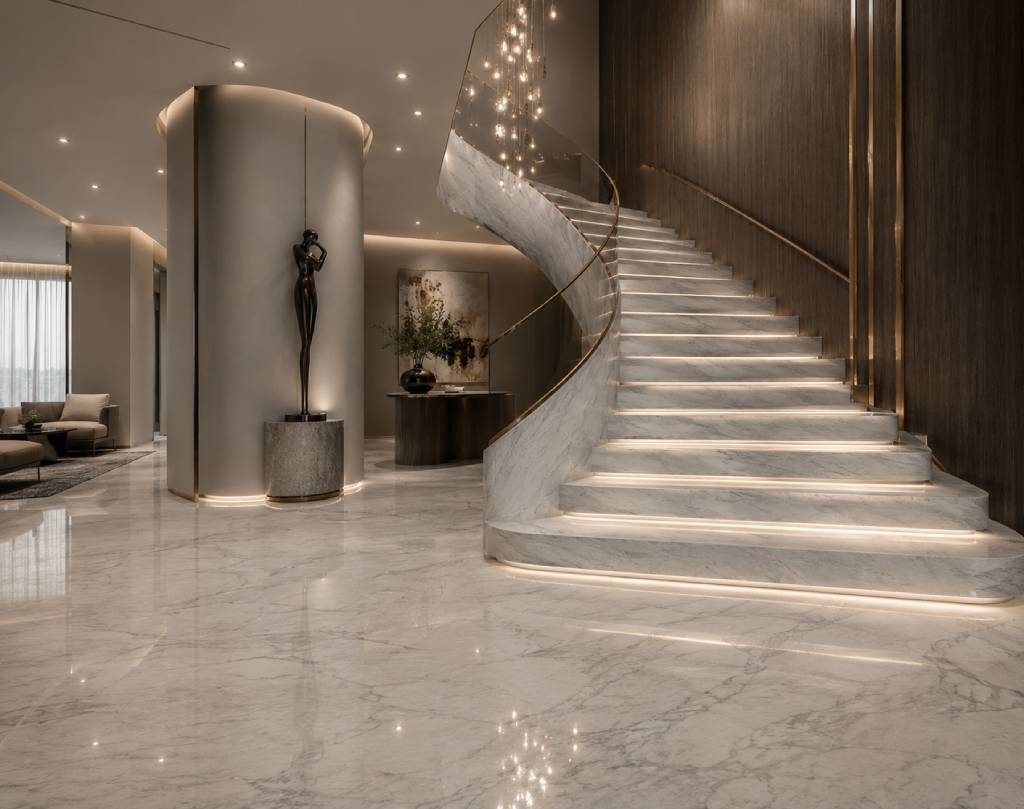
Quick Comparison
When people search for marble vs tiles which is better for flooring, they’re usually looking for a quick answer. But the right choice depends entirely on what matters most inside your home.
| Factor | Tiles | Marble |
| Cost | More budget-friendly | Premium investment |
| Maintenance | Easy to clean and maintain | Requires sealing and periodic polishing |
| Appearance | Uniform and consistent | Natural veining and unique variation |
| Durability | Scratch-resistant and practical | Long-lasting with restoration potential |
| Installation | Faster and simpler | Requires skilled craftsmanship |
| Comfort | Depends on tile type and finish | Naturally cool underfoot |
The practical choice is usually tile. They’re easier on the budget, simpler to maintain and much faster to install, which is why vitrified and porcelain tiles work especially well in busy homes where convenience matters.
Marble is an entirely different experience. Every slab has natural veining and variety that cannot be repeated, giving spaces a more unique and architectural feel. And whereas manufactured surfaces often require full replacement, marble can easily be repaired through polishing and refinishing.
But when convenience is king, tiles are the way to go. But if long-term atmosphere, material richness and permanence matter more, marble changes the conversation entirely.
For homeowners and designers who value elegance, exclusivity, and timeless beauty, Flaunt Marbles offers a curated collection of premium natural stones that bring sophistication to every space. Defined by their distinctive veining, luxurious finishes, and refined aesthetics, these marbles are ideal for creating interiors that feel both modern and enduring. Whether used for flooring, feature walls, or statement areas, Flaunt Marbles adds depth, character, and a sense of understated luxury that enhances the overall ambiance of a home.
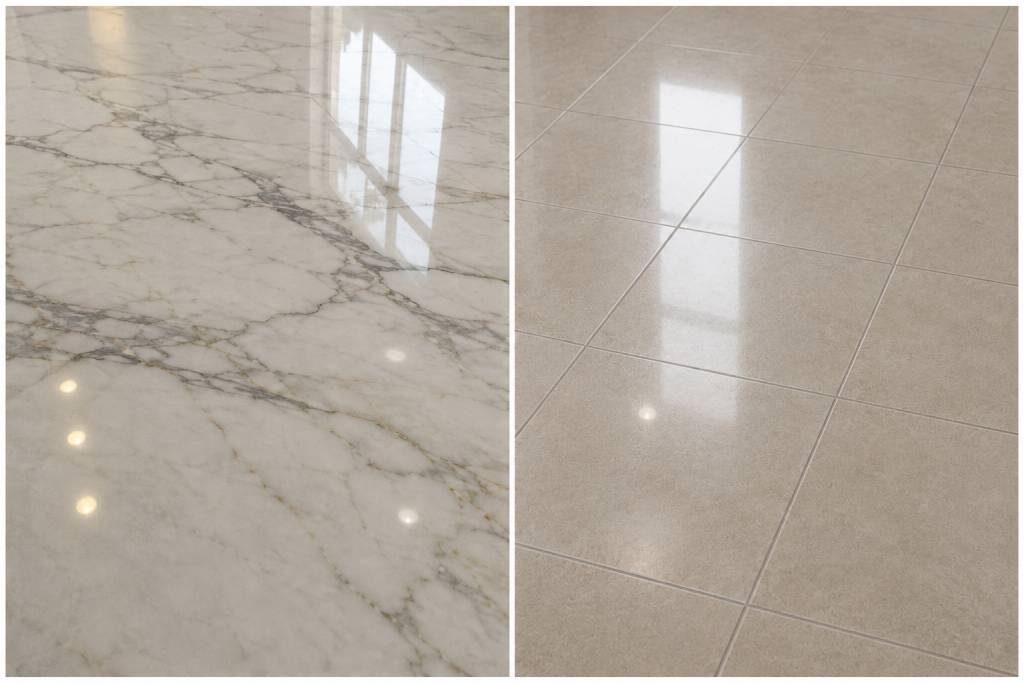
Detailed Comparison Across Every Important Factor
This is where the choice becomes obvious. The debate between tile flooring vs marble flooring is not only about appearance. It’s also about budget, everyday use, installation time frames, maintenance expectations, room compatibility and how each surface performs over time.
1. Cost Comparison in India
For most homeowners, the marble vs tiles conversation usually begins with one thing: budget.
Tiles are naturally the easier option financially, which is why many homeowners start there. Good quality vitrified tiles are available across a wide price range, making them suitable for projects where cost control, quicker installation and design flexibility matter.
Marble belongs to a more premium category, especially when you enter the world of Rare and Precious Marbles, premium Italian surfaces and refined natural stones. The material itself costs more, and the installation also requires greater skill. Leveling, cutting, polishing and finishing all demand experienced labour, because even small errors can affect the final look.
But luxury is rarely defined by upfront cost alone.
Marble can deliver stronger long-term value when it is chosen, installed and maintained well. A beautifully maintained marble floor can be polished, refinished and kept relevant for decades, which is why many premium homes continue to favour marble despite the investment.
If your priority is financial efficiency, tiles are the practical answer. If your priority is natural stone character, restoration potential and a more refined finish, collections such as Celebrity Marbles and other premium marble selections justify their cost in a different way.
2. Durability and Lifespan
When people compare tile flooring vs marble flooring, durability is usually one of the first considerations.
Tiles are generally harder in everyday use. Most vitrified and porcelain tiles resist scratches well, handle constant movement comfortably and work particularly well in homes with children, pets, dining areas or heavy furniture movement. They are designed for convenience and everyday functionality.
If not properly cared for, scratches, etching, or stains might occur over time. But with marble comes something rarely provided by manufactured materials: repair.
Typically, the finish on marble floors can be restored without the need for total replacement. Minor surface wear can typically be polished out. This is one of the reasons marble is still important in heritage homes and decades-old household interiors after installation.
So when people ask tile or marble which is better, the answer depends on whether you prioritise everyday hardness or long-term longevity with character.
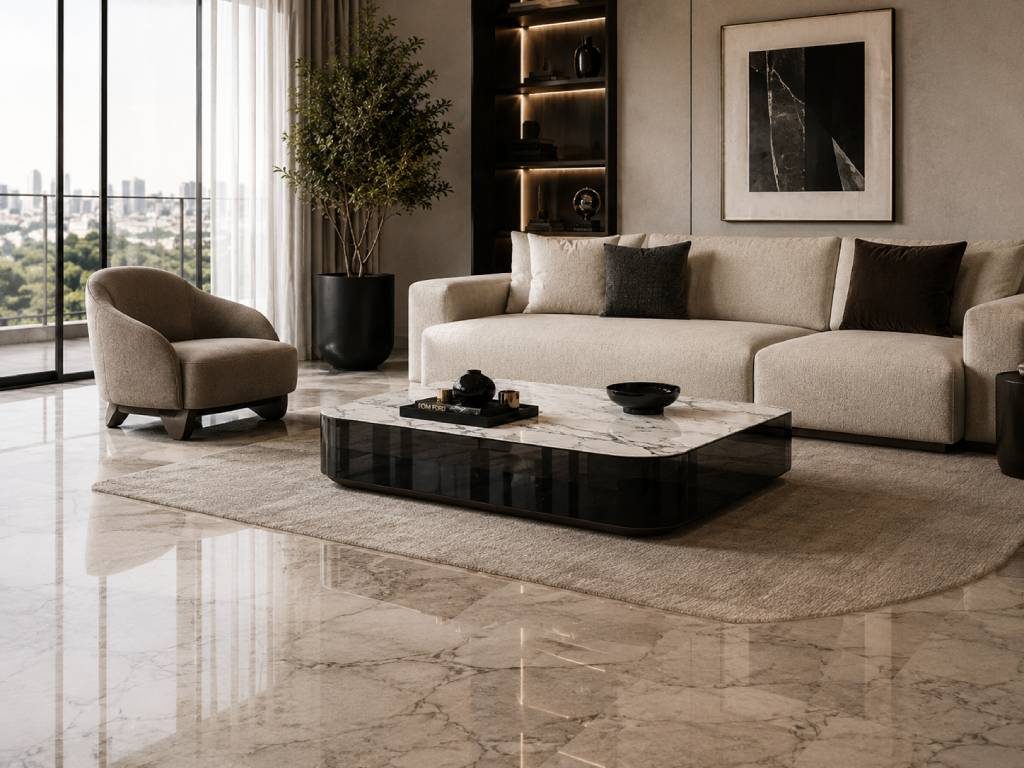
3. Maintenance and Cleaning Effort
This is when the benefits and downsides of marble versus tiles for flooring start to manifest in real life.
Tiles
Tiles are easy to maintain. They are often kept looking good with regular sweeping and mopping, making them a good choice for busy households and high-use areas.
Marble
A little more attention to marble will be needed to maintain the finish over time. Because of the porosity of marble, you need to keep the natural surface with regular sealing and cleaning and avoid acidic spills and harsh chemicals.
Marble, however, has the advantage that it may be restored. Surface dullness, mild scratches and slight wear can often be repaired by refinishing and polishing the floor, instead of replacing the whole floor.
Tiles are easier to maintain. Marble rewards long-term care with longevity and material depth.
4. Aesthetic Appeal and Design Options
This is where marble completely transforms the conversation.
Tiles do offer versatility today. You can find endless finishes, colours, textures, even marble inspired surfaces that visually imitate natural stone. They provide consistency, symmetry and design flexibility.
But marble possesses something tiles cannot manufacture authentically.
Depth.
Natural veining moves across the surface like artwork created by nature itself. Light reflects differently on marble. Rooms seem softer, calmer and more architectural.
That is why discussions around Italian marble for living room spaces almost always lean toward marble in premium homes, where natural veining and material depth become part of the design itself.
Tiles can look beautiful. Marble is unforgettable.
There is a difference.
5. Installation Process and Time
Installation plays a much bigger role than most people expect.
Tiles are quicker, easier and far less complicated to install. Most projects can be completed relatively fast, which makes tiles a great option for renovations that are working around deadlines or tighter timelines.
Marble takes patience. Every slab needs to be carefully placed, aligned and finished properly because even small mistakes become visible later. It’s a material that depends heavily on craftsmanship.
But when marble is done well, the difference is instantly noticeable.
A seamless marble floor has a softness and flow that makes a space calmer, larger and far more luxurious without trying too hard.
If convenience and speed matter most, tiles make life easier.
If you care about detail and timeless craftsmanship, marble is hard to match.
6. Water Resistance and Suitability for Wet Areas
Tiles
Tiles are usually better suited to damp places such as bathrooms, kitchens, balconies and utility rooms because they are good at resisting moisture and don’t need much upkeep.
Marble
Marble is more porous and hence needs to be sealed properly where moisture can be a factor. It will still be utilised in bathrooms and kitchens but needs more attention and upkeep with time.
This is also why many homeowners compare natural stone vs artificial tiles before finalising materials, often choosing both surfaces strategically across different areas of the home. In more functional wet zones, tiles are generally used, however, in living rooms, foyers, bedrooms and other statement interiors where ambiance and material richness are important, marble is a popular choice.
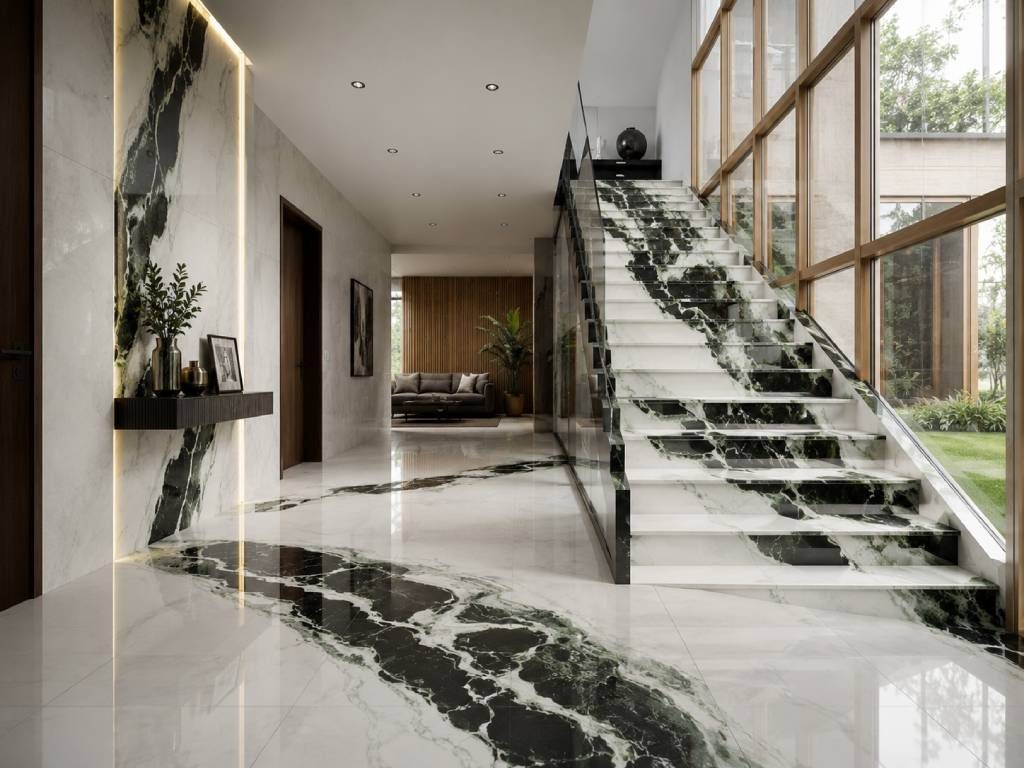
7. Heat Resistance and Comfort
In Indian temperatures, flooring comfort is more important than people realise.
Marble keeps it chilly underfoot even in warmer months. This cooling impact alters the outward appearance of a home, especially in big open living spaces.
The tiles come in different materials and finishes. Some stay comfortable, others feel warmer more obviously.
Marble creates a quiet sense of comfort that becomes particularly noticeable in tropical climates. It softens the experience of heat naturally without effort.
That sensory experience is one of the reasons elite homes continue choosing marble despite newer alternatives.
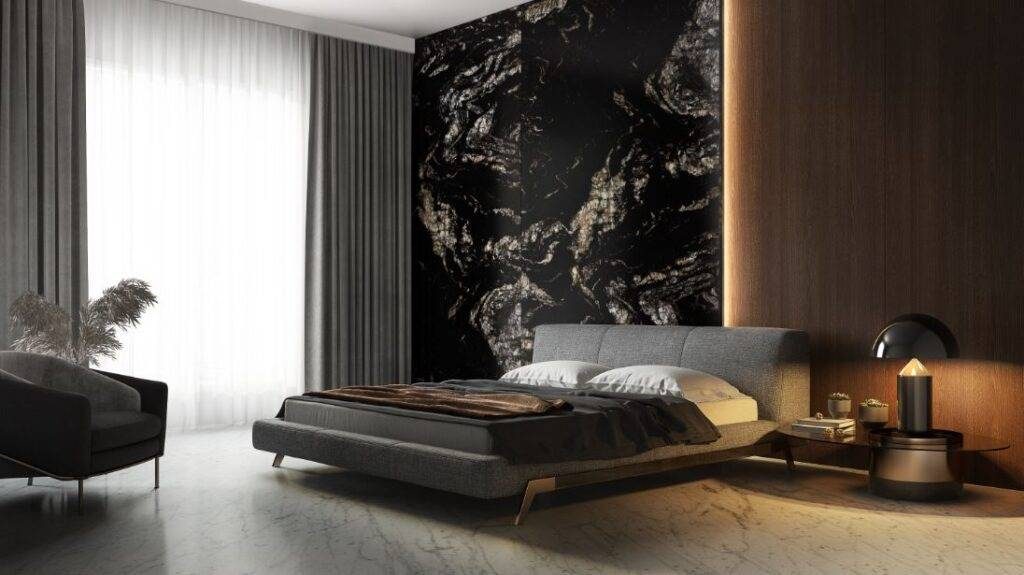
For spaces that demand attention and leave a lasting impression, Statement Marbles presents a collection of bold and visually striking natural stones. Featuring dramatic patterns, rich textures, and unique natural variations, these marbles are designed to become focal points within luxury interiors. Perfect for grand living rooms, elegant foyers, and premium commercial spaces, Statement Marbles combines architectural presence with timeless appeal, helping create interiors that are both memorable and sophisticated.
8. Resale Value and Property Impact
Marble has a subliminal effect on the way the property is perceived.
Homes with marble flooring appear more expensive, sometimes before buyers even know why. The material immediately communicates permanence, craftsmanship and sophistication.
Tiles do not negatively impact property value, but they rarely create emotional impact in the same way.
This is especially true in high end real estate where materials define perception greatly.
When you compare marble vs tiles, it is not just the current lifestyle that’s to be considered but also how you want to position your property in the future.
9. Repair and Replacement
Over time, flooring inevitably experiences wear.
With tiles, damage often means replacement. Finding identical tiles years later can become difficult, especially if the design has been discontinued.
Marble behaves differently.
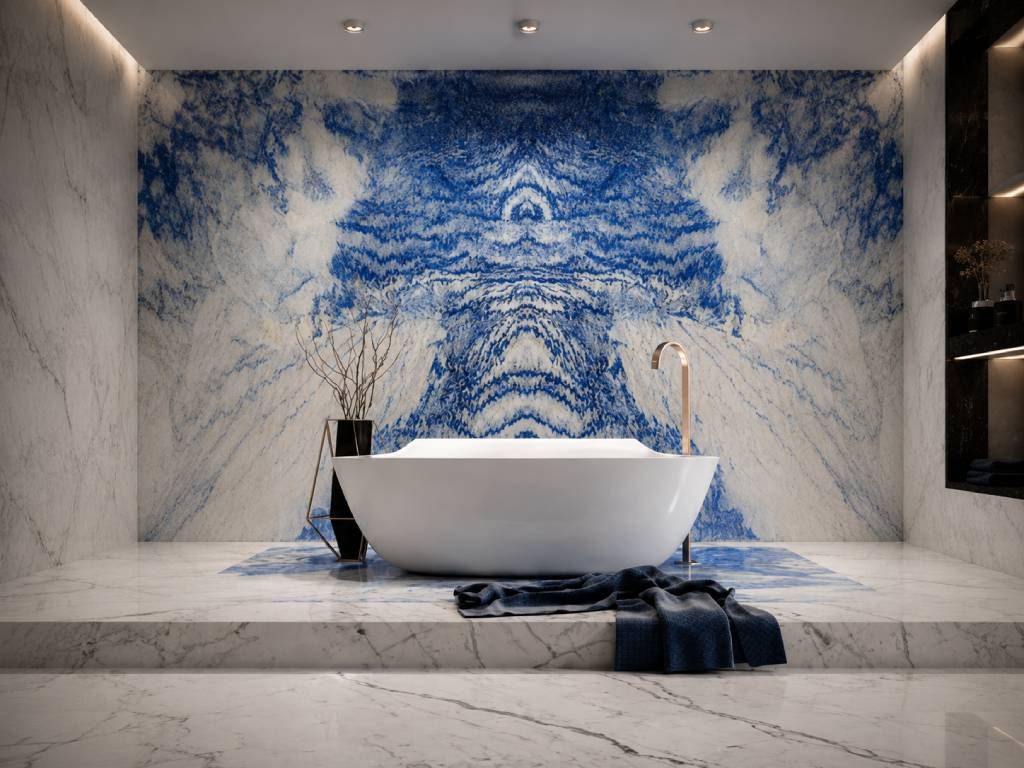
Minor scratches and dullness can often be polished away. Surface restoration is possible without replacing the entire flooring. That ability to renew the material gives marble extraordinary longevity.
It continues adapting rather than becoming obsolete.
10. Environmental Impact
Natural materials are entering the debate of long-term design.
As one of the most enduring
natural stones for interior design, marble can last for decades without needing complete replacement. The lengthy life means fewer renovations and less material thrown away over time. In many homes, the marble flooring is polished to repair it rather than completely removed.
Tiles have industrial manufacturing procedures involved and the replacement cycles are usually shorter, especially if styles become old or discontinued.
Marble can be a more sustainable flooring option for homeowners who expect to stay in their homes for a long time
11. Availability and Variety
Tiles are the best in terms of variety and availability of design. Something for every style, every budget and every kind of project.
The exclusiveness of marble by its nature. Patterns and tones differ from slab to slab. Availability is subject to source and quarry constraints.
But that rarity is also what makes marble desirable.
Perfection appears manufactured. Natural variation feels luxurious.
12. Longevity vs Practicality Trade-Off
That is ultimately what the entire marble vs tiles debate comes down to.
Choose Tiles If:
- You prioritise affordability and easy maintenance
- You need quicker installation timelines
- You prefer flooring for high-use areas
- You want surfaces with minimal upkeep
Choose Marble If:
-
- You like raw materials and singular surfaces.
- You want flooring that will age and restore wonderfully
- You concentrate on long term visual and property value
- You seek spaces with more architectural character and materiality
- Choosing the correct flooring is about function, ageing, and representing your lifestyle throughout time.
The right flooring depends on how you want your home to function, age and represent your lifestyle over time.
Final Verdict: Marble or Tiles, What Should You Choose?
The right choice depends on how the home will be used. Tiles work well for homeowners who The decision relies on how the residence is to be used. Tiles are a good choice for homeowners who want a practical, budget-friendly flooring option that is easy to maintain, quicker to install and stands up well to daily wear and tear. They are especially suited for moist regions, utility spaces, rental properties, high-traffic family zones and projects where timeframes need to stay tight.
Marble will be appreciated by homeowners that view flooring as a long-term decor choice. It looks well in living rooms, foyers, bedrooms, formal dining areas and luxury interiors where natural veining, cooling comfort, restoration possibility and material richness are important. It may require more care than tiles, but with the appropriate sealing, polishing and cleaning it can continue to look sophisticated for decades.
So the decision is not simply about marble vs tiles as a single answer. Choose tiles when convenience, cost and low upkeep are the priority. Choose marble when you want a surface that brings natural character, architectural presence and lasting value to the home.
Choose Tiles If:
- You require faster installation
- You like everyday durability and practicality
- You concentrate budget and maintenance
Choose Marble If:
- You want long-term visual value
- You prioritise atmosphere and material richness
- You want flooring that ages gracefully
FAQ
No. Marble is a natural stone. Tiles are manufactured materials.
Tiles are harder and more scratch-resistant. Marble lasts longer if maintained well.
Depends. Marble is more attractive and has better resale value. Tiles are easier to maintain and they last longer.
No. Tiles are often cheaper than marble in India.
Marble is a popular choice for premium living rooms because of its natural look, cooling properties and long-term worth. Tiles are a great option for homes who want low maintenance and everyday functionality.
For practicality, minimal maintenance and affordability, tiles are recommended. Marble is the choice for quality interiors, natural appeal and long-term visual value
Tiles are cheaper to buy and cheaper to maintain over the long run.