Natural Stone for Interior Design: Types, Benefits & Expert Selection Guide
Posted on by The Quarry
Natural stone has always had a place in homes that are designed to last. It brings something real into a space: natural movement, depth, texture and a sense of character that manufactured surfaces often struggle to replicate.
For homeowners choosing materials with long-term value, natural stone offers a rare balance of beauty and permanence. It does not follow a passing trend. It settles into the home, ages with it and gives every room a more personal, considered presence.
What Is Natural Stone for Interior Design?
Natural stone for interior design is a stone that has been formed within the earth over millions of years by natural geological processes. It is then mined, cut, processed and used in homes as useful and decorative surfaces. It is widely utilised in interiors as flooring, wall cladding, countertops, backsplashes, vanity tops, staircases and tiny architectural aspects.
Natural stone is not produced like artificial materials that are made to fit a pattern. No two surfaces will look exactly the same as each slab is unique in its colour variation, veining, texture and movement. This natural variation is one of the reasons homeowners choose to Flaunt Marbles as statement features in luxury interiors. With the right stone and adequate maintenance, homes develop more realistic, rich and lasting character.
Why Natural Stone Is Popular in Interior Design Today
Homeowners are choosing natural stone interior design because it brings visual character, strength and long-term relevance into the home. Its appeal is easy to understand when you look at what it offers in everyday interiors.
Timeless appeal
Natural stone does not depend on short-lived trends. Its colours, textures and natural movement work across contemporary apartments, traditional homes and luxury villas with equal ease.
Uniqueness
Every slab has its own veining, tone and surface variation. This gives each floor, wall or countertop a distinct identity instead of a repeated, manufactured pattern.
Durability
With the right selection, finish and installation, natural stone can perform well for years across high-use areas such as living rooms, hallways, kitchens and bathrooms.
Sustainability
Natural stone is valued for its longevity. Since it does not need frequent replacement, it supports a more considered approach to material selection.
Design flexibility
It can be used in subtle or striking ways, depending on the space. A soft-toned stone can make a room feel calm and open, while a darker or more expressive slab can bring depth to a feature wall, foyer or bar area.
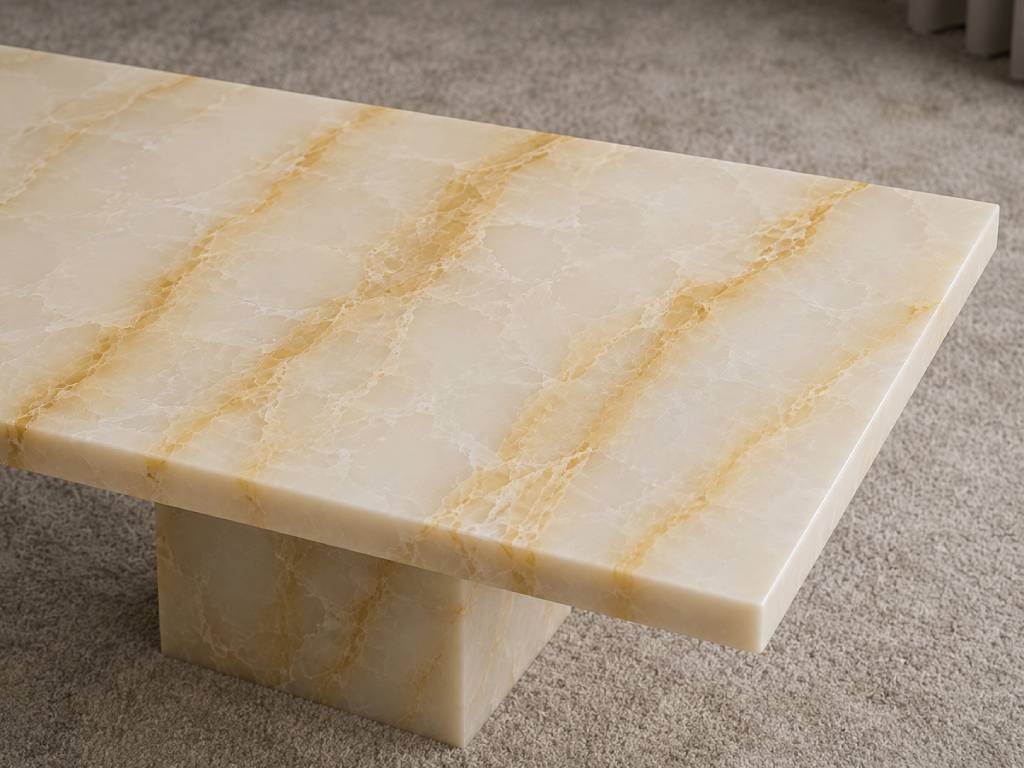
Where to Use Natural Stone for Interior Design in Homes
Natural stone is at its finest when it is selected to suit the room, the level of use and the finish desired. It’s a popular choice in Indian homes for floors, feature walls, kitchens, bathrooms, staircases and smaller architectural aspects. Choose the proper stone and finish to make the space seem better and perform better over time.
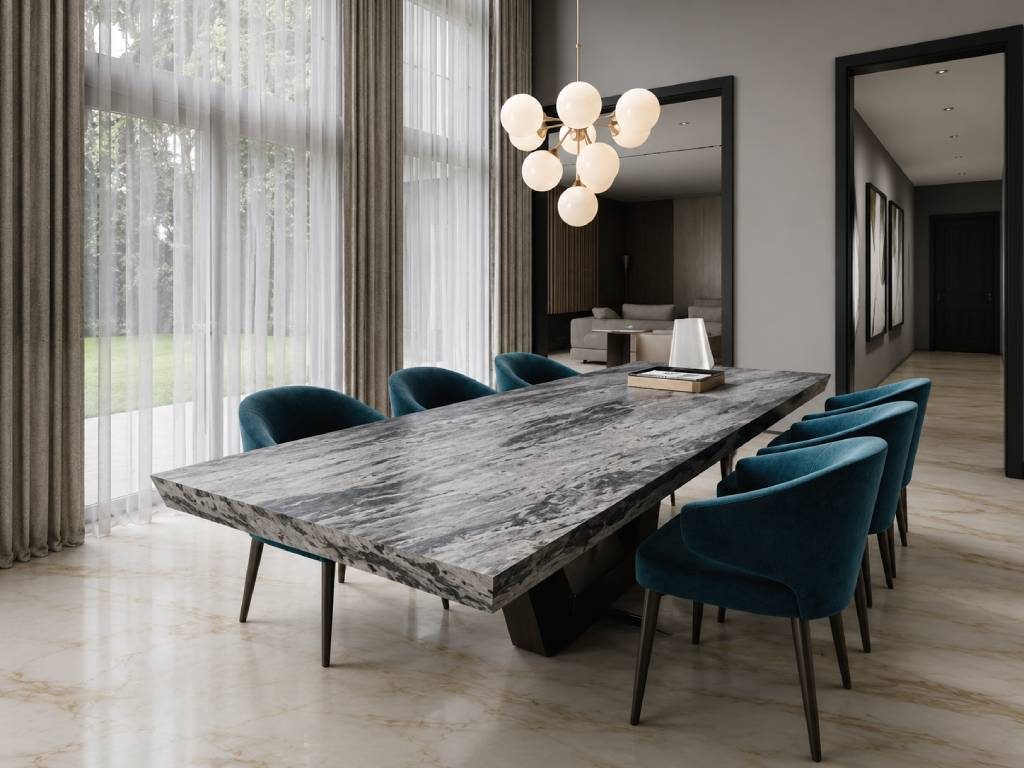
Natural Stone Flooring (Living Room, Bedroom & Hallways)
Natural stone flooring is a great option for spaces that need a tough but luxurious surface underfoot. Marble may provide a touch of polish and light to living rooms and corridors, but granite is durable enough for high-traffic areas. Another useful alternative is quartzite for durability with natural movement on the surface.
The finish must be picked with care. A polished finish is very suitable for formal living rooms and bigger open spaces, whilst a honed finish has a softer feel and is easier to utilise in bedrooms or quieter regions of the home.
Homeowners looking for Italian marble for living room spaces often choose lighter varieties that reflect natural light while creating a refined and timeless atmosphere.
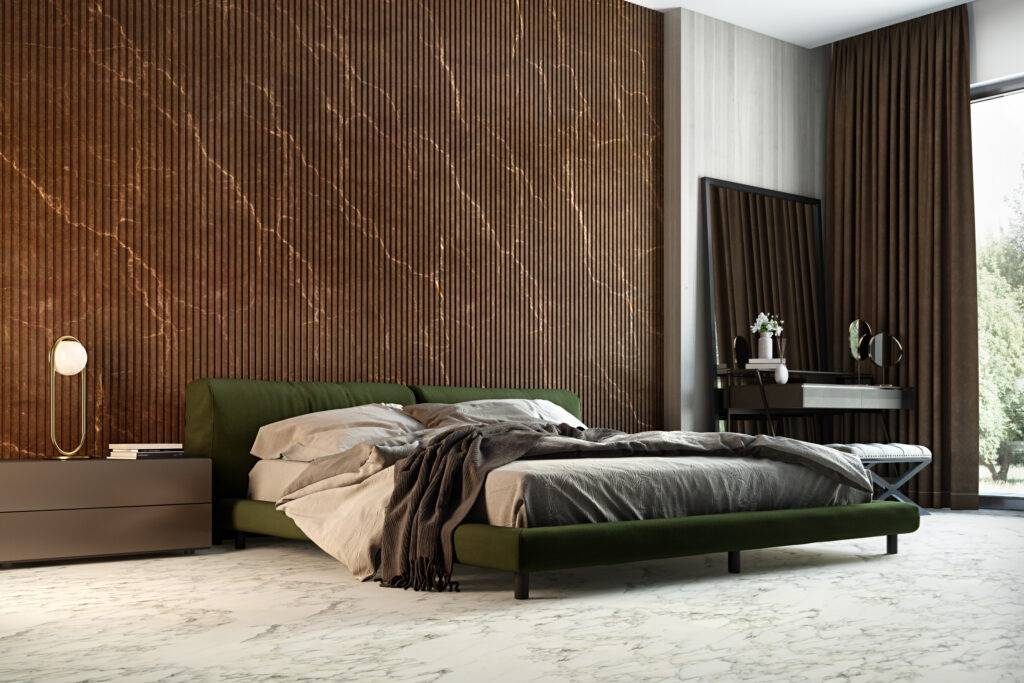
Natural Stone Accent Walls & Feature Walls
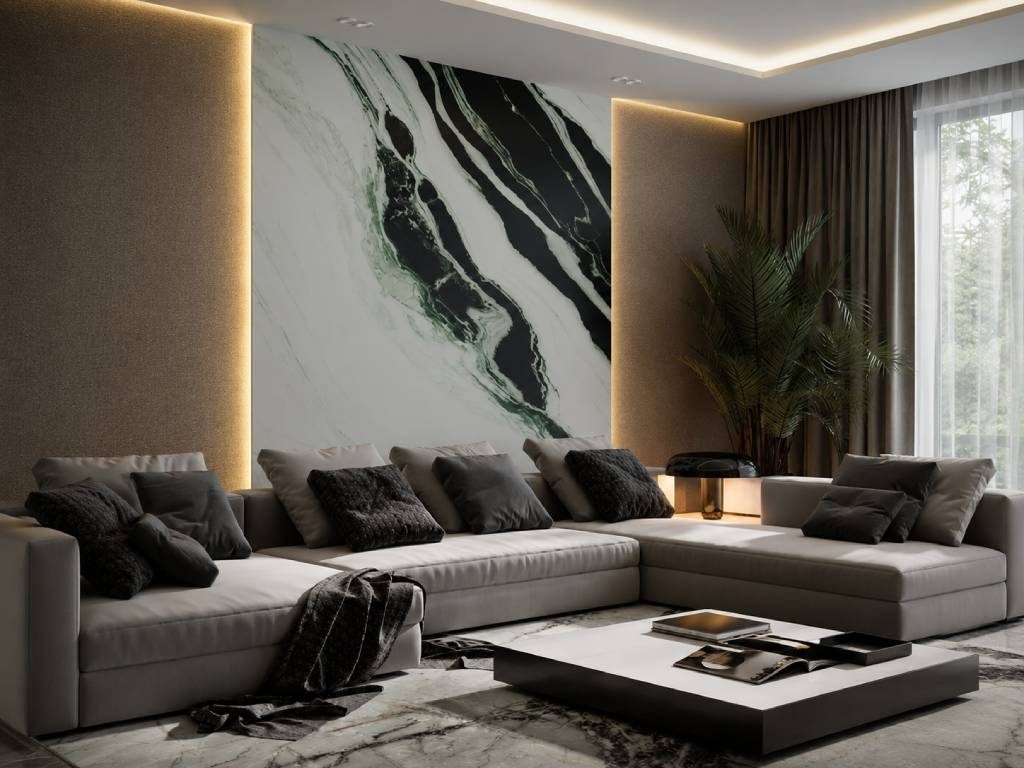
A feature wall is one of the most efficient ways to introduce stone used in interior design to a room without overdoing it. Natural stone works well behind a bed, around a TV wall, in an entrance hall, bar area or formal living room where the surface can become a clear focal point.
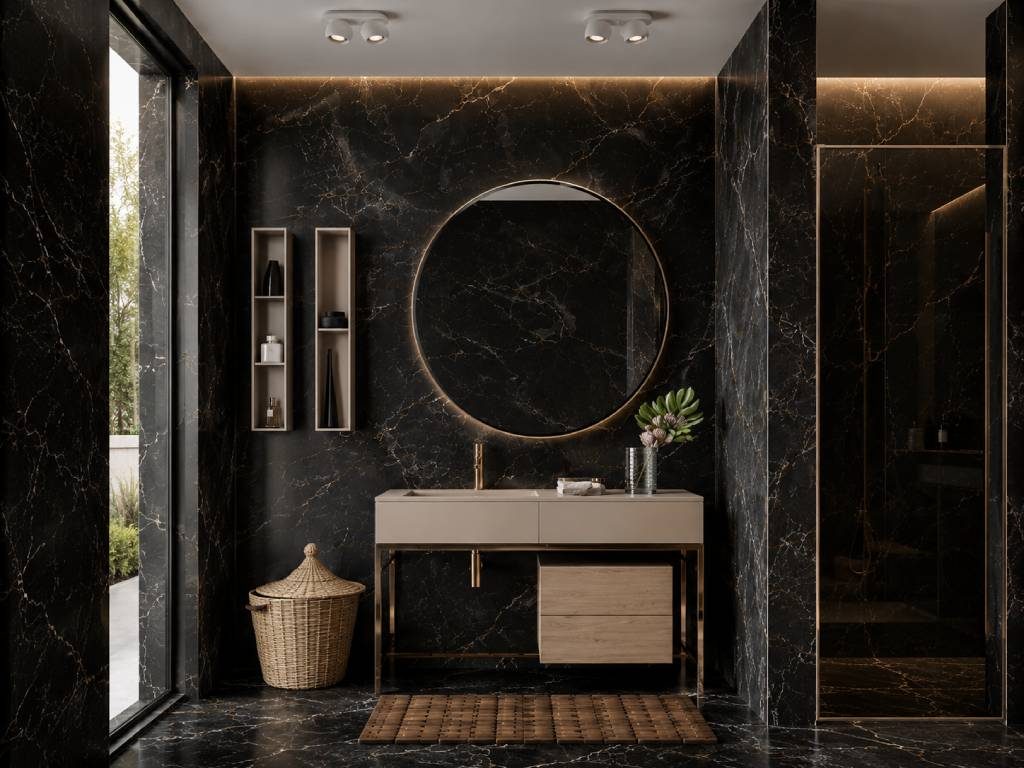
If you want the room to feel brighter and more open, light-coloured stones are a useful choice. Darker stones or slabs with more prominent veining work better when the rest of the space has a neutral palette, soft lighting and minimal visual clutter.
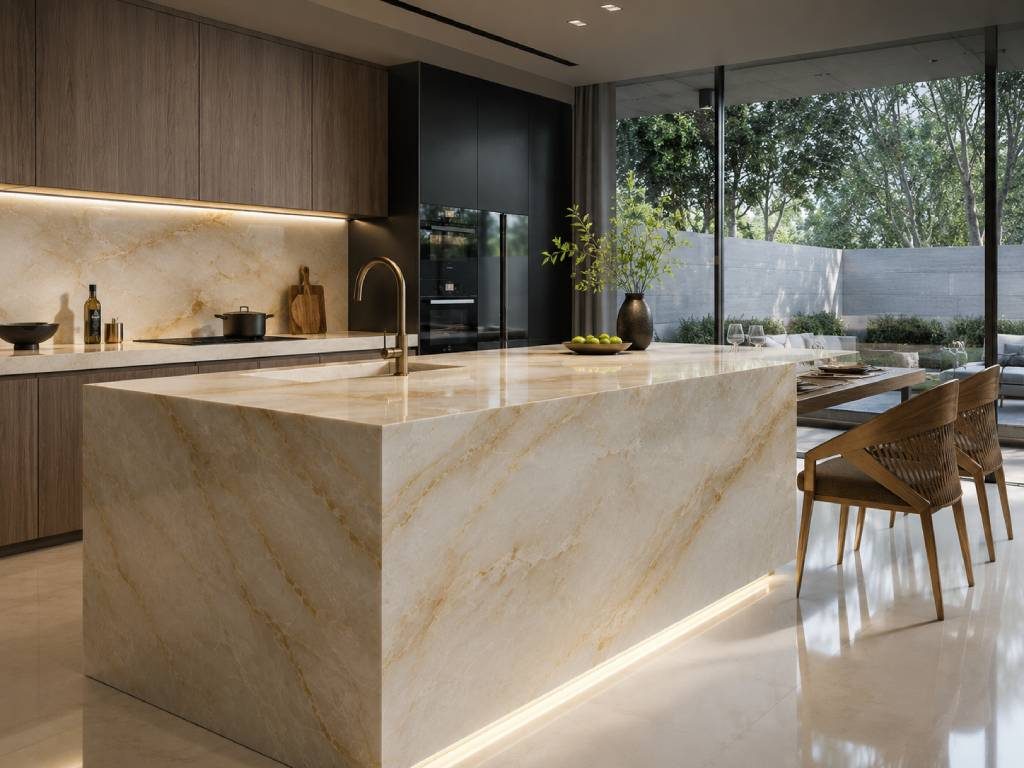
Kitchen Countertops & Backsplashes
Kitchens need surfaces that can take the knocks of daily life, heat, spills and regular cleaning. This is why granite and quartzite are usually selected as interior design stones for kitchen countertops. They provide strength, durability and a finish that stands up well in busy kitchen areas.
Marble is beautiful for backsplashes, islands or low-use counters where you can enjoy its natural veining with a little extra attention. Thickness, edge finishing, sealing and skilful installation are vital because they determine how the stone behaves over time.
Bathroom Walls, Vanity Tops & Shower Areas
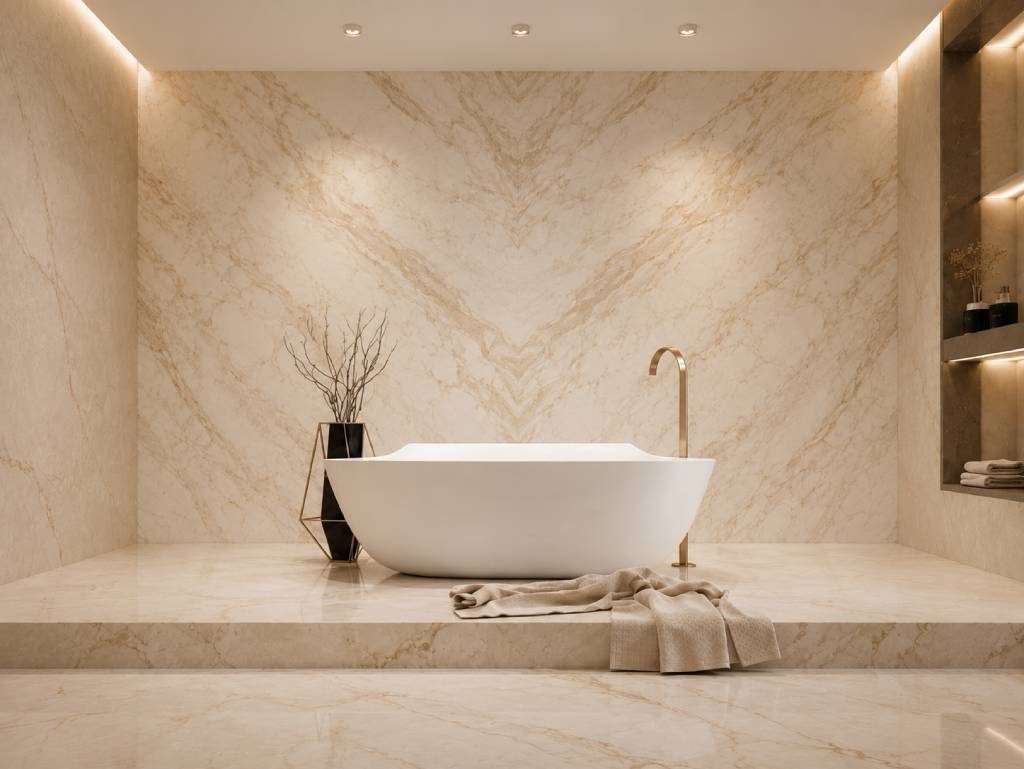
Bathrooms need stones that can endure dampness, cleaning and constant exposure to water. Bathroom walls, vanity tops and shower areas are commonly made of marble and limestone because they lend a clean, composed aspect to the space.
The finish is good for moist regions. Textured or honed surfaces can add grip and adequate sealing can aid in protecting the stone from moisture and stains. Gentle pH-neutral cleaning also helps to preserve the surface without ruining its natural finish.
Staircases, Window Sills & Decorative Elements
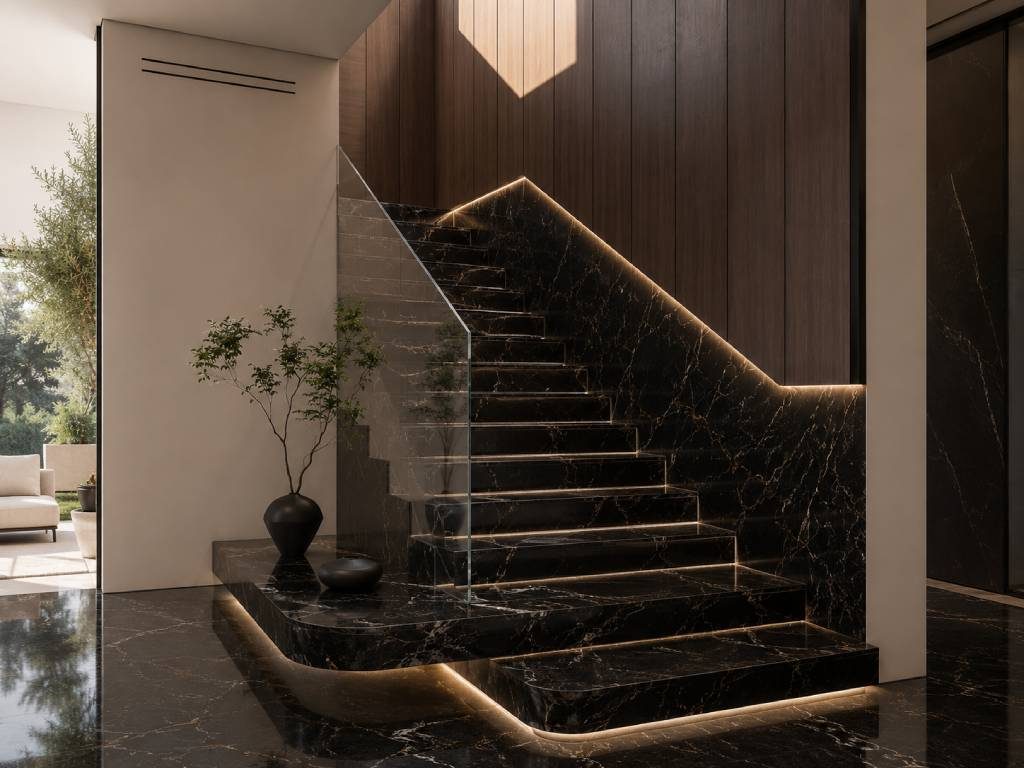
Natural stone works well for staircases, window sills, ledges, tabletops and smaller built-in surfaces because these areas need both durability and a clean finish. For staircases, marble, granite and quartzite are strong choices, depending on the level of use and the finish required.
Window sills and ledges benefit from stones that can handle light, dust and regular cleaning without looking worn too quickly. In Indian homes, these details are often exposed to sunlight, indoor plants, water marks or daily handling, so the stone should be sealed properly and finished with smooth, safe edges.
For decorative elements like tabletops, niches or console surfaces, softer-veined marble, travertine or onyx can bring character without overwhelming the room. The key is to choose the stone according to the function of the surface, the amount of use it will see and how closely it needs to match the flooring or wall cladding around it.
Types of Natural Stone for Interior Design
Choosing the right natural stone for interior design is less about what looks best in isolation and more about what feels right in your space.
Marble for Interior Design
Marble has always carried a certain presence. Its veining feels almost fluid, like it’s moving across the surface.
It works beautifully in spaces where you want a bit of softness and poise. Living rooms, feature walls and bathrooms all benefit from its timeless appeal.
Statement Marbles with bold natural veining are especially suited to feature walls, foyers and formal living spaces where the stone itself becomes the focal point. A polished finish adds light and reflection, while a honed finish feels more muted and lived-in.
Collections such as Celebrity Marbles are often chosen for luxury homes that seek refined aesthetics without overwhelming the overall interior palette.
Granite for Interior Design
Granite is dependable. It doesn’t ask for too much attention, but it performs exceptionally well.
It’s strong, resistant to heat and scratches and ideal for spaces that see a lot of activity. Kitchens, entryways, areas where life happens without pause. It holds up without losing its character.
Limestone & Travertine
These stones feel quieter. More grounded. They bring in an earthy, relaxed aesthetic that works beautifully in softer interiors.
They’re better suited for walls and low-traffic areas. Mainly because they’re more porous. But with proper sealing, they age in a way that feels natural and unforced.
How to Choose the Right Natural Stone for Interior Design
Choosing stone is never just about what catches your eye first.
You start by understanding the space. Is it somewhere that sees constant movement or somewhere more decorative. Then you think about durability. About how much maintenance you’re comfortable with. About how the colours will interact with the rest of your home.
Light stones can open up a room and make it feel more expansive. Darker ones can create contrast and depth. Even the climate plays a role. Humidity, temperature changes, all of it affects how the material behaves over time.
Benefits of Using Natural Stone in Interior Design
The advantages of natural stone become much more apparent when you look at how it functions within a house, as well as how it looks.
- Long-term surface value: When done right, natural stone may stay relevant for years. It doesn’t require frequent changes, making it a good choice for homeowners designing rooms to be permanent.
- More visual depth: The floors, walls and counters get more depth from the natural veining, mineral movement and surface texture than they do from the flat manufactured finishes.
- Consistent performance across spaces: The type of stones used depends on their application. Granite and quartzite are suitable for high-traffic areas, whilst marble, limestone and travertine are best for elegant walls, bathrooms, vanities and ornamental surfaces.
- Design continuity: Natural stone repeated in floors, staircases, sills, wall panels or small elements can connect different portions of the house.
- Sophisticated finish, functional maintenance: Natural stone has an elegant finish that requires no complex maintenance. With careful sealing, gentle washing and expert installation, natural stone is an attractive option.
Luxury interiors often incorporate Rare and Precious Marbles to introduce exclusivity, distinctive patterns and long-term visual value into statement spaces.
Natural Stone vs Engineered Materials: What’s Better for Interiors?
The better choice depends on how the space will be used, the finish you want and how much natural variation you prefer.
If you're comparing natural stone vs artificial tiles, it helps to understand that both materials have their place, but they offer very different results in terms of appearance, durability, maintenance and long-term design value.
| Factor | Natural Stone | Engineered Materials |
| Appearance | Natural veining, colour variation and depth. No two slabs look exactly alike. | More controlled, consistent and uniform in pattern. |
| Durability | Long-lasting when the right stone is chosen for the right space. Granite and quartzite are especially strong, while marble needs more mindful use. | Designed for predictable performance and often suitable for busy, low-maintenance areas. |
| Maintenance | Needs pH-neutral cleaning, spill management and periodic sealing depending on the stone. | Usually easier to maintain and less sensitive to everyday spills or cleaning products. |
| Sustainability | A natural material that can remain in use for many years when maintained well. | Manufactured through a production process, though some options may include recycled content. |
| Design value | Adds authenticity, natural movement and long-term appeal to luxury interiors. | Offers consistency and practicality, especially where a uniform look is preferred. |
| Best suited for | Living rooms, foyers, feature walls, bathrooms, staircases, countertops and luxury home details. | Rental homes, utility areas, budget-sensitive projects or spaces where uniformity is important. |
Natural stone is often the better choice for home owners who value authenticity, variation and a more permanent interior finish. Engineered materials work well when consistency, easier maintenance and budget control are the main priorities.
Maintenance & Care Tips for Natural Stone Interiors
Taking care of natural stone is simple when the routine is consistent. A few careful habits can help preserve the finish, colour and strength of the surface over time.
- Choose pH-neutral cleaners: Clean natural stone using gentle pH-neutral cleaners. Avoid acidic cleansers, vinegar, bleach or harsh chemicals since they might cause stains or dull the surface.
- Clean spills promptly: Wipe up any spills immediately, especially tea, coffee, citrus, wine, oil or coloured liquids. This prevents the stone from taking any markings.
- Seal the surface from time to time: Re-seal natural stone periodically, especially in kitchens, baths and areas of high use. Sealing protects the surface from moisture, stains.
- Use soft cloths Wipe stone surfaces with a soft cloth or sponge. Don't use abrasive scrubbers that can damage or wear away the finish.
- Polish when necessary: Polished stone might lose part of its sheen over time. Professional polishing can revive the surface and maintain its exquisite look.
- Scratch protection: Use coasters, trays, felt pads and mats as needed. Do not slide heavy furniture or sharp things across natural stone surfaces.
When selecting premium marble, it is equally important to assess Italian Marbles quality, including the slab's consistency, finish, natural veining and overall craftsmanship before making a final choice.
FAQ
Natural stone is not heavy maintenance, however it does need to be properly cared for. Use pH-neutral cleaners. Clean up spills quickly and avoid acidic products. Seal the surface occasionally as needed.
Natural stone tends to be more expensive than regular tile but also has natural diversity and durability and gives long-term value. The ultimate price depends on the type of stone, quality of the slab, finish, thickness and installation.
Yes. Natural stone is a sturdy and beautiful material that has stood the test of time in interior design. Works great on floors, walls, counters, bathrooms and architectural elements.
The 3-5-7 rule is about using decor in odd numbered groups of three, five, or seven. Odd numbers of groups frequently look more balanced and natural than even numbers.
Natural stone is used for flooring, wall cladding, kitchen counters and backsplashes, bathroom walls and vanity tops, staircases, window sills, tabletops and ornamental accents.
Marble, granite, quartzite, limestone and travertine are common interior stones for homes. Marble is great for living rooms and bathrooms, granite and quartzite are good for kitchens and high traffic areas, and limestone and travertine are suitable for walls and more tranquil spaces.
The best natural stone will depend on the space and the use. Marble gives a sophisticated style, granite gives strength, quartzite gives durability with visual appeal while limestone or travertine give softer, warmer interiors.