Italian Carrara Marble: History, Characteristics and Design Uses
Posted on by The Quarry
There’s a reason why Carrara marble has stayed relevant for centuries.
Its delicate veining, muted tones and balanced palette make it endlessly adaptable across styles, spaces and eras. You’ll find it in everything from ancient Roman sculptures to beautiful modern homes today.
Because rather than overpowering the interiors, Carrara marble complements it. And that’s what keeps it timeless.
There’s a delicateness Carrara marble has that changes the feel of the place instantly. The pale white tones and delicate grey veining makes every room feel lighter, calmer, and more put together. It’s sophisticated, but in a very raw, understated way.
But what makes Carrara marble so special isn’t just how it looks. It’s the balance it brings into a room. Refined without feeling excessive, versatile without losing its character. The soft veining and enduring elegance allow it to feel just as natural in grand historical architecture as it does in contemporary interiors today. Perhaps that’s why people keep returning to it century after century. Carrara doesn’t chase trends. It simply continues to belong.
Today, Carrara continues to be admired among the world’s
Rare and Precious Marbles for its timeless sophistication and enduring appeal.
What Is Carrara Marble
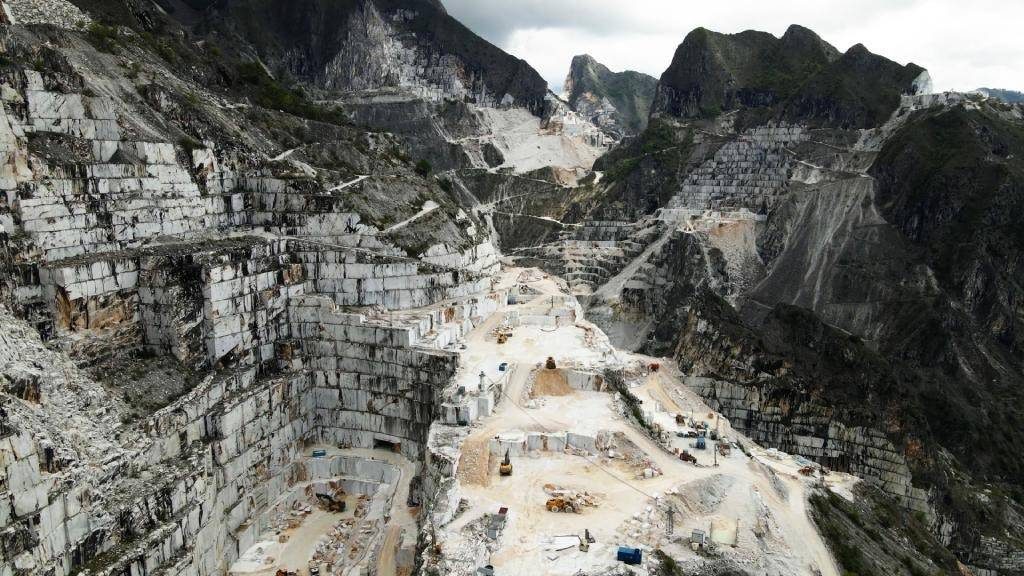
Carrara marble comes from the Carrara region of Italy, where it has been quarried for centuries. Formed naturally over millions of years under extreme heat and pressure. It has become one of the most recognised and widely loved types of marble in the world.
To better understand what is marble, it’s important to appreciate the natural geological transformation behind every luxurious stone surface
Its appeal lies in its softness. The gentle veining, muted tones and ability to elevate interiors without dominating it.
When people ask what Carrara marble is, they’re usually asking why designers and homeowners keep coming back to it. The answer is simple. It feels lasting. Unlike louder, more heavily patterned stones, white Carrara marble brings a kind of luxury that works just as beautifully in modern homes as it does in traditional interiors.
Today, Italian marble Carrara is used across everything from flooring and countertops to bathrooms, feature walls and furniture surfaces. It’s flexible, poised and easy to live with. Which is exactly why it continues to stay relevant across styles and spaces.
Among premium Natural Stones, Carrara marble continues to define luxurious interiors with its understated elegance and timeless character
Key Characteristics of Carrara Marble
The beauty of Carrara marble lies in its restraint, allowing it to adapt effortlessly across many different kinds of interiors.
Airy, Balanced Colour Palette
The gentle white and blue-grey tones bring lightness to a home without feeling stark, cold or overly polished.
Delicate Feather-Like Veining
Unlike heavily patterned stones, Carrara’s subtle veining adds movement and texture, allowing it to complement rather than dominate interiors.
Organic Versatile
Carrara marble adapts effortlessly. Feeling minimal and contemporary in one space, soft and timeless in another, yet naturally belonging in both.
Refined Surface Finish
Carrara marble’s fine grain and soft natural veining allow it to take on beautifully refined finishes. It’s luminous and light-reflective when polished, soft and understated when honed.
Brightens Interiors Beautifully
Designers love Carrara marble for the way it reflects light gently, making rooms feel serene, more open and visually composed.
Timeless Without Feeling Dated
Its restrained palette and subtle movement allow it to evolve effortlessly with changing interior styles and design trends over time.
Adds Character Without Overwhelming
Carrara marble brings richness and depth to a home without competing with surrounding materials, which is why it’s rarely out of place.
Carrara Marble History in Ancient Roman Architecture
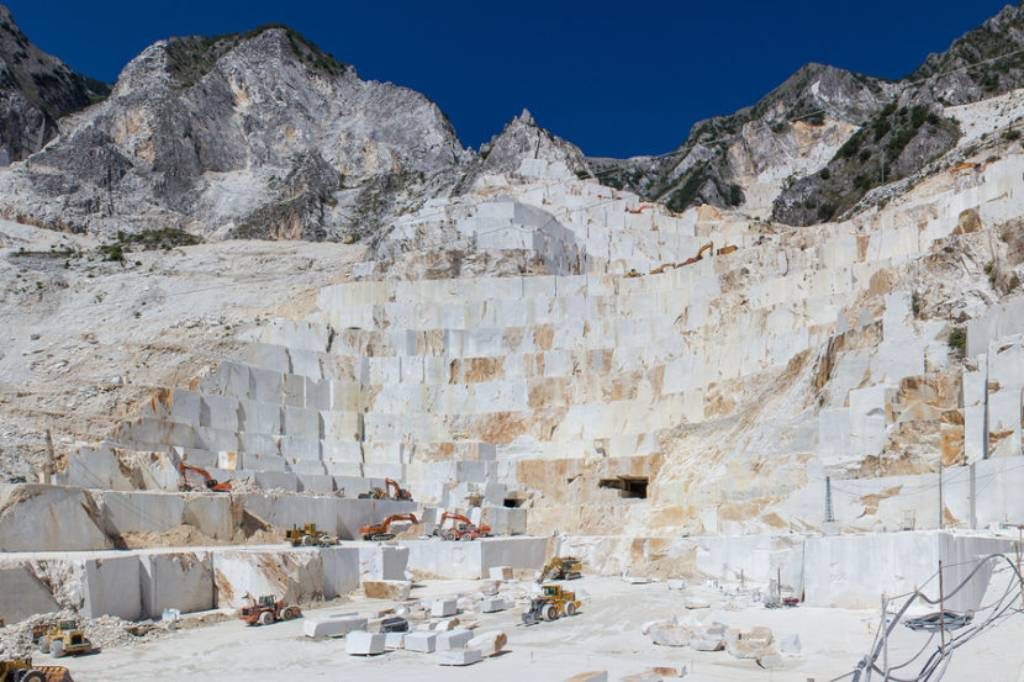
Carrara marble’s story began centuries ago in the mountains of Tuscany, long before it became a feature in modern homes and luxury interiors. It was one of the primary stones used by the Romans for architecture, monuments and sculpture.
Its popularity came from a rare combination of beauty, durability and workability. Carrara marble was strong enough to be used in large architectural structures, while its relatively fine grain allowed artisans to carve intricate details with precision. Because of this, it became widely used across temples, public monuments and sculptural works throughout Ancient Rome.
Over time, Carrara marble became associated with craftsmanship, permanence and refined design. Many of these structures and sculptures still exist today, which speaks to both the material’s longevity and endless appeal.
And perhaps that’s what makes Carrara marble so remarkable even now. Centuries later, it continues to feel relevant within modern settings, bringing a sense of airyness and depth without ever feeling tied to a single era.Celebrity Marbles
Celebrity Marbles are known for their bold patterns and luxurious appearance that instantly enhance any interior space
Statement Marbles are designed to create bold and elegant interiors with a strong visual presence.
Carrara Marble in Architecture and Interior Design
Today, Carrara marble is used across a wide range of architectural and interior applications beyond historic buildings and sculptures. It is commonly featured in kitchens, bathrooms, flooring, wall cladding and furniture pieces within both residential and commercial settings.
One of the main reasons Carrara marble continues to be widely used is its adaptability. Its muted veining and even tones allow it to work across different interior styles, from minimal designs to more traditional settings, while maintaining balance to the overall feel.
Carrara Marble Countertops
Carrara marble is one of the most widely used stones for kitchen countertops and islands because of its cohesive appearance and enduring appeal. Its delicate veining adds subtle movement to the surface, while the neutral white and grey tones pair easily with wood, metal, matte finishes and earthy textures.
One of the reasons white Carrara marble remains popular in kitchens is its ability to adapt across design styles. It can feel sleek in modern-day projects and warm in more traditional interiors without feeling overly trend-driven or decorative.
Carrara Marble Flooring
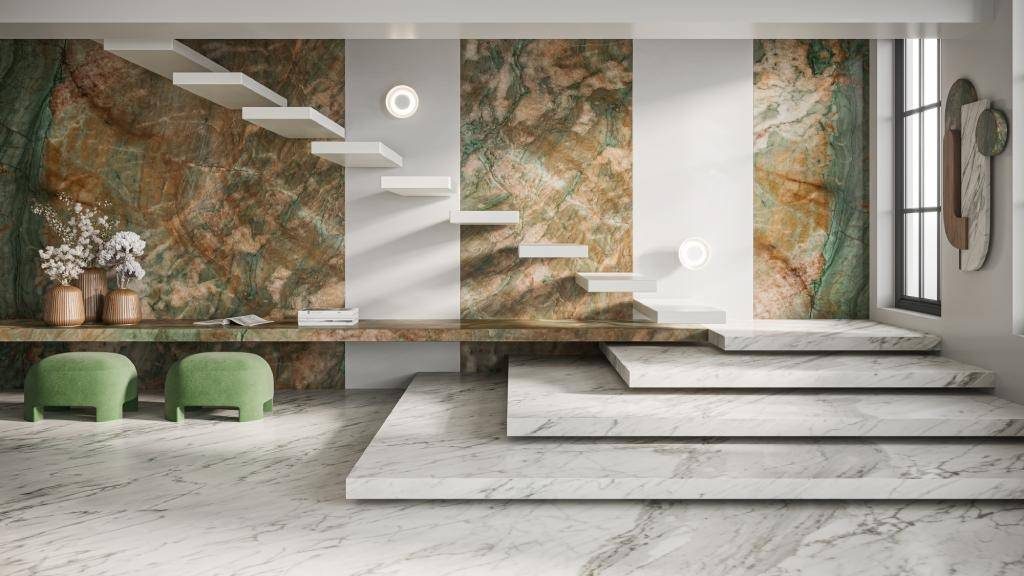
Carrara marble flooring is often used to make homes feel brighter, more open and visually seamless. Its light-reflective surface helps enhance natural light, while the consistent tones create a clean and cohesive look across larger areas.
It is commonly used in living rooms, hallways and bathrooms because it provides a stunning foundation without overwhelming the rest of the interior. Many homeowners also prefer Italian marble Carrara flooring for its appearance and ability to age gracefully over time.
Carrara Marble Wall Applications
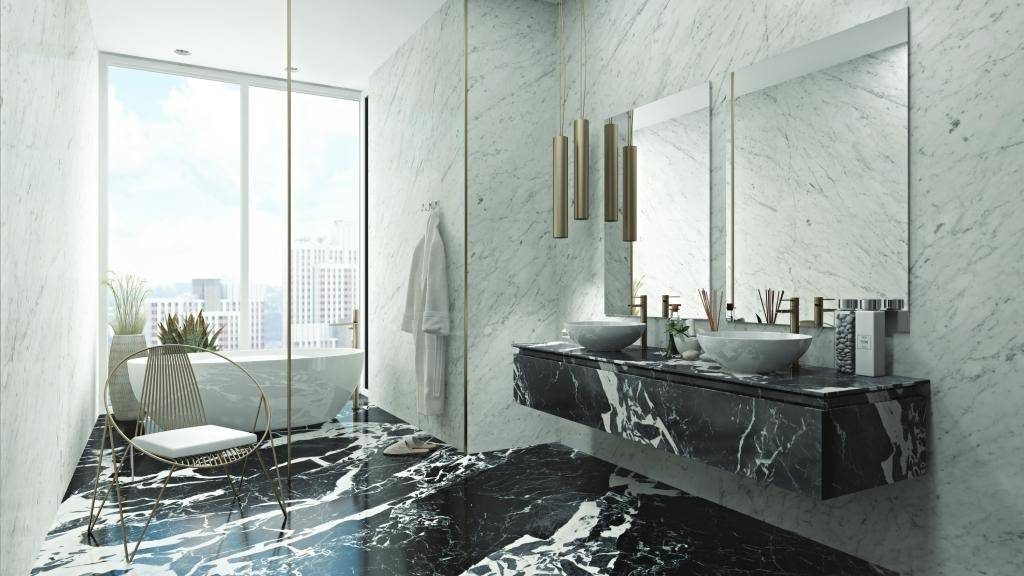
Carrara marble is frequently used on feature walls, bathroom surfaces and TV backdrops to introduce texture and visual depth into a place. The veining patterns help break the flatness of large wall surfaces while still maintaining a clean aesthetic.
Because no two slabs are exactly alike, white Carrara marble walls often bring a sense of individuality to interiors. Its tones and harmonious movement make it especially suitable to feel relaxed and refined forever.
Carrara Marble vs Other Italian Marble
Because it comes from the same region as many other iconic Italian stones, Carrara marble is often compared to Calacatta and Statuario. Initially, most marble can look pretty similar. But the more you look at it, the more the differences start to stand out.
| Characteristic | Softer Carrara Marble Variants | Bolder Carrara Marble Variants |
| Veining Style | Fine, delicate and feather-like veining | Stronger, more dramatic and higher-contrast veining |
| Overall Appearance | Subdued, laid-back and more unobtrusive | Richer, more statement-making and visually striking |
| Background Tone | Warmer whites and muted grey undertones | Brighter whites with sharper contrast |
| Interior Suitability | Minimal, warm and everlasting interiors | Elevated settings requiring stronger visual impact |
| Rarity & Value | More commonly available | Rarer slabs are often considered more exclusive and premium |
What makes Carrara marble so distinct is its subtlety. While some stones are designed to be statement pieces, Carrara has a restrained and more subtle sophistication. It’s easier to live with, easier to style and never comes across as excessive.
Carrara vs Calacatta Marble
The conversation around calacatta marble vs carrara usually comes down to personality. Both are beautiful Italian marbles, but they create very different moods.
Carrara marbleis restrained and more understated, with gentle grey veining and a slightly muted base that is both peaceful and poised.
It blends very seamlessly, bringing depth without overpowering the rest of the design. That versatility is part of what has made it everlasting across so many different styles of interiors.
Calacatta marbleon the other hand, is far more dramatic. Its bright white background and bold, striking veins are designed to stand out immediately.
That’s really the difference. Calacatta tends to be chosen when the marble itself is meant to be the centrepiece. Carrara is chosen when the goal is something subtle and more enduring. A kind of richness that doesn’t need to announce itself to be noticed.
Carrara vs Statuario Marble
The difference between Carrara and Statuario marble is a little like the difference between quiet confidence and full-blown drama.
Carrara marble has a muted, more even-toned look. Its veining is gentle, evenly spread and subtle. Which brings peace and effortless polish.
Statuario marble is the opposite in many ways. Brighter white in tone, sharper in contrast and far more dramatic in movement, it’s designed to command attention the moment you walk into a room.
That’s why so many designers still return to white Carrara marble when they want something that lasts forever. It doesn’t overpower or compete with everything around it. Instead, it brings a kind of unobtrusive richness that’s detailed, relaxed and incredibly easy to live with.
Why Carrara Marble Remains Popular in Modern Design
Trends in interiors change constantly. One year everything is bold and dramatic, the next it’s powdery minimalism. But somehow, Carrara marble is never out of place. It has survived every shift in design because it doesn’t belong to a single style or moment. It just works.
Part of its appeal is how effortlessly it adapts. In modern homes, it comes across as clean and elevated. In traditional interiors, it brings richness with character and history. And as furniture, colours and décor evolve over the years, Carrara continues to complement them rather than clash with them.
When designers think about what Carrara marble adds to a living area, the answer is usually the same. Reliability. Poise. And a kind of quiet beauty that never seems to age.
Conclusion: The Everlasting Appeal of Carrara Marble
Perhaps that’s why Carrara marble has lasted for centuries without ever needing to reinvent itself. While trends continue to shift, it remains one of the few materials that feels equally at home across generations of design. Not because it demands attention, but because it quietly improves everything around it.
When comparing natural stone vs artificial tiles, authentic Carrara marble continues to stand apart for its depth, longevity and refined luxury
And maybe that’s what forever relevant design really is. Not something that follows a particular era or style, but something people continue choosing year after year.
FAQ
Carrara marble is commonly used in kitchens, bathrooms, flooring, feature walls and furniture pieces. Designers often choose it because its subtle veining adds texture and depth to a space without overpowering the overall design.
Yes, Carrara marble is widely used for kitchen countertops because of its gorgeous appearance. It works especially well in bright, contemporary and old-school kitchens. Like most natural stones, it does require sealing and regular maintenance to protect it from stains and etching.
Carrara marble is known for its white or blue-grey surface, delicate grey veining and pared-back appearance. Compared to more dramatic types of Italian marble, it has a gentler look that works across both traditional and current-day interiors.
Carrara marble is an Italian marble sourced from the town of Carrara in Tuscany, Italy. It is known for its powdery white or blue-grey background and delicate grey veining. Carrara marble became famous through its use in Roman architecture and Renaissance sculptures. And today it remains popular in elevated interiors because of its flexible appearance.
Carrara marble typically has subdued grey veining and a more subtle appearance. While Calacatta marble features a brighter white background with bolder, more dramatic veins. Carrara is often chosen for subtle and adaptive interiors, while Calacatta is preferred to make a statement.
Carrara marble is generally more shy in a sense than many other types of Italian marble. While stones like Calacatta are known for bold veining and dramatic contrast, Carrara is valued for its subtle grey patterns. Making it easier to use across different styles of interiors.
Carrara marble has been used in architecture for centuries because of its durability and adaptability. Its long history in Roman architecture and sculpture has also made it one of the most recognised and respected types of Italian marble in the world.