Understanding The Types of Marble – Origins, Colours and Applications
Posted on by The Quarry
In our previous blog, we spoke about what marble actually is. We looked at limestone, pressure and the slow geological process that turns sediment into stone with depth and character. That foundation matters because once you understand how marble forms, something else becomes obvious.
Not all marble feels the same.
You may have already sensed this yourself. Some slabs feel calm and almost quiet. Others feel bold and architectural. Some may suit expansive flooring. Others ask to be used as a statement wall. The reason lies in the types of marble and how they are classified.
Marble can be grouped by origin, by colour and pattern, by mineral composition and by application. These categories overlap. When you choose marble for your home, you are usually making decisions across all of them at once, even if you are not consciously thinking in those terms.
Let us walk through them clearly, so that the next time you stand in front of a slab, you know exactly what you are responding to.
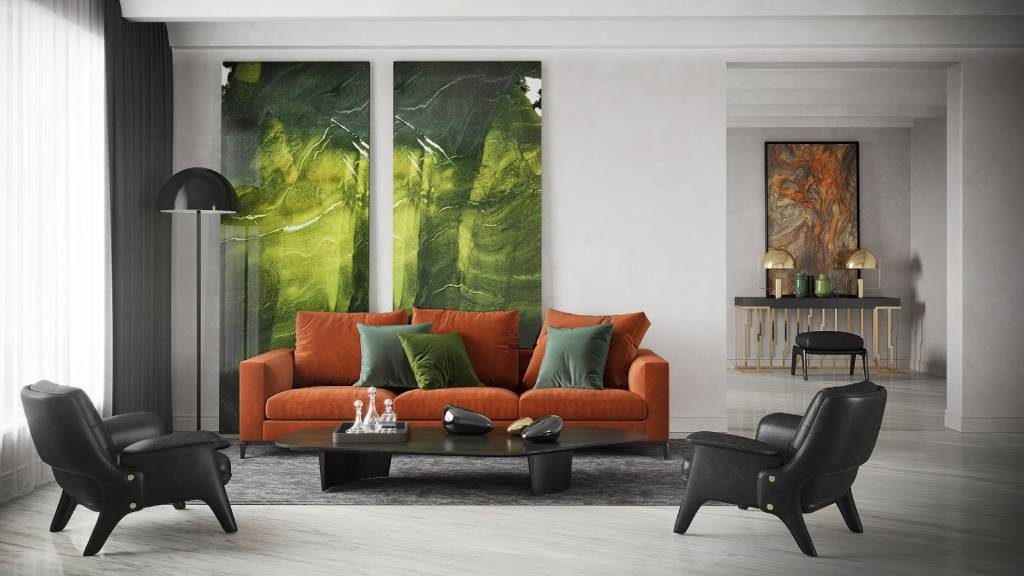
Different Classification of Marble Types
The idea of “types of marble” can sound more complicated than it is. At its core, classification simply helps you narrow your choices.
If you begin with the origin, you are asking where the stone was formed and quarried. Geography influences mineral presence, density and veining style. If you focus on colour and pattern, you are responding to the visible movement and tone of the slab. If you think about application, you are considering how the stone will perform in your space.
All three filters matter.
For example, you might be drawn to Italian marble for its reputation, choose white marble for its lightness and then decide on a particular grade because you are installing it as flooring. That layered decision making is normal. It is also why understanding types of marble is practical rather than academic.
You can also explore Luxury Marbles
Popular Types of Marble by Origin
When people talk about types of marble, origin is usually the first thing that comes up. Italian marble. Indian marble. Greek marble. It sounds straightforward, almost like choosing a country of manufacture. It is more layered than that.
Geography influences mineral content, yes. It also influences how the stone feels visually. The climate, the geological pressure and even the age of the formation affect the way the veins move across the slab. You do not need to memorise this. You simply need to recognise that origin changes character.
Understanding Italian Marbles Quality helps evaluate authenticity and finishing standards.
Indian Marble Types
Indian marble has always felt familiar in residential architecture here. There is a comfort to it. Makrana marble, used in the Taj Mahal, is known for its density and relative consistency. Ambaji marble leans lighter. Udaipur varieties carry softer movement.
What stands out with many Indian marbles is restraint. They rarely overpower a room. If you are flooring an entire home, that matters. You do not want the stone competing with every piece of furniture. Indian marble often allows the rest of the interior to breathe.
That does not make it simpler. It makes it versatile.
See commonly used Popular Marbles for residential flooring and interiors.
Italian Marble Types
Italian marble carries a different personality altogether. The veining tends to be more pronounced. Statuario, Calacatta and Carrara are not subtle stones. They create contrast and drama almost effortlessly.
When you bring Italian marble into a space, you are rarely asking it to disappear. It anchors bathrooms. It defines dining tables. It becomes the reason the room feels elevated rather than merely finished.
There is also a historical weight to it. Italian marble has been used in sculpture and architecture for centuries. That association still shapes how we perceive it today.
You can also read about comparison insights of Italian Marble Vs. Indian Marble.
Other International Varieties
Marble from Greece, Turkey and Spain introduces yet another layer of nuance. Greek marble such as Volakas often balances movement with calm. Turkish varieties can lean towards warmer tones. Spanish marbles sometimes feel earthier and grounded.
It would be easy to reduce this to a checklist of countries. In reality, origin is about temperament. Some stones feel bold. Some feel composed. That difference often comes down to where they formed.
Types of Marble Based on Colour and Pattern
You may not always start with the origin. Sometimes, you simply respond to colour. The way marble interacts with light, space and surrounding materials often becomes the deciding factor. Colour and pattern shape the visual mood of a room just as much as the type of stone itself.
White Marble Varieties
White marble remains timeless because it interacts with light beautifully. It can make a compact room feel larger and more open. When the veining is organic rather than rigid, the surface reflects daylight in a way that feels soft rather than stark.
This is why white marble is often used across expansive flooring, kitchens and bathrooms. It provides brightness without overwhelming the rest of the design.
Dark Marble Varieties
Dark marble shifts the atmosphere entirely. Deep greens, blacks and rich browns introduce intimacy and contrast within a space. Instead of reflecting light outward, these stones absorb it, creating depth and visual weight.
In dining rooms, lounges or powder spaces, dark marble often becomes a grounding element that adds character and sophistication.
Veined & Patterned Marble
Then there are the marbles that refuse to be background. Bold veining, dramatic swirls and strong mineral contrast create slabs that behave almost like natural artwork.
These stones do not quietly support a design. They lead it. Feature walls, statement staircases and sculptural furniture pieces often rely on highly veined marble to anchor the space visually.
Understanding these distinctions helps you move away from trends and toward intention when selecting marble.
Some dramatic varieties are closely related to Onyx Marble used in statement interiors.
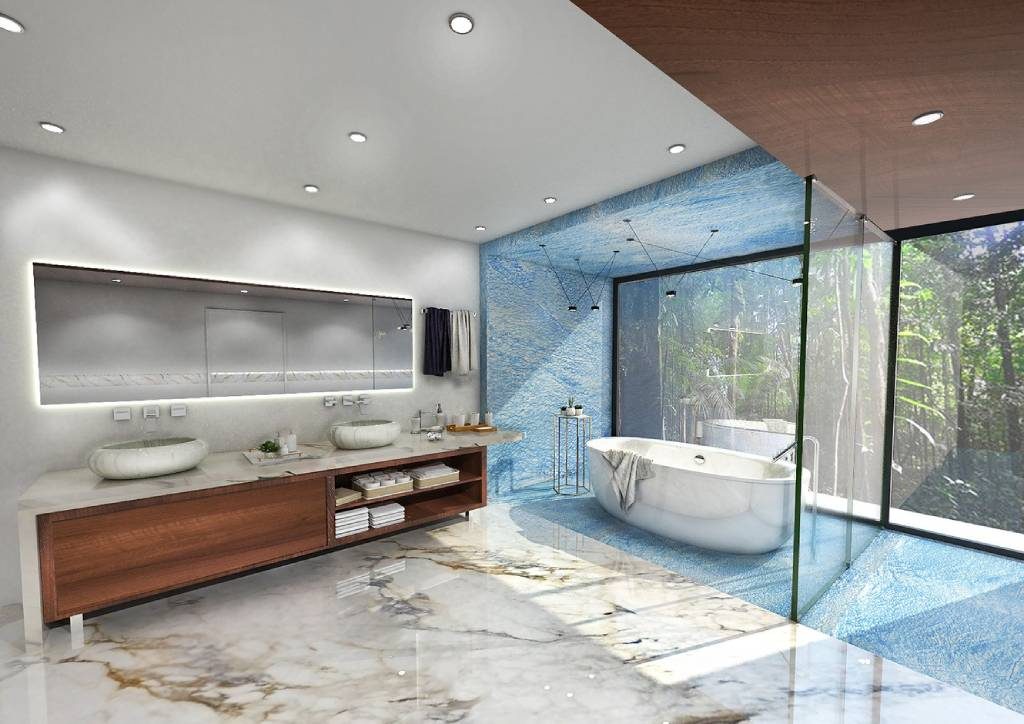
Types of Marble Based on Application
This is where practicality comes into focus. A slab that looks beautiful on its own may not always be the right choice once daily use is considered. Density, finish and durability begin to matter depending on where the marble is installed.
Structural & Flooring Grades
For flooring across large areas, consistency and durability are important. Subtle veining and balanced tones often work best because they create visual continuity without overwhelming the space.
Decorative & Architectural Grades
Feature walls, staircases and vertical surfaces allow for more expressive marble. Bold veining and dramatic patterns can be used here because these surfaces experience less wear.
Specialised Use Cases
Marble used in furniture, countertops or sculptural elements requires careful attention to slab thickness, grain direction and workability during fabrication.
Browse personalised marbles often used for statement surfaces and furniture pieces.
Natural vs. Engineered Marble Variants
There is also the question of authenticity.
Natural marble forms through metamorphism over millions of years. Each slab carries irregularity. Veins shift unexpectedly. Mineral deposits vary.
Engineered marble is manufactured. It offers predictability and repetition. For some projects, that uniformity is desirable.
If you appreciate individuality, natural marble has a depth that feels alive. If you prefer controlled consistency, engineered options may feel practical.
Neither choice is inherently superior. It depends on what you want the material to express.
Tips to Identify Different Types of Marble
When you begin exploring different types of marble, a few simple observations can help you understand what you are looking at.
Look at the veining pattern
Natural marble often shows irregular movement and mineral variation across the slab, while engineered marble tends to appear more uniform and repetitive.
Observe colour depth and variation
Natural marble typically carries subtle tonal shifts caused by mineral deposits formed over time.
Check the slab edges and thickness
Natural marble slabs are usually cut from quarry blocks and may show natural layering or crystalline texture.
Consider the origin and quarry source
Knowing where the marble was quarried often helps identify its geological character, density and typical veining style.
In practice, the most reliable way to understand marble is to view full slabs rather than small samples. The scale reveals the true movement, structure and personality of the stone.
Choosing the Right Marble Type for Your Home
Ultimately, choosing between types of marble is less about hierarchy and more about alignment.
Think about how you want your space to feel five years from now, not just on installation day. Consider how much movement you want in your surfaces. Reflect on how much maintenance awareness you are comfortable with.
Marble responds to light, to use and to time. That responsiveness is part of its appeal.
At The Quarry, we curate marble from 179 quarries across 31 countries and finish slabs in Italy to a calibrated 20 mm world standard thickness. When you visit the Quarry Gallery by appointment, the difference between viewing a small sample and a full slab becomes immediately clear. Scale changes perception. Veining makes sense. Density feels tangible.
At The Quarry CO: LAB, we explore distinctive stones that go beyond conventional selections while remaining grounded in geological authenticity, brought together by the world's greatest craftsmen.
Once you begin to see marble as a family of materials shaped by origin, colour and use, the selection process becomes far more intuitive. You stop asking which marble is best and start asking which marble belongs in your home.
FAQ
Origin can influence mineral composition, density and veining style. Its quality ultimately depends on the specific quarry, grading and finishing process rather than the country alone.
Start with the application. Consider whether the marble will be used for flooring, walls or furniture. Then think about colour, pattern and how much visual movement you are comfortable with. Alignment between space and stone is more important than popularity.
White marble and dark marble serve different design purposes. White marble reflects light and creates openness. Dark marble introduces depth and contrast. The choice depends on the atmosphere you want to achieve.
The main types of marble are usually classified by origin, colour and application. You will commonly hear of Indian marble, Italian marble and other international varieties, as well as white, dark and heavily veined marbles depending on appearance.
Natural marble forms over millions of years through metamorphism. Engineered marble is manufactured by combining crushed marble with resin. Natural marble offers variation and individuality, while engineered marble provides uniformity.
Indian marble generally offers softer movement and warmer tones, while Italian marble is often known for high contrast veining and refined patterns. The difference comes from geological formation and mineral composition.
Durability depends on the density and how the marble is used. Some varieties are better suited for high traffic flooring, while others are ideal for decorative applications. Proper installation and maintenance also influence longevity.
The best type of marble depends on where you are using it and the mood you want to create. For large flooring areas, more restrained varieties often work well. For feature walls or statement spaces, bold veined marbles are commonly preferred.