How To Check Italian Marble Quality: A Discerning Buyer’s Guide To Statuario Marble
Posted on by The Quarry
Italian marble can look flawless under showroom lights, but the real test begins when you look closer. For a premium stone like Statuario, beauty should come with authenticity, density, precise finishing and proof of origin.
Looking closely at the stone reveals the craftsmanship behind its finish and the authenticity of its natural character. Details such as density, veining, polish and origin help distinguish an exceptional slab from one that simply appears impressive under showroom lighting.
This guide keeps it simple. You will learn how to check quality of Italian marble in a showroom, so you can choose with more confidence and avoid costly mistakes later.
Assessing the Italian Marble’s Porosity
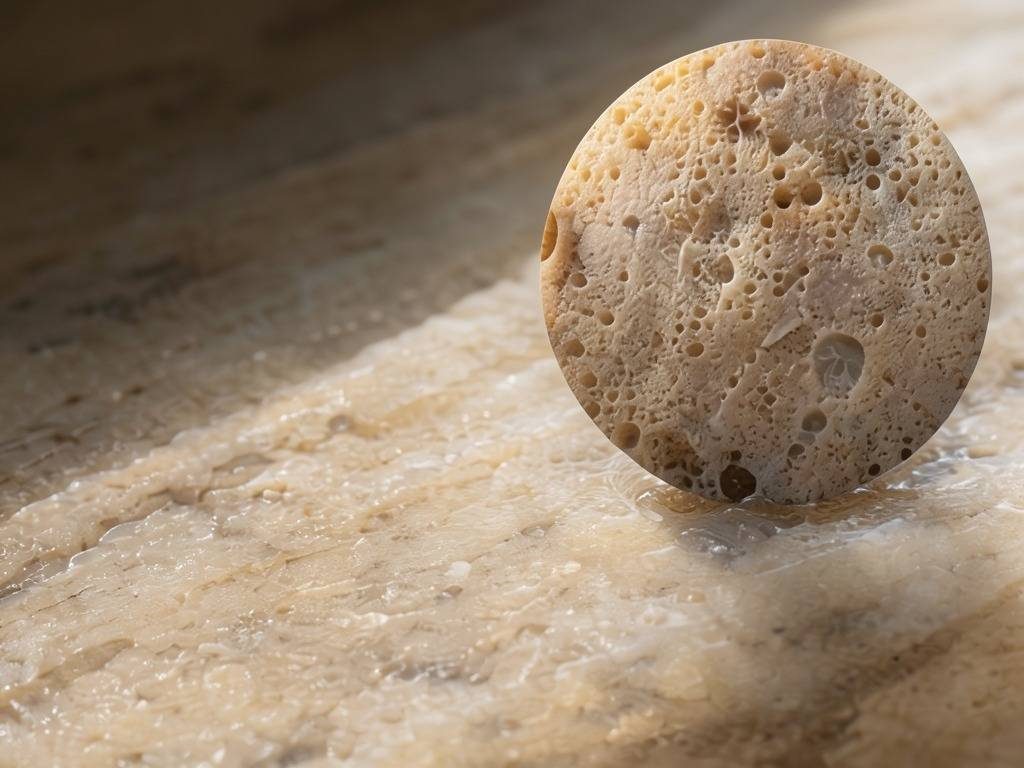
Porosity is the clearest early signal of a slab’s density and stain resistance, and it takes only a few drops of water to reveal it.
The rate at which the water is absorbed indicates how tightly composed the stone is. When the droplets remain on the surface for longer, the marble usually has low porosity, meaning it is denser and more resistant to stains. This is a quality associated with premium natural stones selected for long-term performance. Faster absorption may indicate a more porous slab and calls for closer evaluation.
This simple test remains one of the most reliable ways to understand how to check Italian marble quality before making a selection.
Checking the Italian Marble’s Vein Authenticity
Next, look at how the veining flows across the slab over the slab after having checked the surface quality.
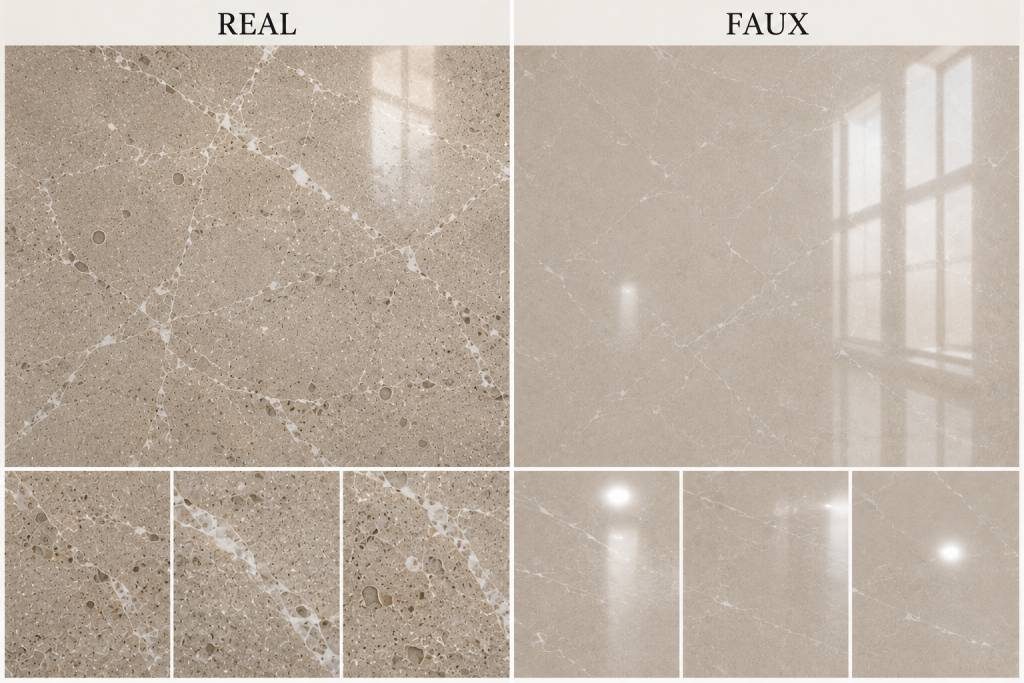
Back up and look at the full pattern. Authentic marble is never a repeat. To give it the natural movement and irregularity of real stone, its veins have different directions, widths and intensity.
This variety is particularly well exemplified in collections like the Flaunt Collection in which each slab has its own unique makeup. If the veining is too even, symmetrical or replicated, it can be a sign that the surface is artificial or printed.
Recognising these natural variances is an important element of understanding how to check the quality of Italian marble without reliance on professional equipment.
Evaluating the Italian Marble’s Finish Excellence
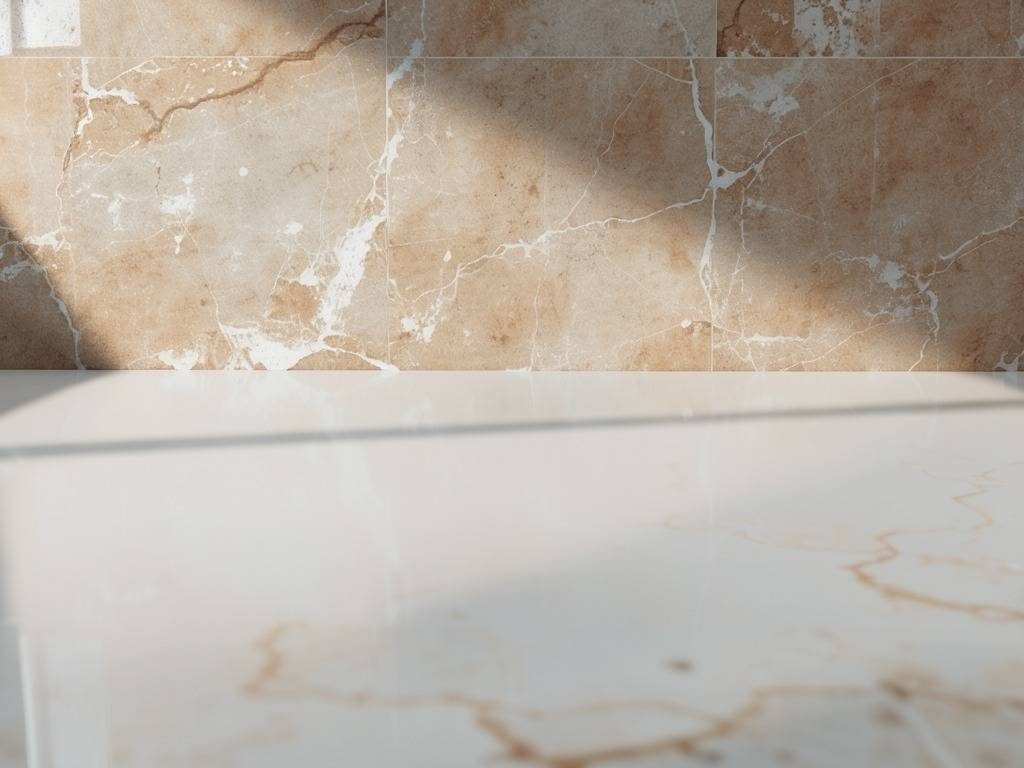
The finish shows that the marble has been polished and prepared with great care when the slab looks balanced.
The surface response to light is especially telling. A well completed slab will give off light uniformly throughout its entire surface, with an even polish and no obvious discontinuities. This demand for perfection is particularly crucial for the Statement Collection where the stone is meant to be the visual centrepiece.
Dull spots, cloudiness or uneven shine may suggest discrepancies in polishing or processing. With time, these flaws might be more apparent and impair how well the marble holds its gloss.
Confirming Italian Marble’s Dimensional Precision
A marble slab may look polished and visually consistent at first glance, but the way it has been cut and processed matters just as much.
This part is less obvious, but just as important. Look at the edges. Feel the slab. This is about dimensional precision.
Is the thickness consistent? Are the edges clean and even? Or do you notice slight irregularities?
Good marble is processed with accuracy. When that precision is missing, it creates problems during installation and later on as well.
It’s one of those details that quietly defines how to check quality of Italian marble beyond just appearance.
Finding out the Italian Marble’s Acoustic Density
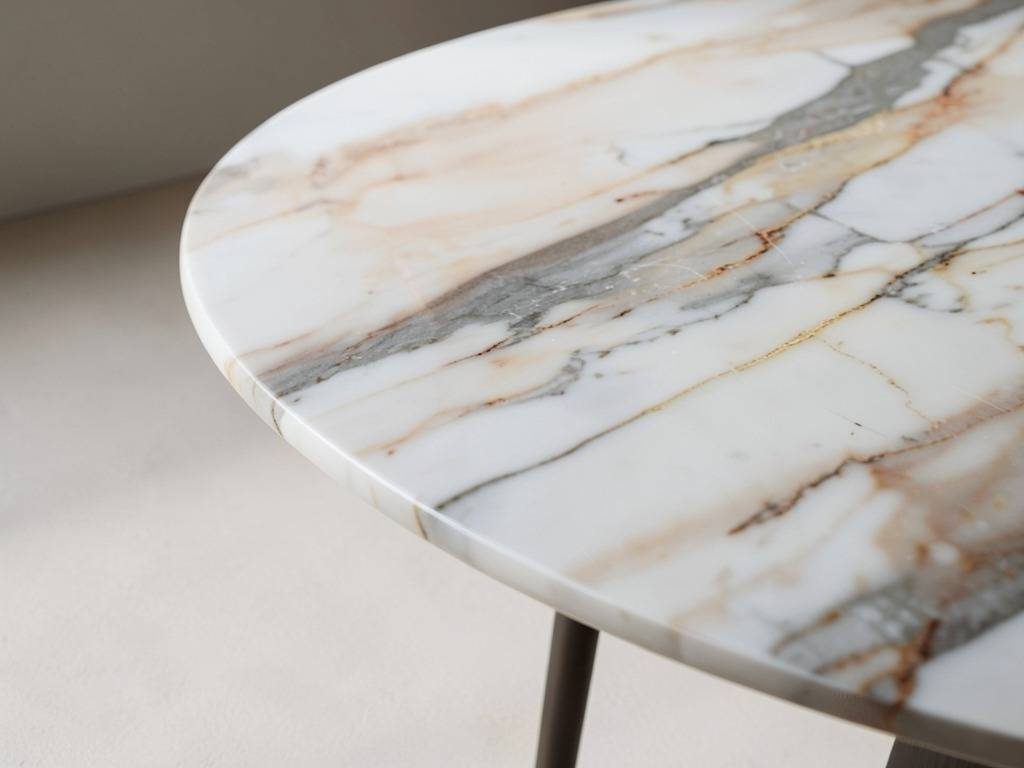
After checking the visible details, a tap test can offer a useful indication of the marble’s internal strength and quality.
A gentle tap on the slab gives a quick read on its internal density and structural integrity. A clear, ringing sound generally suggests that the marble is dense and structurally sound, while a dull response may point to internal cracks, voids or areas of weakness.
Although this test cannot replace a professional assessment, it can reveal concerns that are not visible on the surface. It is therefore a useful part of understanding how to check Italian marble quality before making a final selection.
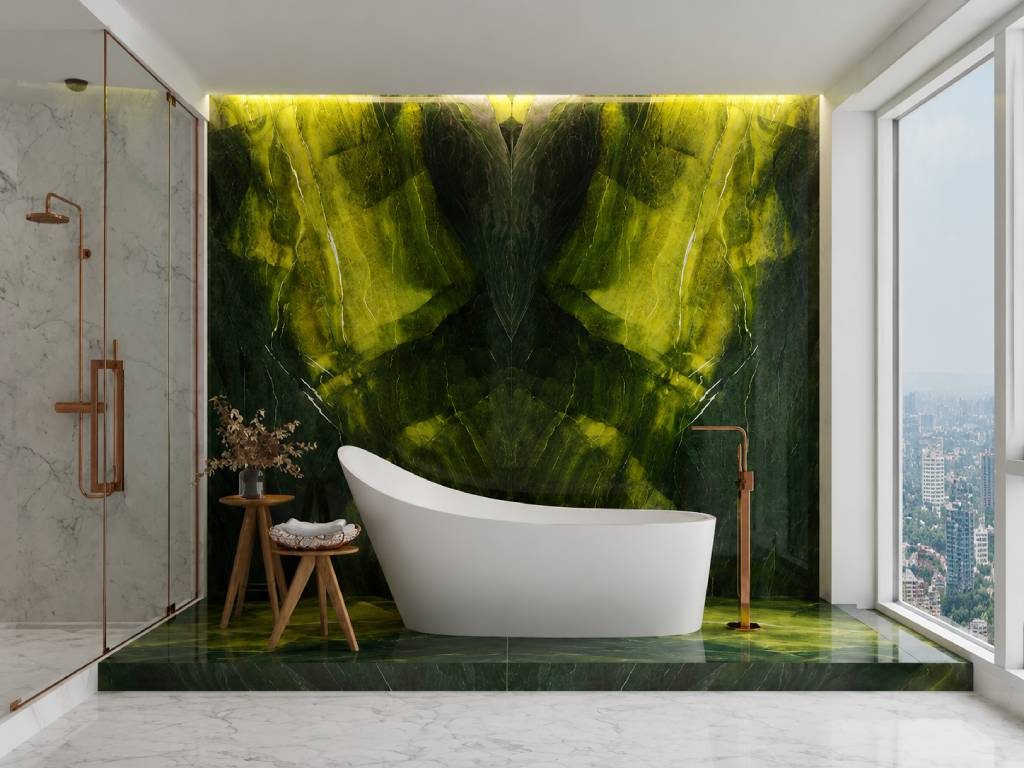
Careful Oversight that Saves Costs
Even after the major quality checks, smaller inconsistencies can still affect long-term performance and installation. This is where patience pays off. Take your time. Look closely.
Check for hairline cracks, filled patches, or any inconsistencies. Sometimes they’re subtle. Especially under showroom lighting.
Now turn the slab around if you can. The backside often reveals repairs more clearly.
These are small things, but they can turn into big issues later. Paying attention here is a very real part of knowing how to check quality of Italian marble before you commit.

Verified Origin Check
After checking the slab’s physical quality and finish, the final step is to know where the marble actually comes from. Origin plays a major role in confirming authenticity, especially with premium Italian stones like Statuario.
At some point, you have to ask directly. Where is this coming from? This is your origin verification.
Much of the world's Rare and Precious Marble is sourced from renowned quarries, making verified origin an essential part of the buying process. That’s not just a name. It’s part of what defines its authenticity. Ask for documentation, import details or proof.
Investing in a collection like the Celebrity Collection calls for certainty, not assumption, and origin verification is where that certainty begins. And this step is essential in how to check Italian marble quality with confidence.
Quick Buyer Checklist: How to Identify High-Quality Italian Marble in Minutes
After a good look at the slab, this simple checklist lets you decide if the marble is worth going ahead with.
- Water test: The water should be absorbed slowly suggesting low porosity.
- Vein authenticity: The veining should look natural, diverse and non-repetitive.
- Finish excellence: The surface should be uniformly illuminated, without any dull areas.
- Dimensional accuracy: The thickness and edges should be perceived as uniform.
- Tap test: A clearer, ringing sound usually implies a superior density.
- Surface check: No obvious hairline cracks or extra fillers.
- Verification of origin: The details and documents of import need to be verified.
Once you know them, checking Italian marble quality becomes second nature. If you're still undecided about materials, the difference between natural stone and artificial tiles will help you make a more informed long-term investment based on durability, authenticity and visual appeal.
FAQ
It’s typically priced at a premium because of its origin, rarity and finish, but is often considered a long-term investment due to its quality and enduring appeal.
Real marble shows natural imperfections and irregular veining. If it looks too perfect or too repeated, it’s likely that it’s artificial.
Start with simple checks like the water test, vein authenticity, finish excellence, and the tap test. High-quality marble feels dense, looks naturally varied and reflects light evenly.
It’s known for its fine grain, natural translucency, elegant veining and refined finish. Along with strong long-term performance.
Carrara is softer and more subtle. Calacatta is bold and dramatic. Statuario balances both with striking veins on a bright white base.
Density, porosity, finish, origin and structural integrity all come together to define quality.
Statuario, Carrara and Botticino are popular choices, depending on your space and design intent.