Marble Design for Home: Elegant Ideas for Luxury Interiors
Posted on by The Quarry
Marble changes the way a home is experienced because no two slabs look exactly alike. The veining, colour movement, finish and scale of the stone all influence how a room feels once it is lived in, furnished and lit through the day.
A well-planned marble design for home interiors can make large spaces feel more composed, small corners feel more intentional and everyday areas feel more refined. It works across floors, walls, bathrooms, kitchens, foyers and architectural details, as long as the stone is chosen with the room’s scale, usage and lighting in mind.
This guide looks at how marble can be used across different areas of a luxury home, including walls, bathrooms, kitchens, foyers and carefully planned floor design of marble choices that bring the space together.
How Marble Transforms the Look of a Home
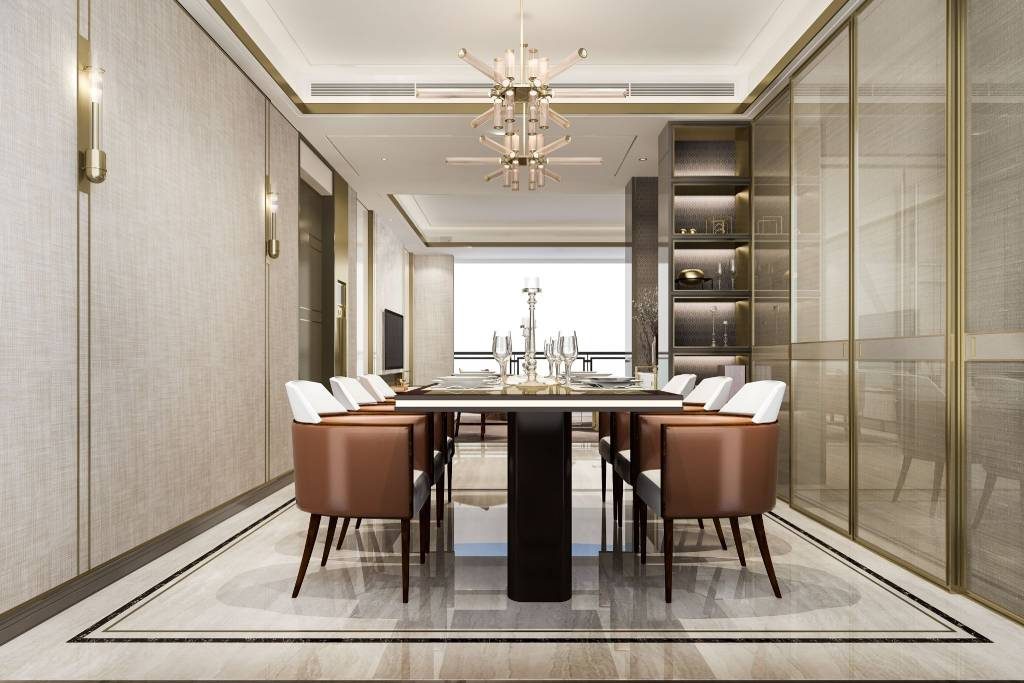
Marble changes a room by affecting how open, bright or grounded it feels. A white or softly veined marble can make compact rooms feel lighter because it reflects natural and artificial light well. A darker or more heavily veined marble works better as a focused feature, such as a TV wall, foyer backdrop or dining wall, where it can give the space more depth without making every surface feel busy.
In open-plan homes, a consistent house marble design can help connect living, dining and passage areas without using too many different materials. Large slabs and fewer joints create a cleaner look, especially in apartments, villas and luxury residences where visual continuity matters.
The finish also changes the result. Polished surfaces reflect more light and are good for formal areas, but honed or leathered finishes can be calmer and preferable when a softer, less reflective surface is needed. Used thoughtfully, marble becomes part of the architecture rather than a decorative layer added later.
Marble Design Ideas for Different Areas of Your Home
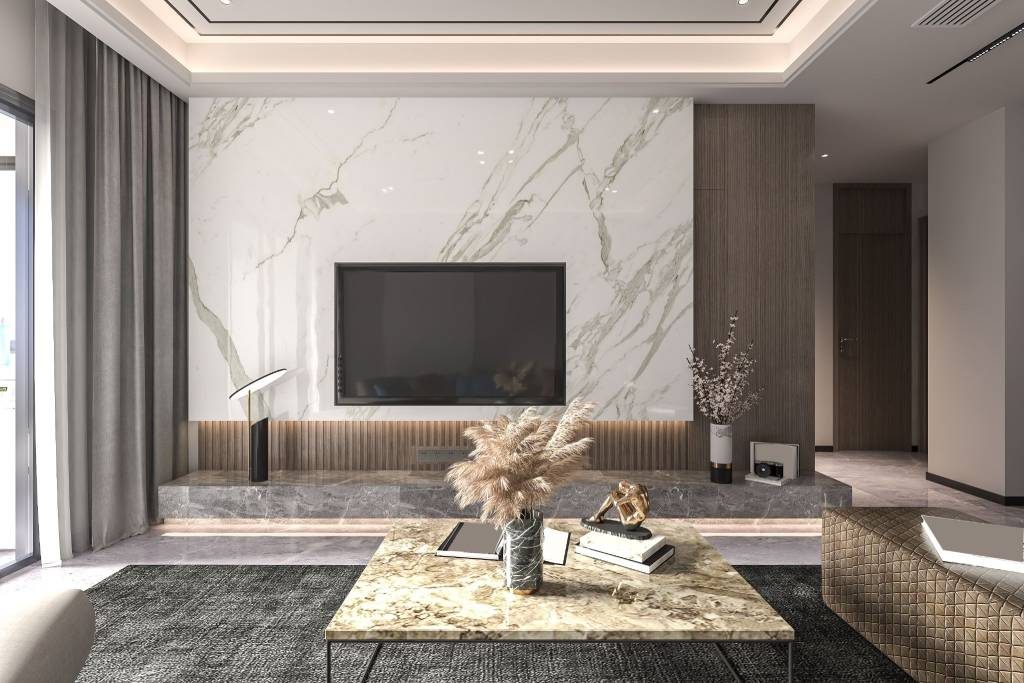
Every room needs marble to do a different job. In a living room, it may need to bring scale and continuity. In a bedroom, it should feel quieter and more measured. In bathrooms and kitchens, the finish, sealing and placement matter as much as the look of the stone. The right marble application begins with how the room is used every day.
Living Room Marble Designs
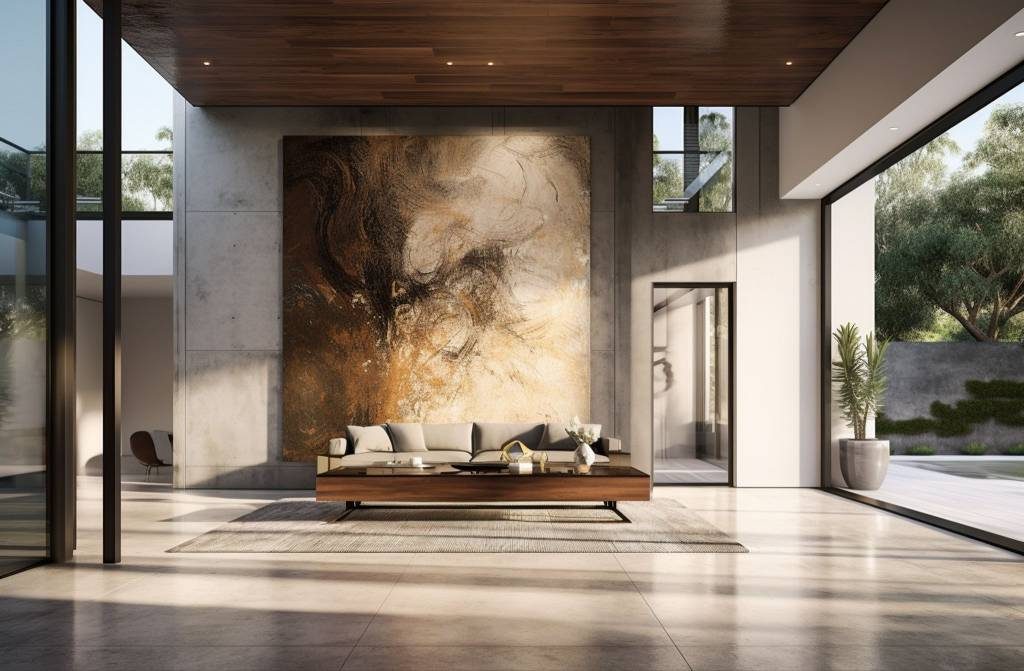
The living room usually carries the largest visible marble surface in a home, so the design needs to feel balanced from every angle. A planned marble design for living room walls or flooring works best when the slab scale, furniture layout and lighting are decided together.
For feature walls, choose Statement Marbles or slabs with enough movement to be appreciated from a distance. For flooring, lighter marble with controlled veining is often easier to use across large areas because it allows rugs, sofas, art and lighting to sit comfortably within the room.
Key living room marble ideas include:
- A floor-to-ceiling marble feature wall works well behind the main seating area when the rest of the room uses simpler furniture and warm, indirect lighting.
- A marble TV backdrop looks cleaner when wiring, cabinetry, grooves and lighting are planned before installation.
- Seamless marble flooring can connect the living, dining and passage areas in open-plan homes.
- Bookmatched marble panels are ideal for large walls where the veining has enough space to align properly.
- A marble-clad fireplace surround suits formal living rooms, especially when paired with wood, brass or textured upholstery.
- Decorative marble border design for home living spaces can define seating zones while keeping the main flooring material consistent.
Bedroom Marble Designs
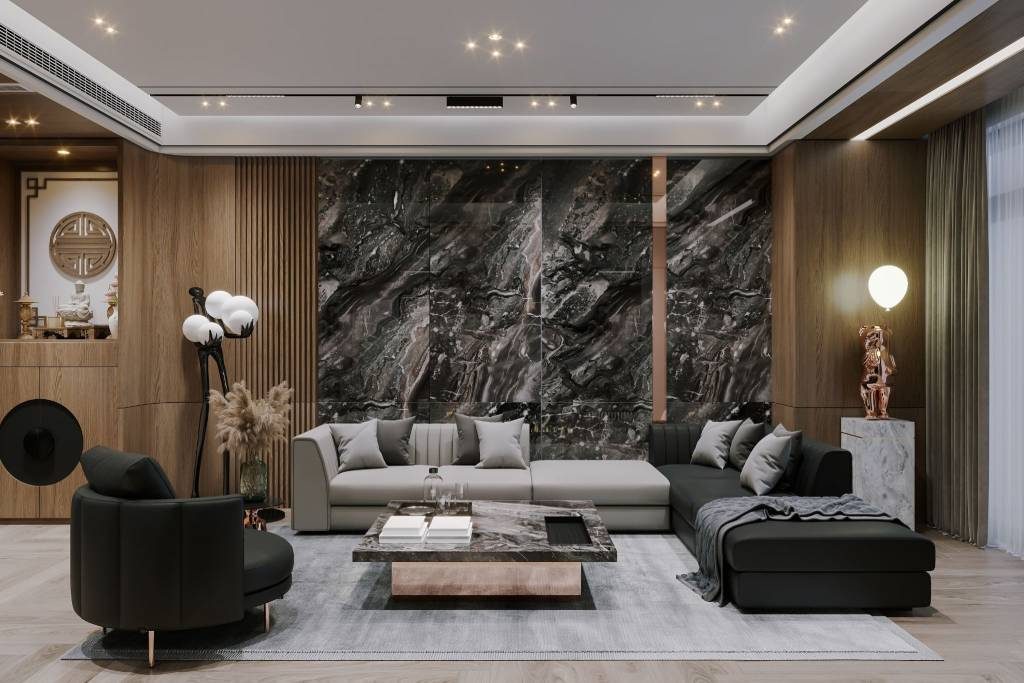
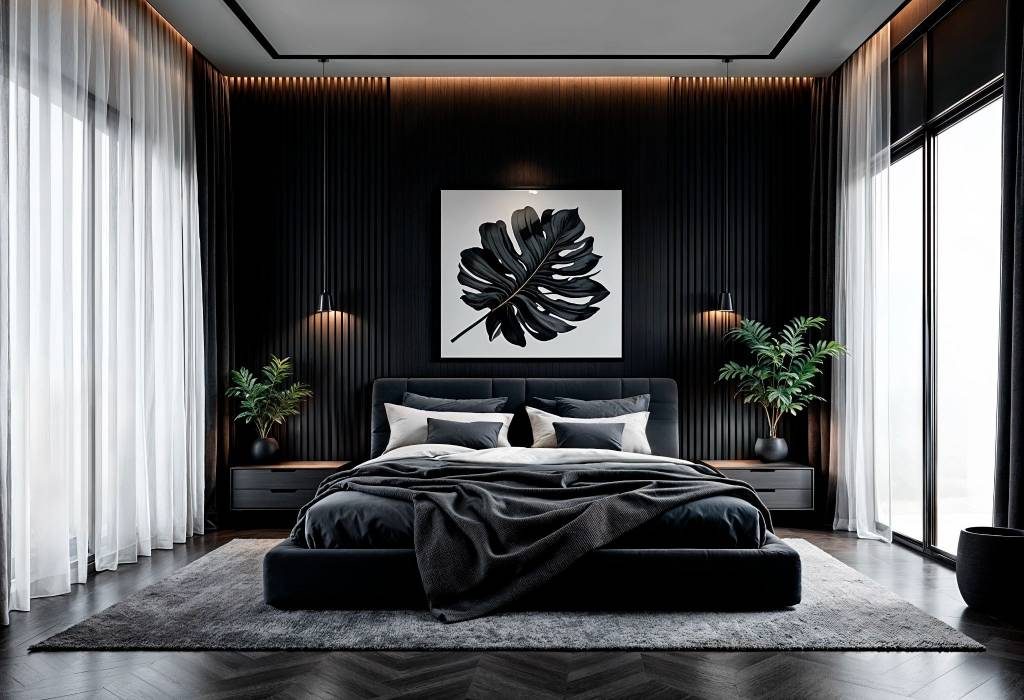
In bedrooms, marble should feel calm and intentional. It is best used as one focused detail, such as a headboard wall, dressing area backdrop or small niche, so the room still feels restful.
Softer veining, warmer tones and honed or matte finishes usually work better here because they sit well with fabric, rugs, wood and warm bedside lighting.
Bedroom marble design inspirations:
- A marble headboard feature wall can replace artwork when the slab has gentle movement and the bed linen is kept simple.
- Softly veined accent panels, such as Flaunt Marbles, suit bedrooms that need a refined focal point.
- Marble flooring paired with area rugs adds polish while keeping the room comfortable underfoot.
- Integrated marble bedside niches work well in compact bedrooms where storage and design need to come together.
- A dressing area marble backdrop suits walk-in wardrobes and vanity corners where the stone can be viewed up close.
- Minimal marble wall detailing is useful when the room already has strong furniture, lighting or decorative elements.
Bathroom Marble Designs
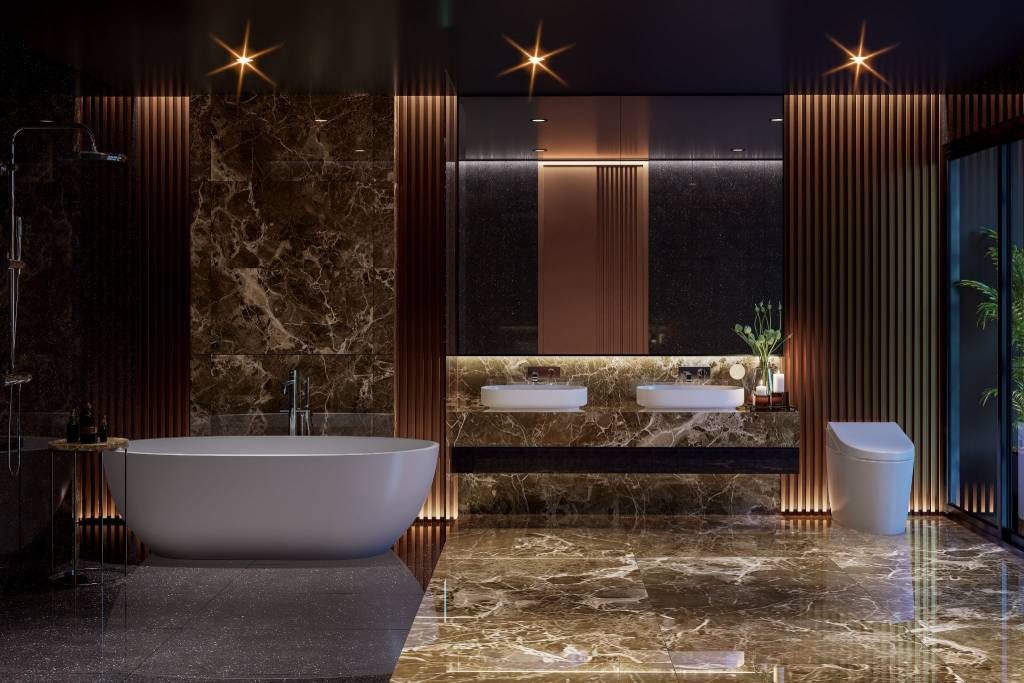
Bathrooms are one of the most effective areas for marble, provided the finish and installation are chosen carefully. Since the space deals with moisture, water flow and regular cleaning, sealing, drainage and surface grip need to be planned from the beginning.
Marble works beautifully on full-height walls, vanity backdrops, shower areas and bathtub surrounds. For flooring, a honed or low-slip finish is usually more practical than a highly polished surface.
Popular applications for bathroom marble include:
- Marble vanity walls pair well with mirrors, sconces and fixtures in brass, chrome or brushed metal.
- Full marble shower enclosures need proper sealing, slope planning and professional installation.
- Seamless floor-to-wall marble can work beautifully in larger bathrooms when the veining is kept controlled.
- A marble backdrop for a freestanding tub suits master bathrooms where the bathing area is designed as a focal point.
- Bookmatched marble walls work best on large bathroom surfaces where the pattern can be seen clearly.
- Marble shelves and niche accents add storage while keeping the material language consistent.
Kitchen Marble Designs
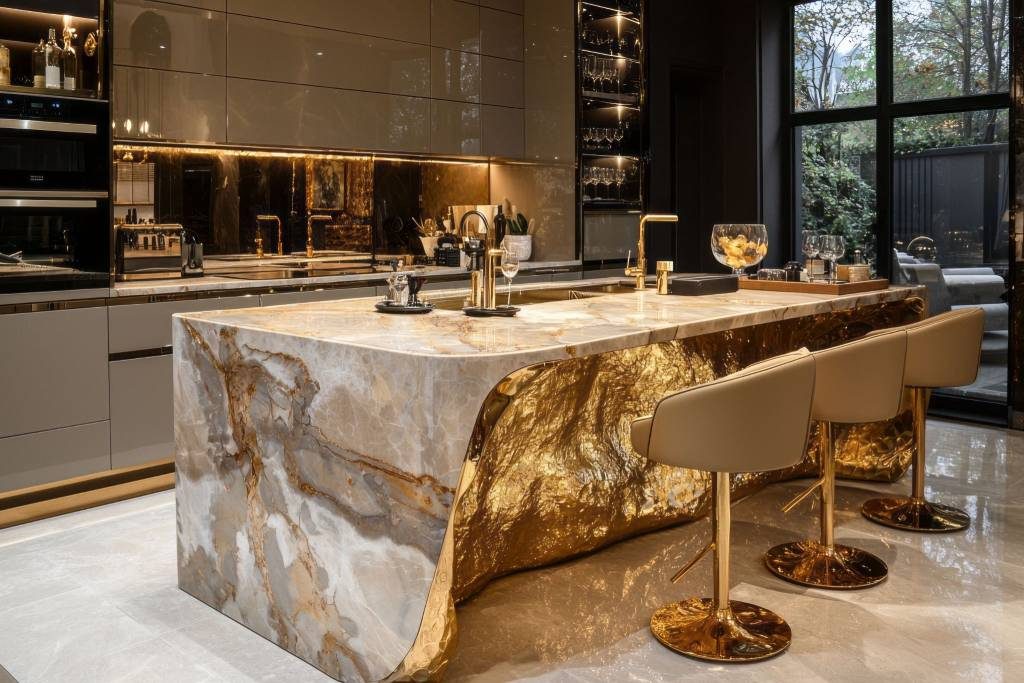
In luxury kitchens, marble is often chosen for its natural character, but placement matters. It works best on islands, backsplashes, breakfast counters and wall cladding where it can be seen clearly and maintained well.
For high-use counters, the marble, finish and sealing should be selected with spills, heat, cleaning and daily use in mind. Many homeowners prefer using marble on islands or backsplashes, then pairing it with more practical surfaces where heavy prep work happens.
Popular kitchen marble approaches:
- Waterfall-edge kitchen islands work well when the slab has linear veining that can continue neatly over the sides.
- Full-height marble backsplashes are practical behind counters when sealed correctly and cleaned with pH-neutral products.
- Marble-clad breakfast counters create a refined transition between the kitchen and dining area.
- Feature wall cladding suits open kitchens where the stone is visible from the living space.
- Open shelving with marble back panels works best when the shelves are kept light and uncluttered.
- Seamless marble countertop extensions are useful when the kitchen island also serves as a dining, serving or entertaining surface.
Marble Flooring Designs That Make a Statement
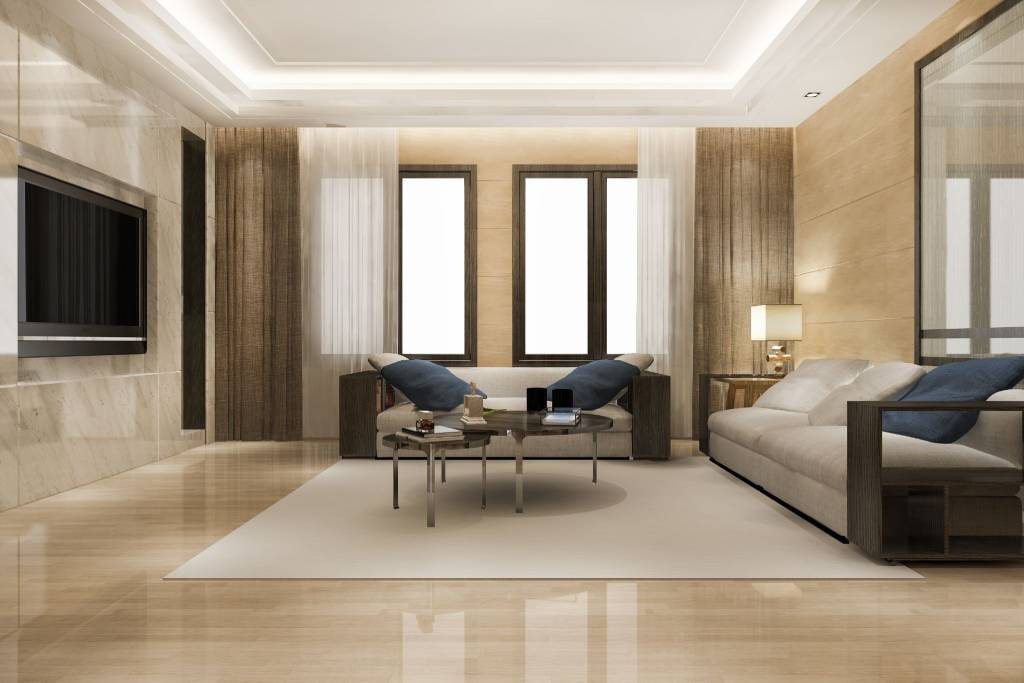
The floor design of marble affects how spacious, bright and connected a home feels. A lighter marble floor can reflect more daylight across living and passage areas, while larger slabs with fewer joints create a smoother visual flow from one room to another. Before choosing a pattern, consider the size of the room, amount of natural light, furniture layout and how much veining the space can comfortably carry.
Large-format marble flooring is often preferred in luxury homes because it reduces joint lines and gives the floor a more expansive look. For smaller rooms, softer veining or simpler patterns usually work better than highly detailed layouts.
Popular floor design of marble concepts include:
- Large-format marble slabs suit open interiors because they reduce visual breaks and allow the stone to feel more continuous.
- Bookmatched flooring layouts work best in large foyers, formal living rooms or double-height spaces where the pattern can be seen properly.
- Geometric marble patterns suit transitional interiors that need structure without relying on heavy ornamentation.
- Decorative inlay flooring designs are suitable for entrance foyers, puja areas or formal dining spaces where detailing can be contained.
- Contemporary border detailing can frame a seating area or passage without making the full floor look busy.
- Symmetrical layouts emphasise architectural proportions and work well in villas, bungalows and larger apartments.
A well-executed floor design of marble should feel aligned with the architecture of the home. The slab size, pattern, direction of veining and finish all need to be decided before installation begins.
Statement Marble Features for Luxury Home Interiors
In luxury homes, marble can become part of the architecture through walls, staircases, columns, bars, fireplaces and furniture. These features work best when the slab, scale, lighting and surrounding materials are planned together.
Feature Walls
Large marble walls featuring Celebrity Marbles suit living rooms, dining areas, entrance foyers and lounges. Use bookmatched slabs for wide surfaces, softer veining for compact rooms and grazing light to reveal the stone after sunset.
Staircases
Marble staircases need stone that handles movement, edge detailing and regular cleaning. Choose slip-conscious finishes, refined edge profiles and a vein direction that follows the rise cleanly.
Columns and Cladding
Marble-wrapped columns work best in large foyers, double-height spaces and luxury lobbies. Keep adjoining walls simpler so the column reads as a planned architectural detail.
Designer Marble Furniture
Luxury interiors increasingly feature designer marble applications for upscale homes, from dining tables and consoles to bar counters. Let distinctive veining lead, while the furniture form stays clean and balanced
Materials That Pair Beautifully with Marble
Marble looks best when the surrounding materials are chosen with restraint. The right pairing can soften the stone, frame its veining or allow its natural movement to remain visible.
| Pairing Material | Best Used In / Applications |
| Wood | Works well with marble because it brings warmth and balance. Dark wood pairs beautifully with white or grey marble, while lighter oak or walnut can soften stronger stones. |
| Brass, bronze and black metal | Useful for lighting, trims, handles, fixtures and furniture details. Brass feels warmer and more classic, bronze feels more understated and black metal creates a sharper contemporary contrast. |
| Glass | Helps maintain openness, especially in bathrooms, staircases and dining areas where the marble should remain visible without adding visual weight. |
| Textured fabrics, rugs and wall panels | Especially useful in bedrooms, living rooms and lounges where comfort matters as much as finish. These materials soften marble-heavy rooms. |
| Textured plaster and natural stone accents | Can be used in nearby areas, but they should stay quieter than the marble so the room does not feel visually crowded. |
Choosing the Right Marble Design for Your Home Style
The right marble design for home interiors depends on architecture, light, room size and daily use, because marble changes once it is seen at scale.
When choosing a marble design, consider:
- Architectural style: Contemporary homes usually suit larger slabs, cleaner lines and controlled veining, while classic homes can carry borders, inlays and symmetrical layouts.
- Room size: Bold veining needs enough viewing distance. For compact rooms, softer movement or a focused marble detail usually works better.
- Lighting: Understanding how to check Italian marble quality before making a selection also helps ensure the stone performs as beautifully as it looks.
- Placement: For spaces that call for exceptional natural character, Rare and Precious Marbles can create distinctive focal points while complementing the overall design language.
- Material pairings: Review wood, metal, glass, fabrics and wall finishes together so the marble feels connected to the rest of the home.
At The Quarry, every slab is selected for origin, quality, finish and character before it reaches the Gallery. This helps homeowners, architects and designers review the actual slab, its veining, finish and suitability for the space with greater clarity.
The best custom marble design solutions for homes feel integrated because the stone, layout, lighting and installation are considered together.
FAQs
Yes, marble feature walls work well in modern homes when the slab, scale and lighting are chosen carefully. They are especially effective behind television units, sofas, dining consoles, beds and entrance foyers. Bookmatched slabs suit larger walls, while softer veining works better in compact rooms.
Marble can be used for flooring, wall cladding, bathroom walls, vanity counters, kitchen islands, backsplashes, staircases, niches and furniture. In living rooms, it works well as flooring or a feature wall. In bedrooms, it is best used behind the bed or in dressing areas. In bathrooms and kitchens, the sealing, finish and maintenance should be planned carefully.
Marble flooring can make a room look larger and brighter because polished or lightly finished marble reflects light and creates a more continuous surface. Large-format slabs with fewer joints help reduce visual breaks, making living rooms, passages and open-plan areas feel more spacious.
Choose marble by looking at the home’s architecture, room size, natural light, furniture style and level of daily use. Contemporary homes often suit clean slabs and minimal detailing. Classic homes can carry borders and inlays. For bold veining, use the marble on a focused surface rather than across every wall or floor.
Current marble flooring trends include large-format slabs, bookmatched layouts, subtle border detailing, geometric inlays and seamless open-plan flooring. Luxury homes are also moving towards fewer joints, softer veining for large floors and carefully placed statement patterns in foyers, lounges and formal dining areas.
The best way to use marble in a living room is through one or two strong applications, such as continuous flooring, a TV backdrop, a fireplace surround or a feature wall behind the seating area. Pair it with wood, warm lighting, neutral upholstery and simple furniture so the room feels balanced.
The best marble design for home interiors depends on the size, style and use of the space. Large-format flooring works well in open living and dining areas, while feature walls are suitable for living rooms, foyers and bedrooms. Softer veining is easier to use across large surfaces, while bolder marble is better for focused areas such as TV walls, vanities, islands or entrance backdrops.