Italian Marble Flooring Design: Types, Patterns, Cost & Expert Selection Guide For 2026
Posted on by The Quarry
Italian marble flooring design is one of those decisions that silently determines the entire ambiance of a property. The floor is the surface you live with every day, so the marble you choose has to look beautiful, feel right underfoot and continue to hold its presence over time.
In India, Italian marble is a popular choice for flooring in luxury residences due to its natural veining, elegant gloss and timeless look. It works well in luxury flats, villas, duplexes and penthouses, as it combines visual richness, durability and a naturally cool surface that complements Indian weather.
Italian marble flooring design is not just about the stone. The final effect depends on the type of marble, the size of the slab, the pattern, the polish, the quality of the installation and the maintenance routine. This blog includes common forms of marble, Italian marble flooring patterns, room-wise ideas, care requirements, cost aspects and suggestions for choosing experts.
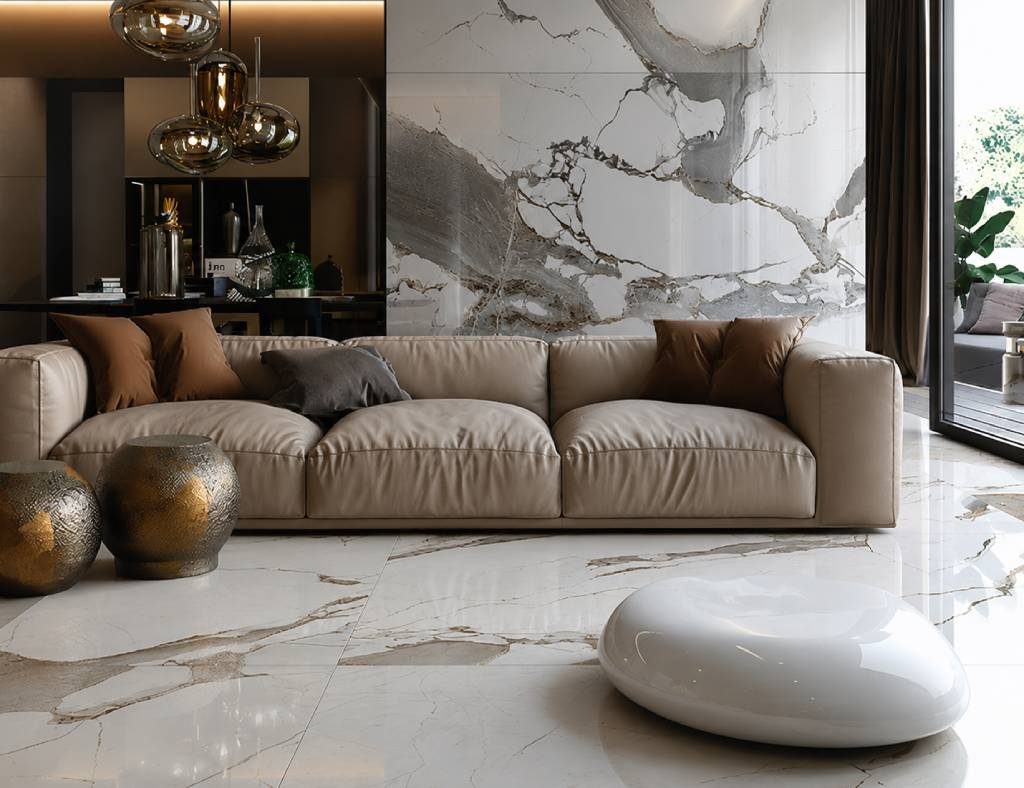
Why Italian Marble Flooring Design Is Preferred for Luxury Homes
Luxury homes continue to invest in Italian marble flooring design ideas because the material offers a sense of refinement that feels enduring, not trend-led.
Key reasons include:
- Provides a classic and elegant look
- Increases property resale value
- Naturally cooler in warm Indian conditions
- Available in a variety of hues, designs and finishes
- Complements contemporary and traditional decor
- Customisation using layouts, inlays and borders
- Provides a seamless quality look for expansive rooms
Italian marble easily adapts to changing furniture types, including Marble Office Tables, lighting systems and interior themes. A neutral sofa, brass detailing, wooden furniture or glass partitions can all sit comfortably against the same marble floor, which is why designers often recommend it for homes meant to feel relevant for many years.
The choice of Luxury marble makes a big difference to the overall look, brightness, upkeep and expense of the project. To make the best choice in flooring, you need to know the numerous variations.
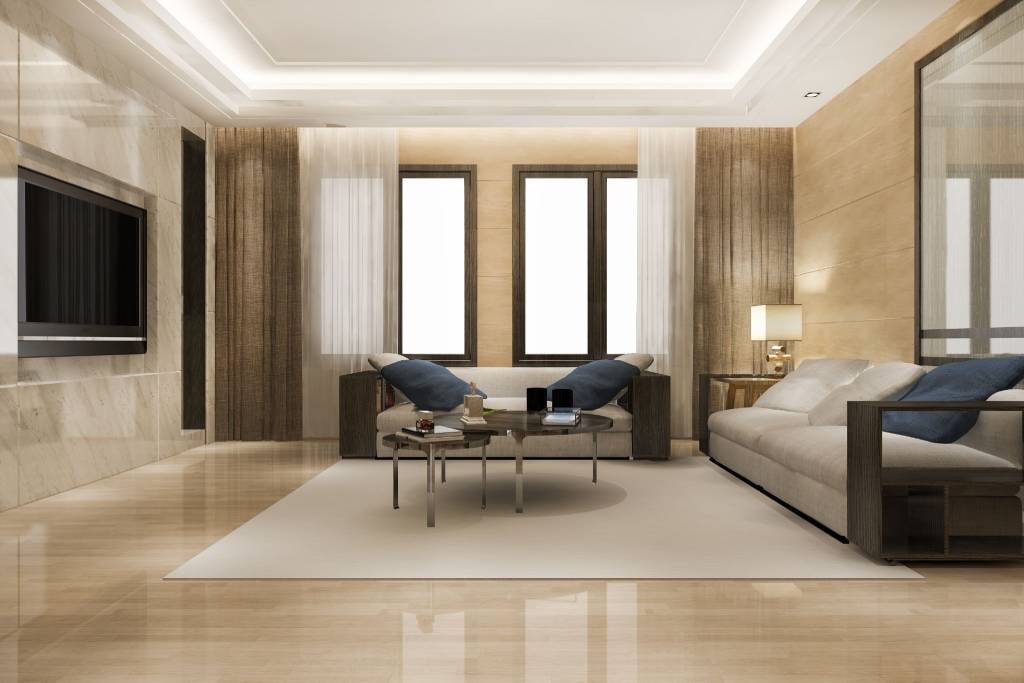
Popular Types of Italian Marble Used in Flooring Design
Various Popular Marbles produce extremely varied moods in flooring. . Some are bright and formal, some softer and more subtle and others are chosen for their striking veining and stronger visual movement. That right choice depends on the room, the natural light, the colour scheme of the furniture and how much the floor will be used.
Statuario Marble Flooring Design
Statuario has a dazzling white foundation with beautiful grey veins that lend it a distinctive, elegant presence. It works brilliantly in living rooms, entrance foyers and luxury homes where the flooring is designed to be seen as soon as one enters the space.
Being rare and expensive, Statuario is normally positioned in the upper price range of Italian marble. It is best suited to applications when the slab selection, lighting and furniture layout allow the veining to remain apparent and uninterrupted.
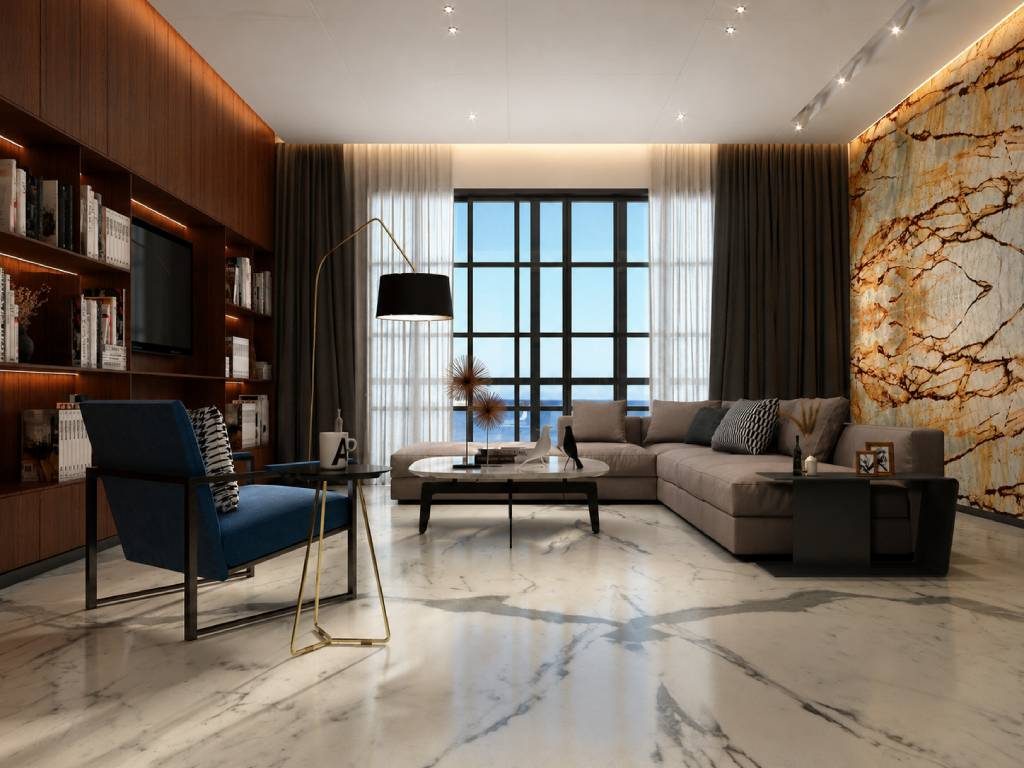
Carrara Marble Flooring Design
Carrara marble is known for its softer grey veining and elegance. It is more subdued than Statuario thus can be used more easily over bigger portions of floor without the look becoming cluttered.
It is good for modern apartments, Minimalist Marble Design concepts and contemporary interiors with a peaceful and controlled design language. Carrara is also a practical luxury choice for bedrooms, bathrooms and living spaces because its softer veining pairs easily with warm wood, muted upholstery and neutral walls.
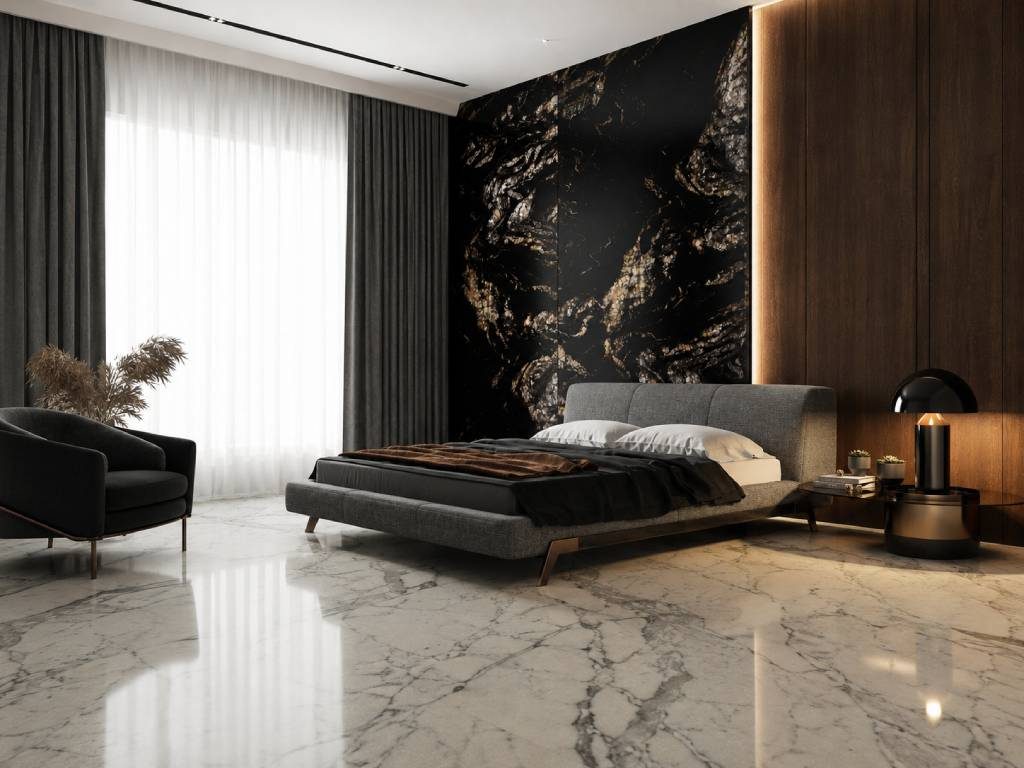
Calacatta Marble Flooring Design
Calacatta marble is known for its brighter base and bold, expressive veining. It is rarer than Carrara and usually carries a more premium value. Designers often use Calacatta in residences where the flooring is expected to create a strong visual identity.
It works especially well in spacious living rooms, foyers, formal lounges and select villa spaces. Since the veining is more prominent, the rest of the room should ideally have a cleaner palette, muted lighting and well-picked furniture so the marble can remain the main visual anchor.
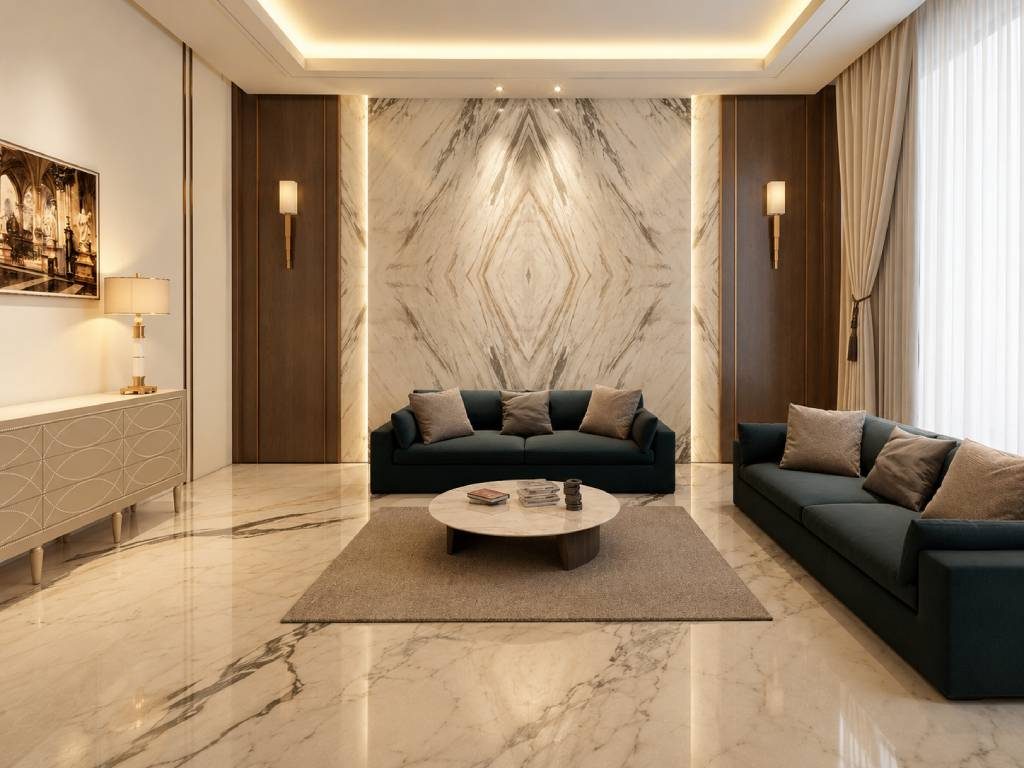
Italian Marble Flooring Design Patterns & Layout Ideas
The layout of marble flooring can completely change how a room is experienced. A simple grid can feel clean and modern, while book-matching, borders or inlays can make the same marble feel more architectural and detailed.
Here are the most widely used Italian marble flooring layouts and where they work best.
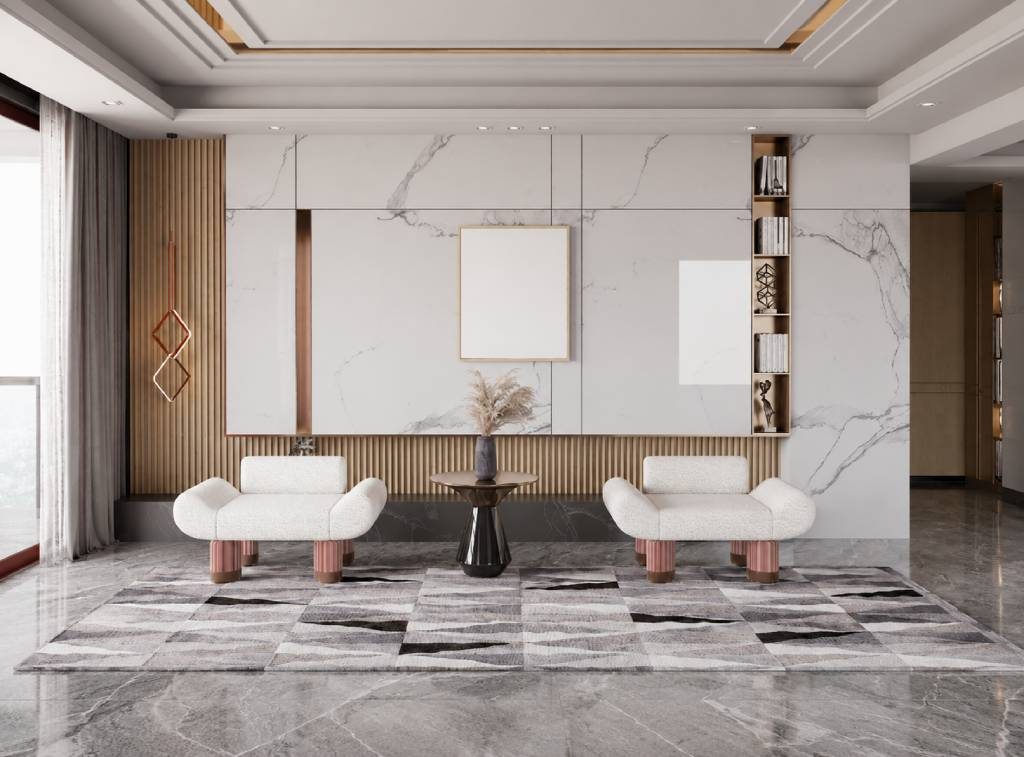
1. Book-Matched Italian Marble Flooring Design
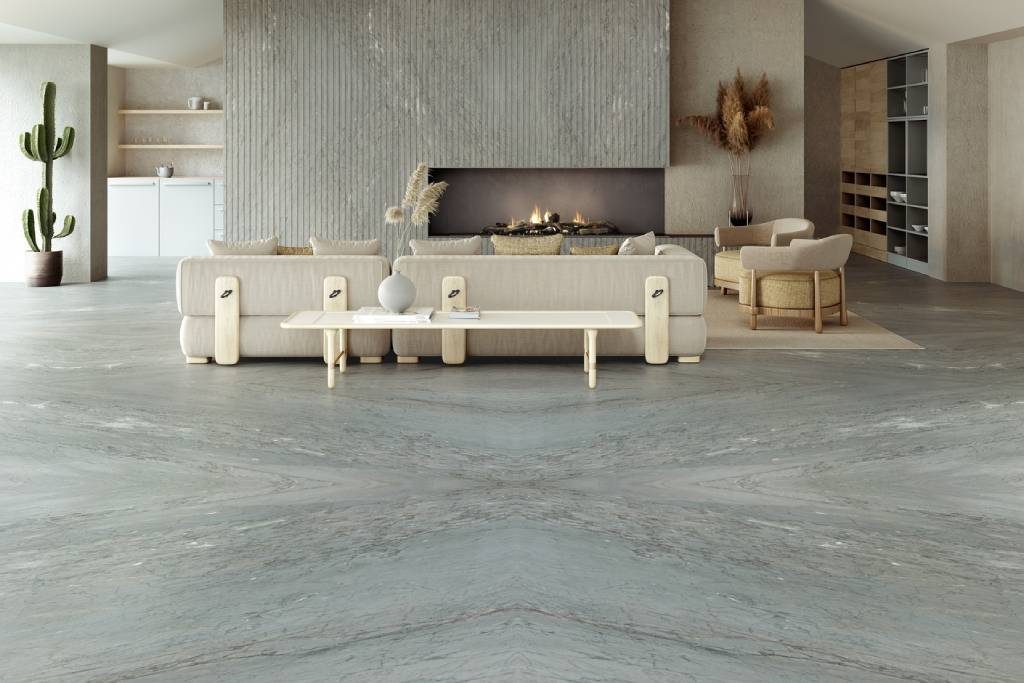
Book-matching is the process of joining neighbouring marble slabs so that the veining is mirrored across the surface. Done effectively, the outcome feels symmetrical, deliberate and almost like artwork.
This is a very common approach in large living rooms, foyers, formal lounges and for Italian marble flooring patterns in open-plan layouts. It takes careful slab selection and precision installation; thus, the cost is typically higher. But the end effect can be a visual cohesiveness that typical tile patterns couldn't match.
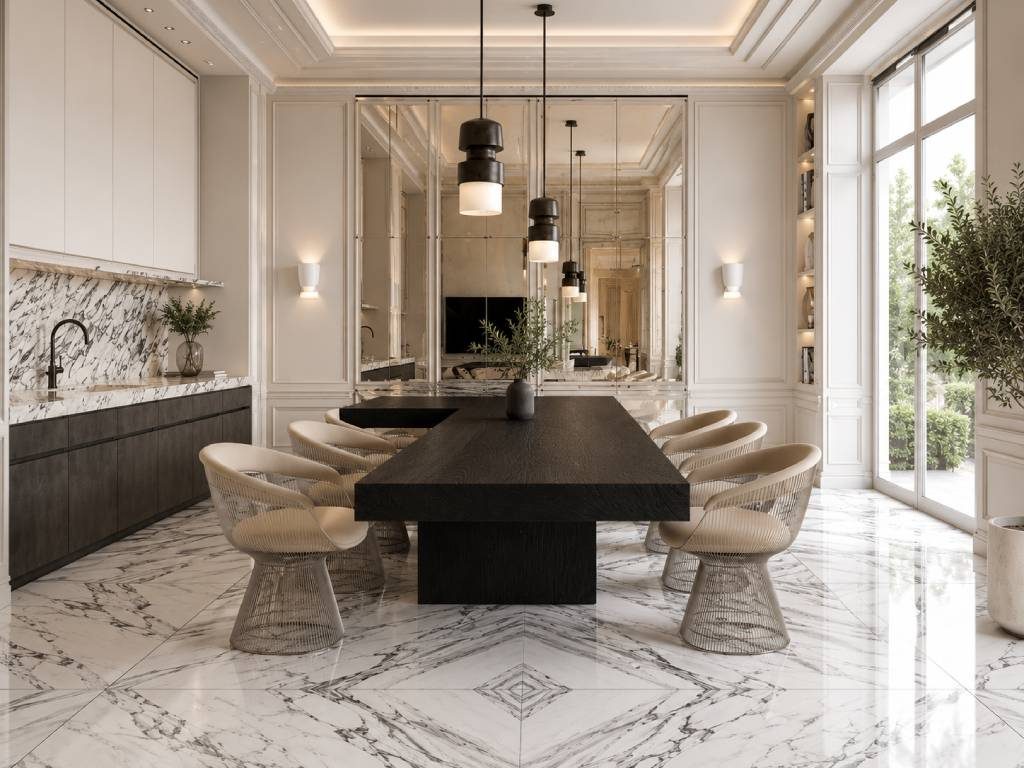
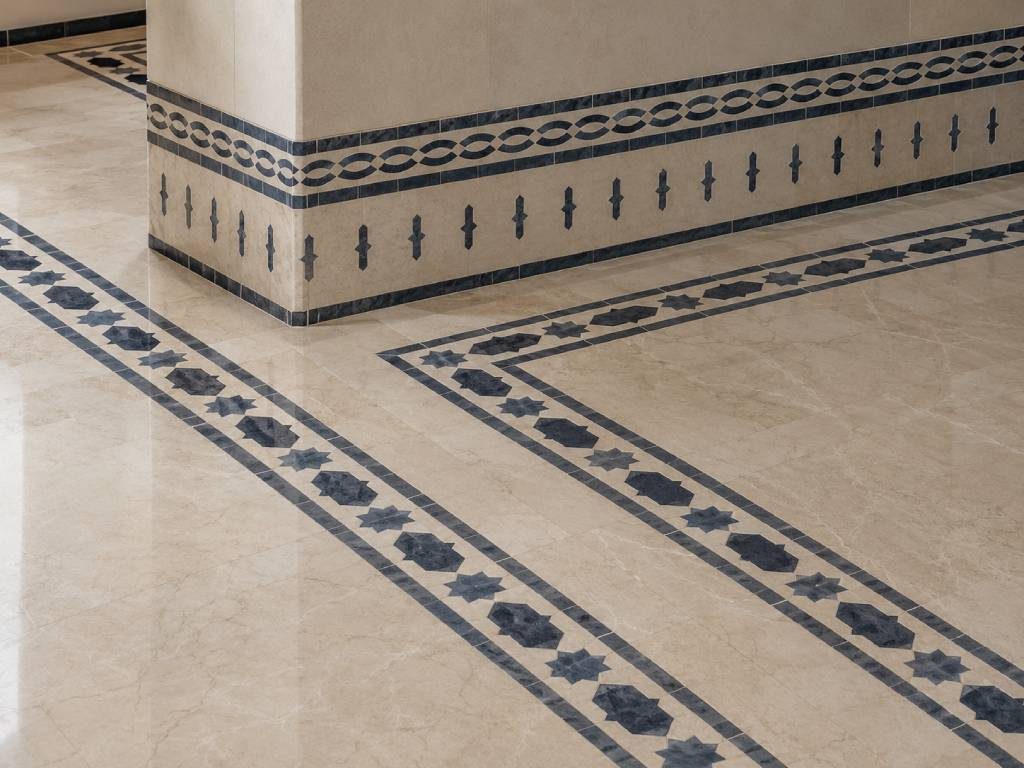
2. Marble Inlay Flooring Design for Statement Interiors
Marble inlay is the insertion of beautiful stone parts into the flooring to create themes, medallions, borders or unique patterns. It is often used in entryways, mandir spaces, corridors and formal living rooms.
This design technique works best when used with restraint. A single medallion on an entryway or a thin border around a seating zone can be lush without weighing down the floor. Inlay work adds to the expense of the project as it demands professional craftsmanship, precise cutting and elaborate finishing.
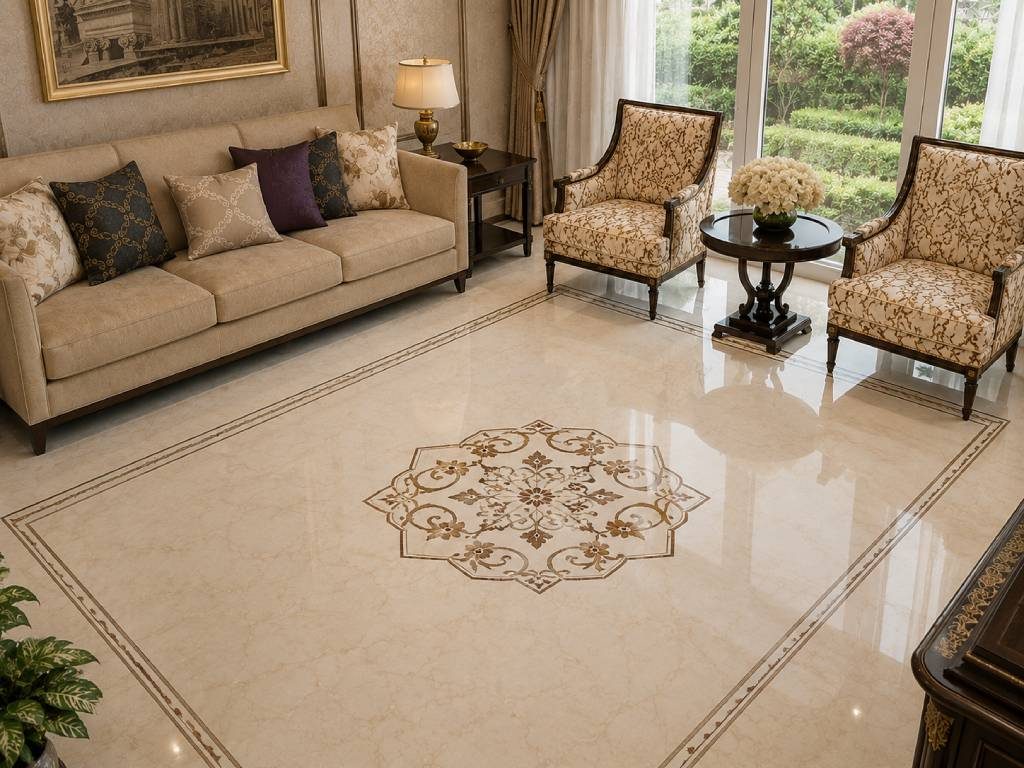
3. Border Framing Pattern in Italian Marble Flooring
Border framing is contrasting strips of marble along the border of a room. It helps to clarify the floor plan and makes the room look more put together.
This pattern works well in dining rooms, living rooms, foyers and large bedrooms. The contrast should complement the main marble rather than compete with it. The width of the border also matters. A thin border is suitable for small rooms, while a wider frame can be effective in larger villa spaces.
4. Diagonal Italian Marble Flooring Layout for Visual Expansion
In this pattern marble tiles are laid at a 45 degree angle to the walls. Diagonal directions can open up tight rooms, narrow passages and apartment hallways.
This layout needs a perfect alignment, as mistakes are easily obvious. It can also have slightly more wastage than a straight configuration and should be properly considered before installation begins.
![Diagonal marble floo]ring pattern](https://www.quarry.asia/blog/wp-content/uploads/2026/07/chart-2026-07-09T150004.600-1024x574.jpg "Diagonal marble floo]ring pattern")
5. Large Slab Seamless Marble Flooring Design
The large format marble slabs produce a smooth surface with fewer obvious joints. This style is becoming more and more popular in luxury villas, penthouses and large flats where the homeowner wants a clean contemporary look.
Fewer grout lines help the room feel larger and more continuous. The success of this flooring depends heavily on slab handling, levelling and installation expertise. It is also important to view the full slab before selection so the veining flow feels natural across the room.
6. Mixed Marble Tone Zoning for Open-Plan Layouts
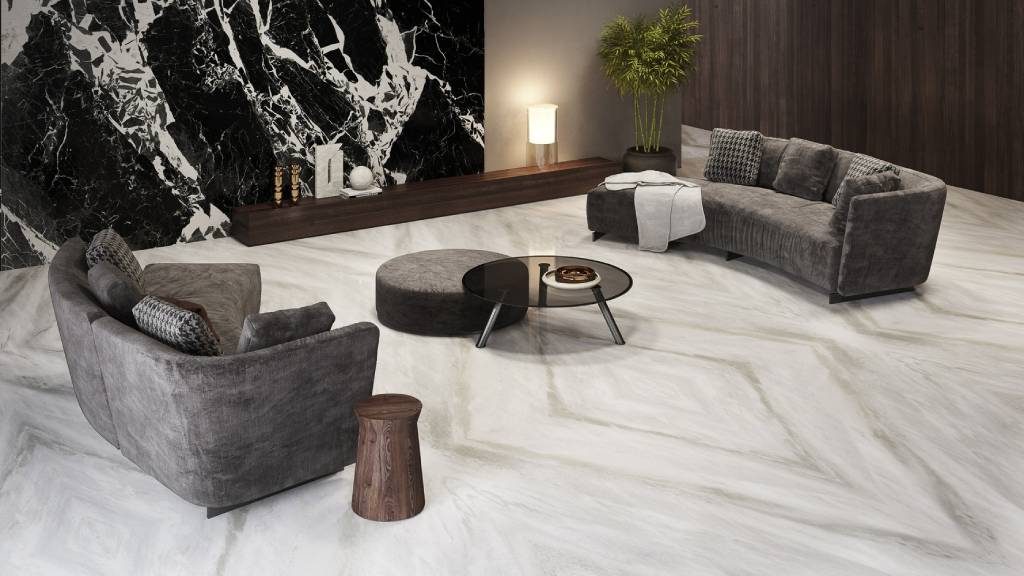
In many modern homes, two complementing marble tones are used to delineate functional zones without adding walls. A lighter marble can work across the main living area, while a darker or warmer marble can mark the dining space, bar area or circulation path.
This approach is useful in open-plan apartments and villas where the homeowner wants structure without interrupting the flow of the space. The tones should belong to the same design family so the flooring feels connected rather than patchy.
This approach also works well with personalised marbles, allowing homeowners to create flooring layouts that reflect their individual design preferences while maintaining visual continuity.
Room-Wise Italian Marble Flooring Design Ideas
A modern Italian marble tiles design for living room often incorporates large-format slabs, book-matching, or Calacatta marble. Natural light enhances veining patterns, creating a luxurious atmosphere throughout the day.
For Indian luxury homes, living rooms usually benefit from marble that feels impressive without becoming too busy. Soft white, beige or grey-toned Italian marble works well with brass accents, wooden furniture, rugs and layered lighting.
Living Room
A modern Italian marble tiles design for living room often incorporates large-format slabs, book-matching, or Calacatta marble. Natural light enhances veining patterns, creating a luxurious atmosphere throughout the day.
For Indian luxury homes, living rooms usually benefit from marble that feels impressive without becoming too busy. Soft white, beige or grey-toned Italian marble works well with brass accents, wooden furniture, rugs and layered lighting
Bedroom
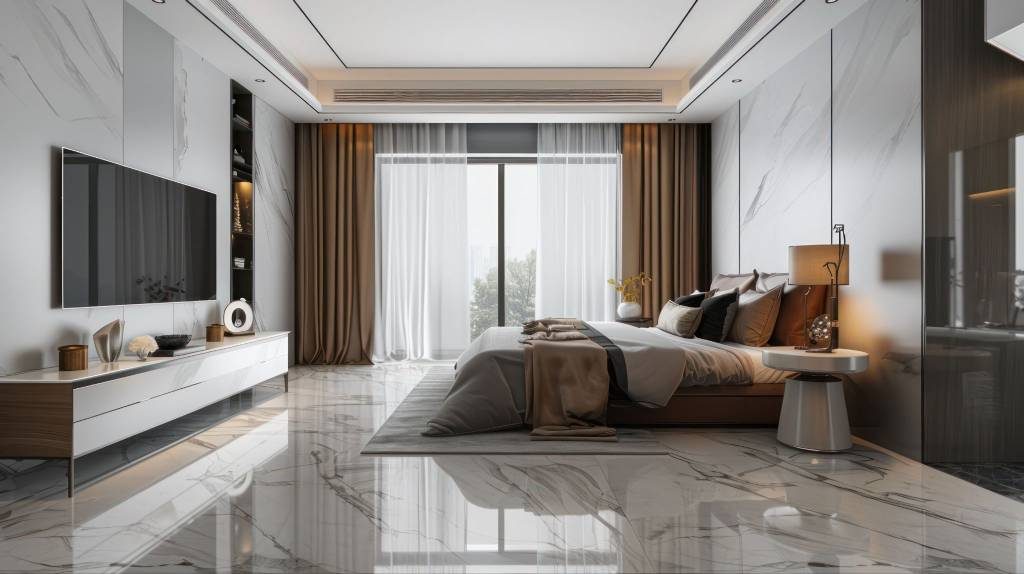
In bedrooms it is better to choose gentler types of marble, such as Carrara or beige Italian marble. The stones make for a peaceful foundation and look good with textured fabrics, mellow lighting and muted colour schemes.
A high-gloss finish could look too formal for a bedroom, so time the final polish to suit the mood of the room. Softer veining usually works better than very dramatic patterns in spaces meant for rest.
Kitchen
Lighter marble colours can make kitchens look brighter and more spacious. Proper sealing is essential because kitchen floors are more exposed to spills, moisture and everyday movement.
For kitchens, it helps to choose a marble with balanced veining and a finish that can be maintained easily. Rugs or mats near wet zones, immediate cleaning of spills and regular sealing will help preserve the surface.
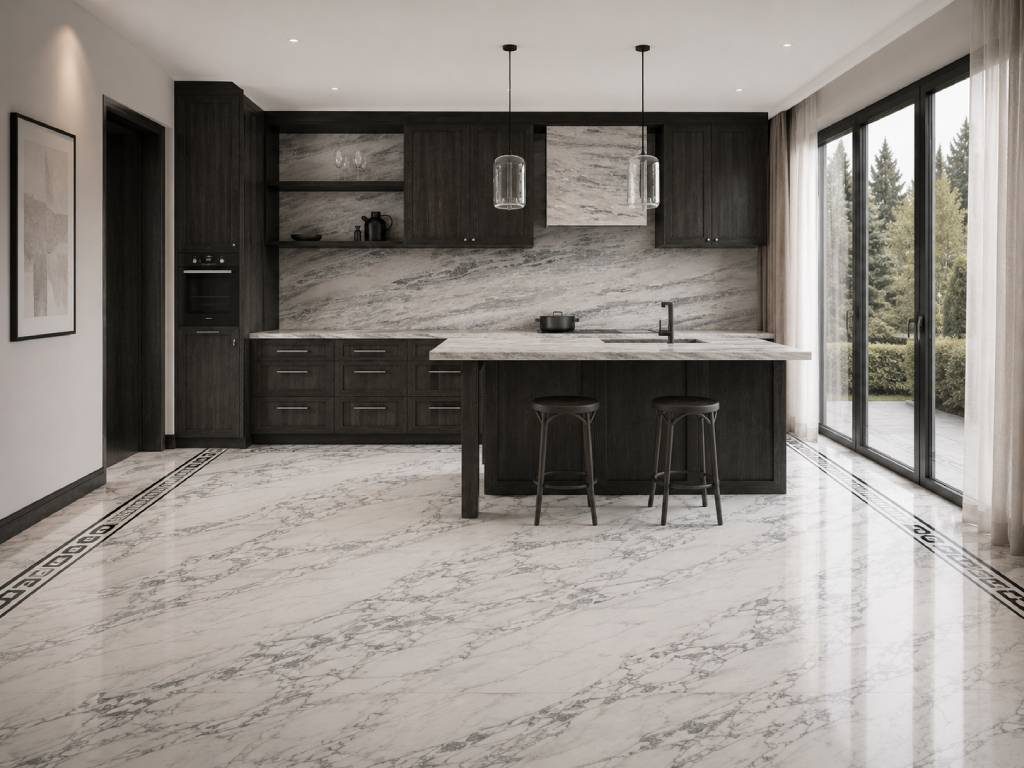
Foyer
The foyer is the first surface guests experience when they enter the home, so it can carry a little more detail. Inlay designs, border framing or premium Statuario marble can transform the entrance into a statement feature.
Those looking for the best Italian marble flooring design for small apartments typically find that lighter hues and smooth slab installations make small rooms seem much larger.
Luxury homeowners looking at new projects are increasingly considering premium Italian marble flooring ideas for 2026 that feature big slabs, mixed-material borders, soft beige palettes, subtle inlay detailing and marble floors matched with warm wall finishes.
Maintenance & Long-Term Care of Italian Marble Flooring
With careful maintenance, Italian marble can last for decades in its beauty. The care regimen is easy, but it needs to be consistent.
Do's
- Professionals propose sealing marble from time to time
- Clean up spills immediately
- Use marble cleansers with a neutral pH
- Put pads under furniture to protect furnishings from scratching the marble
- Polish when the surface loses its gloss.
Don'ts
- Don’t use acidic cleansers
- Don’t shift heavy furniture
- Do not use scouring pads
- Limit extended contact with staining materials
Common Maintenance Mistakes
- Stain removal delay
- Skipping sealing schedules
- Using strong household chemicals
- Ignoring little scratches until they become worse
Regular care will help to maintain the appearance and long term value of marble flooring. In high-use Indian homes, sealing, gentle cleaning and careful furniture movement make a visible difference over the years.
Understanding Italian Marbles Quality before making a purchase also helps homeowners choose flooring that offers lasting performance and visual appeal. The whole investment is impacted by the quality of the marble, installation, planning for wastage, polishing, edge work and future upkeep. A floor that’s built well often ages better and requires fewer fixes down the road.
Is Italian Marble Flooring Design Worth It? (Expert Verdict)
Imported Marbles, especially Italian marble, are among the strongest flooring options for homeowners who want classic luxury with long-term value. It offers natural beauty, cooling comfort, design versatility and lasting appeal.
The best results come from choosing the right marble for the right room, seeing the slabs before selection, planning the layout carefully and working with experienced installers. Italian marble does require regular care, sealing and gentle cleaning, but that care is part of preserving a valuable natural material.
This is where expert guidance makes a real difference. At The Quarry, every slab is selected with attention to quality, rarity, finish and how it will perform inside a luxury Indian home. From helping homeowners view the slab in person to guiding them on layout, application and maintenance, The Quarry makes the selection process more considered.
A thoughtfully planned luxury Italian marble flooring design for villas in India can offer exceptional aesthetic and lifestyle value for luxury villas, premium apartments and high-end houses. When selected well and maintained properly, it can remain refined for decades to come.
FAQ
High quality Italian marble, when properly selected, handled and placed, will not crack easily. Cracks can often be caused by faulty installation, uneven subflooring, high impact or the lack of sufficient support under the stone.
Italian marble flooring can survive for decades with proper care. Regular cleaning, periodic sealing, timely polishing and careful moving of furniture retain its surface, strength and attractiveness.
Yes, Italian marble is a very strong flooring choice for Indian homes, notably luxury flats, villas and high-end mansions. Its naturally cool surface is ideal for hotter areas and the veining, reflective finish aids in the creation of light, sophisticated rooms.
Yes, Italian marble normally is more expensive than most Indian marble and engineered flooring options. It is rare and naturally formed, has a good polish and has a unique slab character also. It is typically seen as a long term design investment for luxury interiors.
Italian marble requires periodic maintenance to preserve its shine and natural beauty. It should be sealed from time to time, washed with pH-neutral chemicals and protected against acid spills, strong cleaners and dragging of furniture. It ages well with proper installation and upkeep.
Italian marble flooring prices range based on the type of marble, rarity, size of slab, finish, thickness and complexity of installation. High-end stones like Statuario and Calacatta are often pricier due to their unique veining patterns and scarcity. The value is in the stone, craftsmanship and long lasting finish
Statuario, Calacatta, Carrara and Botticino are the most chosen Italian marble for flooring design. Statuario and Calacatta are well suited for expressive luxury areas, while Carrara and Botticino may be used for softer, more subtle floors.