Marble Wardrobe Design Ideas for Elegant Bedrooms
Posted on by The Quarry
A wardrobe is used every day and occupies a large portion of a bedroom wall, so its surface is as significant as its storage. In luxury homes, stone wardrobe design can transform a purely functional element into a considered architectural feature, with marble adding natural pattern, depth and coherence to the space.
Marble wardrobe design is particularly effective on full-height shutters and expansive wardrobe walls, where the pattern can be appreciated at scale. Lighter stones can help compact bedrooms feel more spacious, while bolder slabs suit master bedrooms and villas where the wardrobe forms an important part of the overall décor.
This guide explores marble wardrobe design ideas for different bedroom styles, including sliding and hinged layouts, interior storage organisation, finishes, lighting and practical considerations that help the wardrobe function beautifully in everyday use.
Marble Wardrobe Designs That Suit Different Bedroom Styles
The style of the bedroom should shape how the wardrobe is designed, from the marble pattern and shutter profile to the hardware and level of contrast. Contemporary spaces often suit cleaner lines and controlled veining; minimalist bedrooms benefit from lighter surfaces and concealed details; while larger luxury suites can carry stronger patterns, bookmatched panels and richer metal accents.
The flooring, wall colour, furniture finish, lighting and scale of the room should all be considered so the wardrobe feels visually connected to the rest of the interior.
Contemporary Bedrooms
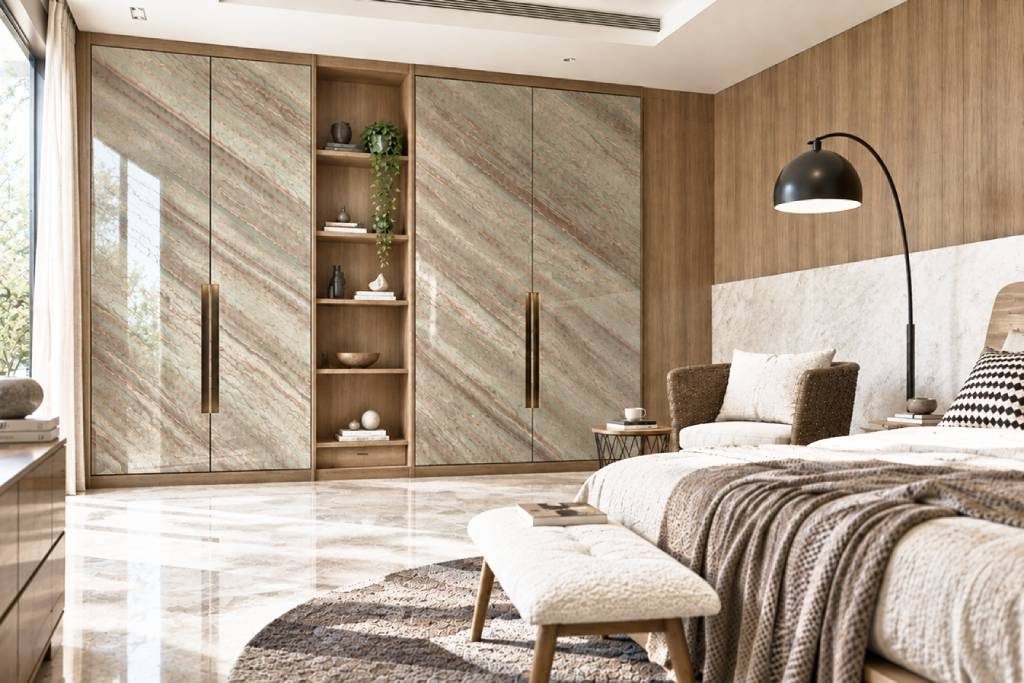
Contemporary bedrooms are defined by clean architectural lines, precise proportions and a controlled mix of materials. A marble wardrobe design in this setting should feel structured and integrated, with the wardrobe reading as part of the room’s architecture rather than as a separate piece of furniture.
Full-height shutters, slim metal profiles and broad panels allow the marble pattern to run continuously across the surface. White, grey or beige marble from The Quarry's Statement Collection works particularly well with timber flooring, muted walls and warm lighting, while champagne, bronze or brushed brass trims can sharpen the composition.
Key contemporary wardrobe ideas include:
- Use large, uninterrupted panels to give the wardrobe a clean, wall-like appearance.
- Choose controlled veining that complements the flooring and furniture without competing with them.
- Add integrated lighting or slim metal profiles to define the edges and bring precision to the design.
Minimalist Bedrooms
Minimalist bedrooms rely on restraint, proportion and visual order. Every detail is noticeable, so the marble should support the room’s calm character rather than become its dominant feature.
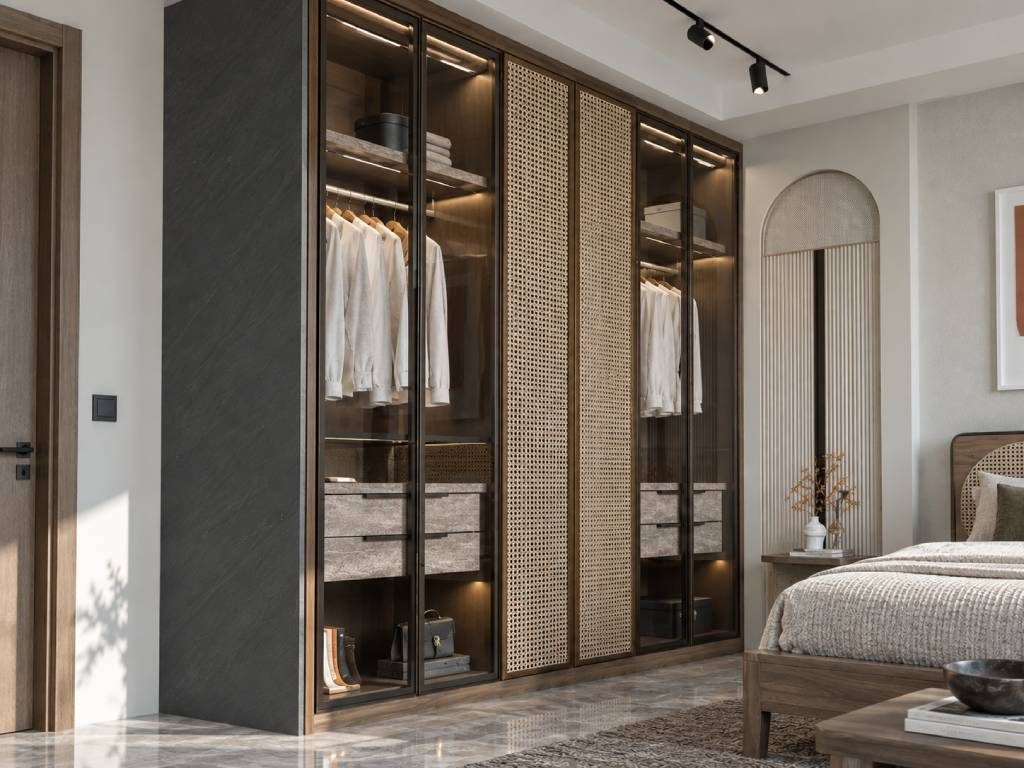
A minimalist bedroom marble wardrobe design generally works best with a light base, subtle veining and concealed hardware. Natural stones from the Rare and Precious Collection complement this aesthetic beautifully. Flush shutters, fewer material changes and a simple tonal palette help the wardrobe sit quietly within the room while still adding depth and natural character.
Some useful minimalist design approaches are:
- Choose fine, low-contrast veining that blends easily with neutral walls and flooring.
- Use concealed handles and flush panels to maintain a smooth, uninterrupted surface.
- Keep the composition symmetrical and place everyday storage behind closed shutters to preserve a clutter-free appearance.
Luxury Master Bedrooms
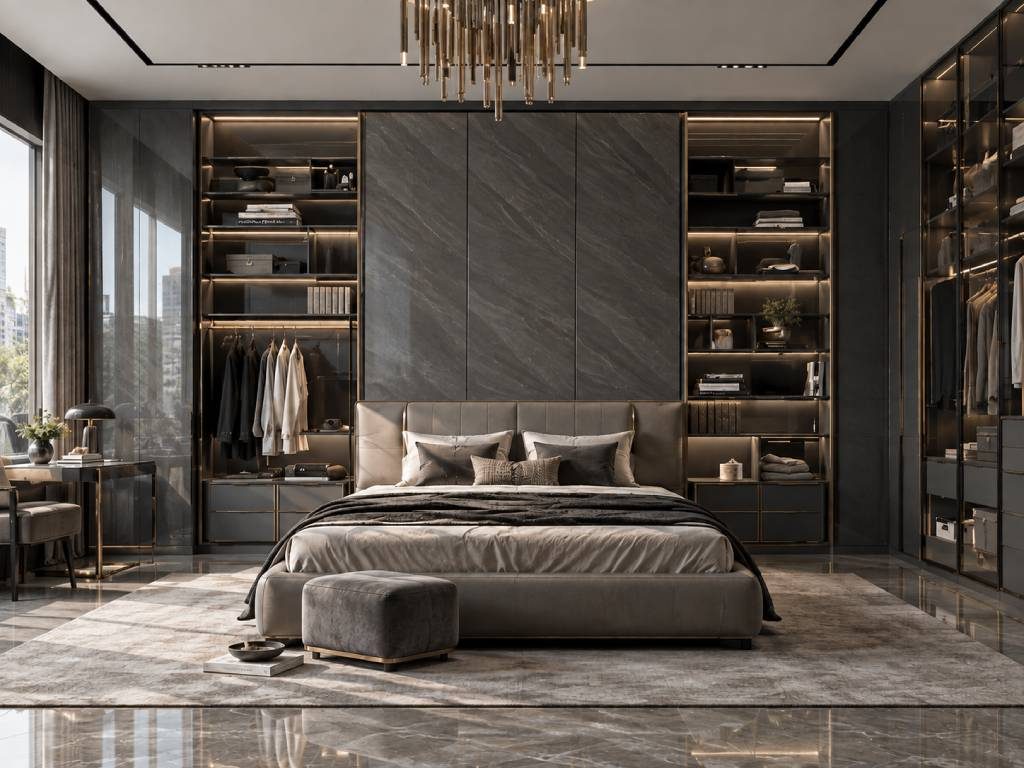
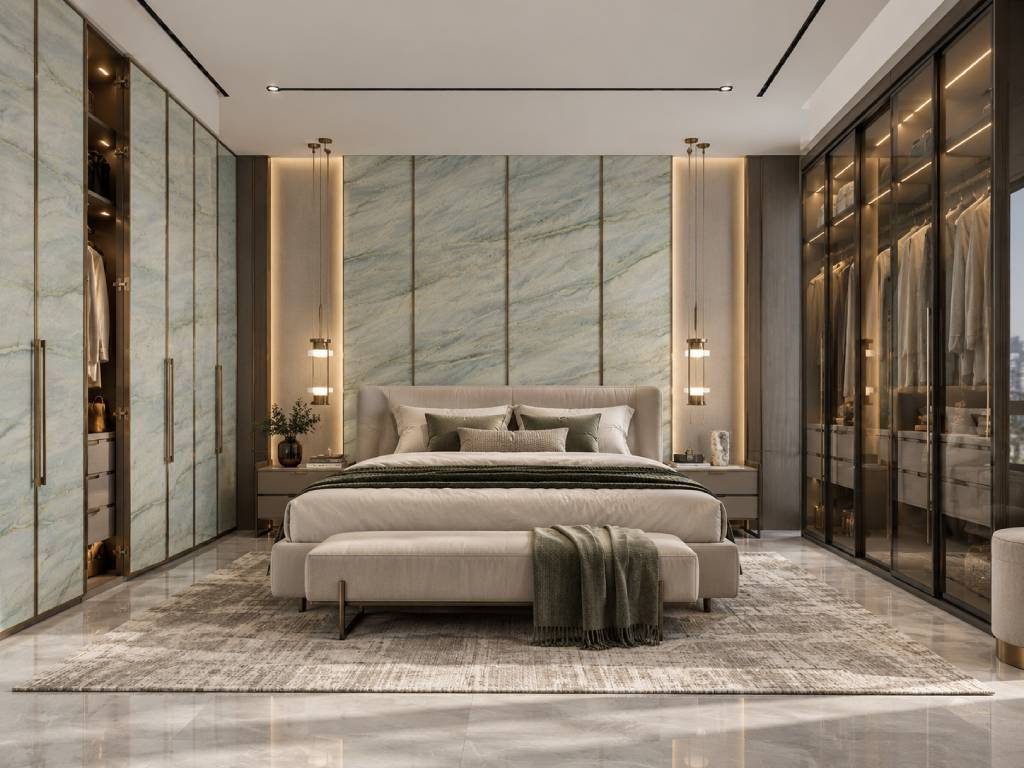
In a large master bedroom, the wardrobe can become one of the room’s defining design features. A luxury marble wardrobe design for master bedroom setting can use expressive veining, bookmatched panels and refined detailing because the scale of the room allows the surface to be appreciated fully.
Here, marble from the Celebrity Collection or the Flaunt Collection can be paired with glass, bronze, brass or leather to create a richer composition. Backlit sections, curated display cabinets and custom storage interiors are especially effective when they are planned around the homeowner’s dressing routine. If the room already includes marble flooring, a vanity or a feature wall, the wardrobe stone should be selected as a part of the complete material scheme.
Design highlights include:
- Bookmatched or large-format panels create a strong focal surface across wide wardrobe shutters.
- Brass, bronze and glass details add depth and give the wardrobe a more tailored finish.
- Bespoke interiors, illuminated display sections and dedicated accessory storage make the wardrobe feel as considered inside as it does outside.
Difference Between Sliding and Hinged Marble Wardrobes
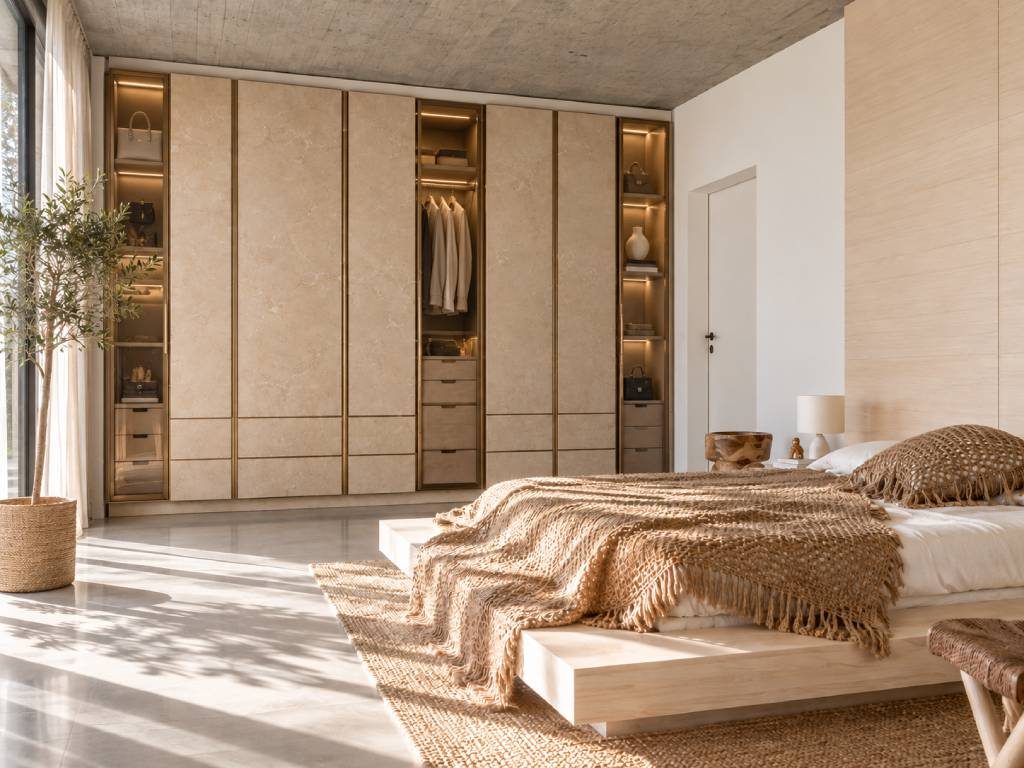
The shutter mechanism changes the function and design of a wardrobe. Marble has visual weight, so the way it opens should suit the size of the room, the circulation space and the way the wardrobe will be used daily.
| Feature | Sliding Wardrobes | Hinged Wardrobes |
| Space Requirements | Ideal for small rooms because shutters do not need front clearance | Best for rooms with enough space in front of the wardrobe |
| Accessibility | Gives access to one section at a time | Gives full access to the wardrobe interior |
| Visual Appeal | Creates large, continuous marble surfaces | Provides a more traditional and adaptable wardrobe appearance |
| Design Flexibility | Works well for large panels and simple details | Offers more possibilities for handles, trims and internal divisions |
| Best For | Modern urban bedrooms and compact apartments | Larger bedrooms, villas and master suites |
Sliding wardrobes are ideal if you are short on room or want a smooth, wall-like impression. Hinged wardrobes are the better choice if you want full access, detailed hardware and a bespoke internal layout.
Designing the Interior of a Marble Wardrobe
A good wardrobe is beautiful on the outside, but the interior must also suit the way the homeowner dresses, stores and organises everything.
A well-planned inside marble wardrobe design needs to consider hanging height, drawer depth, accessory storage, lighting, ventilation and everyday accessibility. The ideal wardrobes are easy to use in the morning and easy to look after over time.
Walk In Wardrobe Layouts
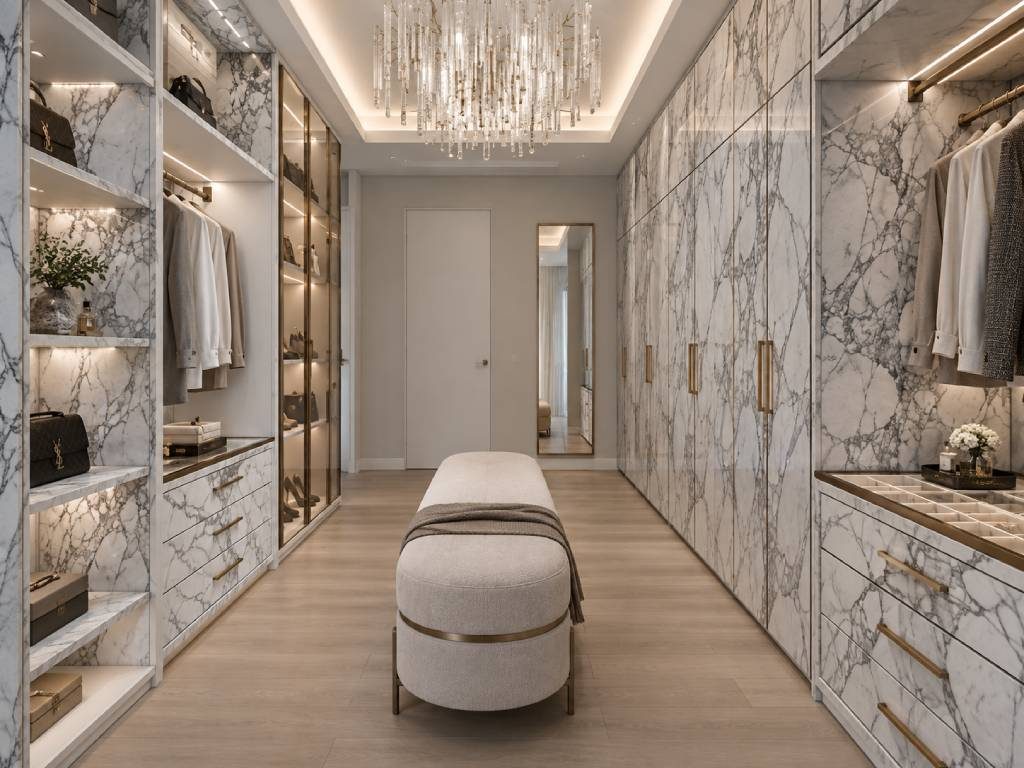
Modern walk-in wardrobe designs for bedroom spaces should begin with circulation and the homeowner’s daily routine. In larger homes, the wardrobe often doubles as a private dressing room, so two people should be able to move comfortably without blocking drawers, shutters or display units.
Keep everyday clothing at an accessible height, place seasonal items in the upper compartments and use integrated lighting inside shelves and drawers. A mirror, bench or vanity can complete the dressing area without interrupting movement. Well-planned walk-in wardrobe designs for bedroom suites feel personal because the layout responds to how the space is actually used.
Dedicated Storage Zones
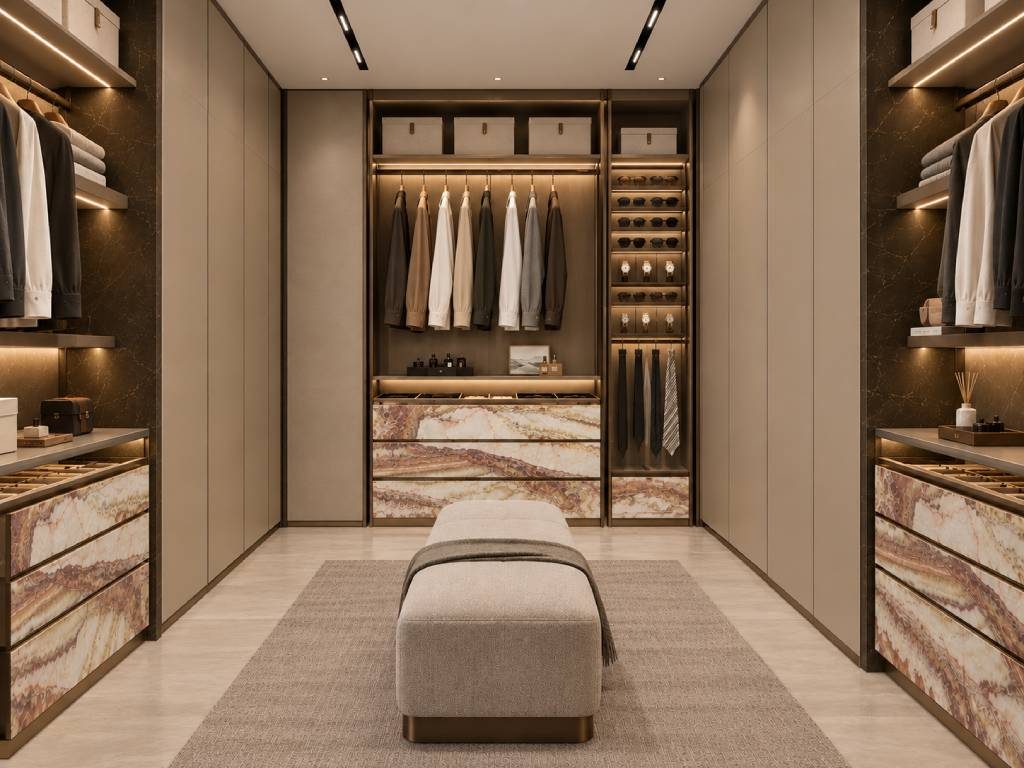
Organised storage is central to a successful inside marble wardrobe design. Rather than treating the interior as one large compartment, divide it according to garment type, the frequency of use and the homeowner’s dressing habits.
- Use full-height hanging sections for dresses, jackets and formal wear.
- Plan shelves and drawers for folded clothing and everyday essentials.
- Add shallow, divided trays for watches, jewellery and smaller accessories.
- Keep footwear in pull-out shelves or angled racks, with seasonal items stored above.
This approach makes the wardrobe easier to use while keeping the marble exterior visually composed and free from clutter.
Display Sections and Open Shelving
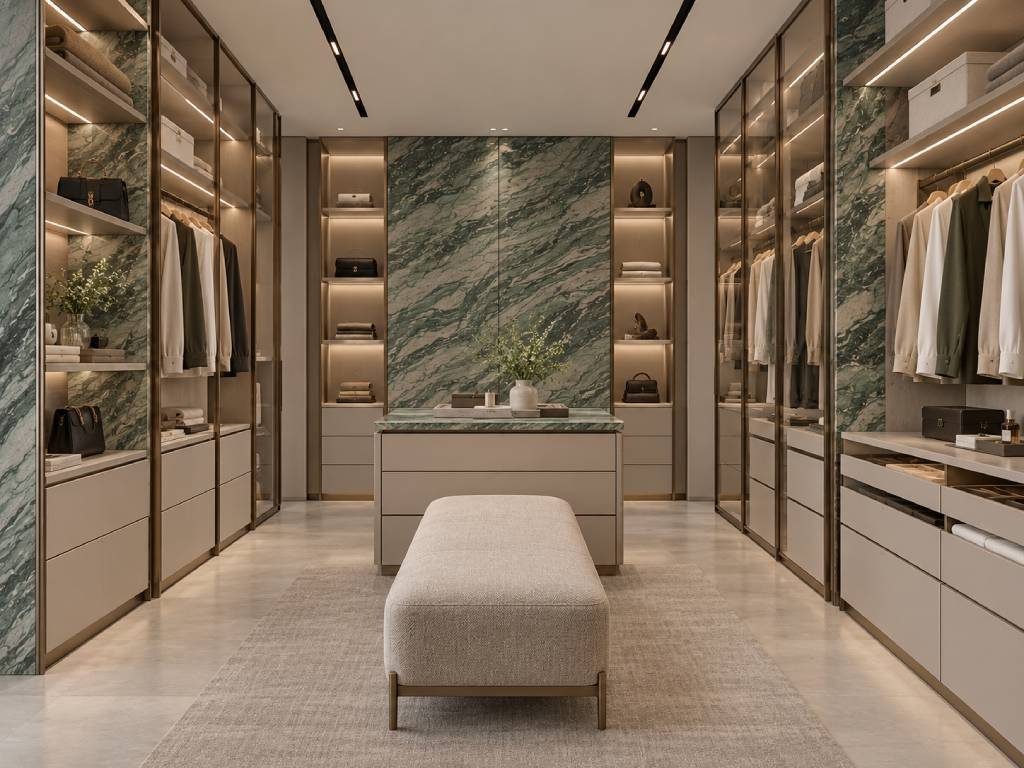
Open and glass-fronted sections work best when used selectively within a luxury wardrobe. They are most useful for handbags, shoes, watches or accessories that are displayed with intention, rather than for everyday storage.
Illuminated niches can break up a large marble wardrobe wall and improve visibility at night, while open shelving can sit beside a vanity or dressing corner. Glass-fronted cabinets offer a useful balance by protecting items while keeping them visible. In larger wardrobes and walk-in layouts, these sections should be planned as part of the overall composition so that the display, storage and circulation remain balanced.
Marble Wardrobe Finishes, Patterns and Design Details
The finish should be chosen according to the room’s lighting, scale and overall mood. A polished surface reflects more light and suits contemporary bedrooms with darker walls or limited natural light. A matte or honed finish is better for calmer, more understated interiors, especially where the glare needs to be controlled or the wardrobe occupies a large wall.
The veining should also respond to the size of the room. Subtle patterns work well in compact bedrooms, guest rooms and minimalist spaces because they add depth without making the wardrobe feel visually heavy. Stronger veining is better suited to wide shutters, walk-in wardrobes and master suites, where the pattern has enough space to be appreciated.
A few details can further refine the design:
- Bookmatched panels work best on broad wardrobe fronts where the veining can align clearly.
- Fluted accents or metal trims can be used selectively to define edges without interrupting the marble pattern.
- Integrated lighting can highlight the surface while improving visibility around shelves, drawers and display sections.
When comparing Marble vs Tiles for wardrobe applications, or evaluating an Italian marble wardrobe design vs laminate wardrobe, the main difference lies in material depth, natural variation and the quality of the finish over time.
It is equally important to understand how to check Italian marble quality before selecting a slab. Natural marble requires careful slab selection because the colour, veining and scale vary from one piece to another. The stone should therefore be chosen in relation to the wardrobe dimensions, bedroom lighting and surrounding materials so that the final surface feels balanced within the room.
Floor to Ceiling Marble Wardrobe Designs
Floor-to-ceiling wardrobes are very useful in luxury bedrooms because they make the storage feel built into the architecture. They also help prevent awkward gaps above the wardrobe that collect dust and make the room look shorter.
The proportions of a full-height marble wardrobe design need to be planned carefully. In smaller bedrooms, lighter marble and slim profiles can keep the room from feeling closed in. In larger suites, stronger veining or bookmatched surfaces can be used with more confidence.
Benefits of floor-to-ceiling wardrobes include:
- Enhanced vertical storage that makes better use of the full wall height.
- Clean and seamless aesthetics help the wardrobe feel built into the room.
- Reduced visual clutter that keeps the bedroom calmer and more organised.
- Better integration with architectural elements makes the wardrobe feel intentional.
- Greater customisation opportunities allow storage to be planned around clothing, accessories and lifestyle needs.
- Improved sense of scale makes the bedroom feel more finished.
For contemporary homes, this configuration offers a strong balance of storage efficiency and refined design.
Latest Marble Wardrobe Design Trends
The latest marble wardrobe design trends in 2026 are moving towards customisation, better interior planning and more thoughtful surface combinations. Homeowners are not choosing wardrobes only by shutter finish anymore. They are looking at lighting, storage habits, hardware, dressing routines and how the wardrobe fits in with the rest of the bedroom.
Fluted Wardrobe Panels
Fluted surfaces bring rhythm to the wardrobe without the need for excessive decoration. They work well on accent shutters, side panels or parts that need a tactile feel.
Concealed Handle Systems
Concealed handles create a cleaner surface and are especially useful when the marble pattern should remain uninterrupted.
Integrated LED Lighting
Lighting inside drawers, shelves and display sections improves visibility and makes the wardrobe easier to use. Warm lighting usually works best with marble because it softens the surface and brings out the veining.
Mixed Material Combinations
Marble pairs beautifully with wood, glass, leather, brass and bronze. Wood can soften the stone, glass can lighten the composition and metal detailing can give the wardrobe a more polished edge.
Statement Veining Patterns
Bold marble-inspired surfaces work best in large rooms or selected portions of the wardrobe. They sit particularly well behind a dressing area or within a walk-in wardrobe.
Floor-to-Ceiling Installations
Full-height wardrobes are still popular because they maximise storage and make the room feel more complete.
Luxury Walk-In Wardrobes
The ritual of dressing is guiding the way custom walk-in wardrobes are planned, not only storage. Seating, mirrors, vanity counters and accessory displays are now being incorporated into the layout.
Curated Display Storage
Open shelving and glass-fronted compartments are being used more carefully to display quality items without making the wardrobe feel cluttered.
Seeing the stone in person and understanding how it reacts to different lights is helpful before settling on a marble wardrobe. Homeowners, architects and designers can see the full slab character, finish options and natural variation at The Quarry Gallery in Mumbai before choosing. This is especially important for wardrobes since the surface is viewed vertically and often under bedroom lighting.
FAQ
Yes, floor-to-ceiling marble wardrobes work well in modern bedrooms because they create a clean, continuous surface and make better use of vertical space. Lighter marble, slim profiles and concealed handles can keep smaller rooms feeling open, while larger bedrooms can accommodate stronger patterns and bookmatched panels.
Yes, you can customise marble wardrobes for walk-in closet solutions in bedroom arrangements. The design may also incorporate special hanging zones, drawers, display shelving, shoe storage, vanity sections and lighting. Walk-in closets in high-end homes are typically designed according to the home-owner’s dressing habits and storage needs
Choose a marble wardrobe design that suits the size, colour scheme and furniture style of the room. Minimal bedrooms require softer veining and tidy shutters. Contemporary bedrooms can use grey, white or beige marble with sleek metal embellishments. More dramatic veining, bookmatched panels and feature sections can be used in larger luxury bedrooms.
The inside of a marble wardrobe should be based on daily use. Provide hanging space for formal wear, shelves for folded clothes, drawers for accessories, shoe storage, seasonal compartments and sufficient internal lighting. A strong inside marble wardrobe design makes the wardrobe more convenient to use and helps keep the bedroom organised.
The latest trends in marble closet design include fluted panels, hidden handles, warm LED lighting, blended materials, floor-to-ceiling wardrobes, walk-in layouts and curated display storage. These trends are about looks and usability, so the wardrobe seems sophisticated and practical.
Bookmatched marble panels, expressive natural patterns, refined metal trims and integrated lighting can give a marble wardrobe a more considered appearance. Fluted accents, glass-fronted sections and concealed handles can add further detail while keeping the overall design clean, balanced and cohesive with the bedroom.
Sliding marble wardrobes conserve space because the shutters slide horizontally and require no front clearance. Hinged wardrobes demand more space to open but allow complete access to the inside of the closet. Sliding designs work well in modern, small bedrooms, while hinged versions are ideal in larger rooms and master suites.
Storage wise, you get practical solutions such as hanging rods, drawer units, accessory trays, shoe shelves, open display sections, seasonal storage and integrated lighting. Deluxe wardrobes can also feature glass-fronted parts, vanity counters, illuminated niches and customisable storage for watches, jewellery or luggage.
The best marble wardrobe design for a bedroom relies on the size of the space, the storage needs and the overall interior style. Small bedrooms look best with subtle veining and lighter finishes, whereas spacious master bedrooms can handle floor-to-ceiling wardrobes, bookmatched panels and stronger marble patterns.