Everything You Need to Know About Statuario Marble (2026 Guide)
Posted on by The Quarry
Some materials finish a space. Statuario marble gives it mood, light and a sense of luxury.
Known for its bright white base and bold grey veining, Italian statuary marble is one of the most admired natural stones in the world. It feels rare, expressive and refined. When used well, it becomes the visual anchor of a home.
This guide takes you through what Statuario marble is, how to choose the right slab, where to use it and whether it is worth the investment for Indian homes.
What is Statuario Marble? A Clear Definition with Origin and Characteristics
Statuario marble is a premium white marble quarried in the Carrara region of Italy. It is recognised for its luminous white background and bold grey veining that moves naturally across the slab.
What makes Statuario stone special is its contrast. The base feels clean and refined, while the veins bring drama and movement. Nothing feels printed or repeated. Every slab has its own rhythm.
Formed over millions of years, Statuario marble develops a dense structure and takes on a beautiful polish. In the right light, it has a soft glow that makes the surface feel alive.
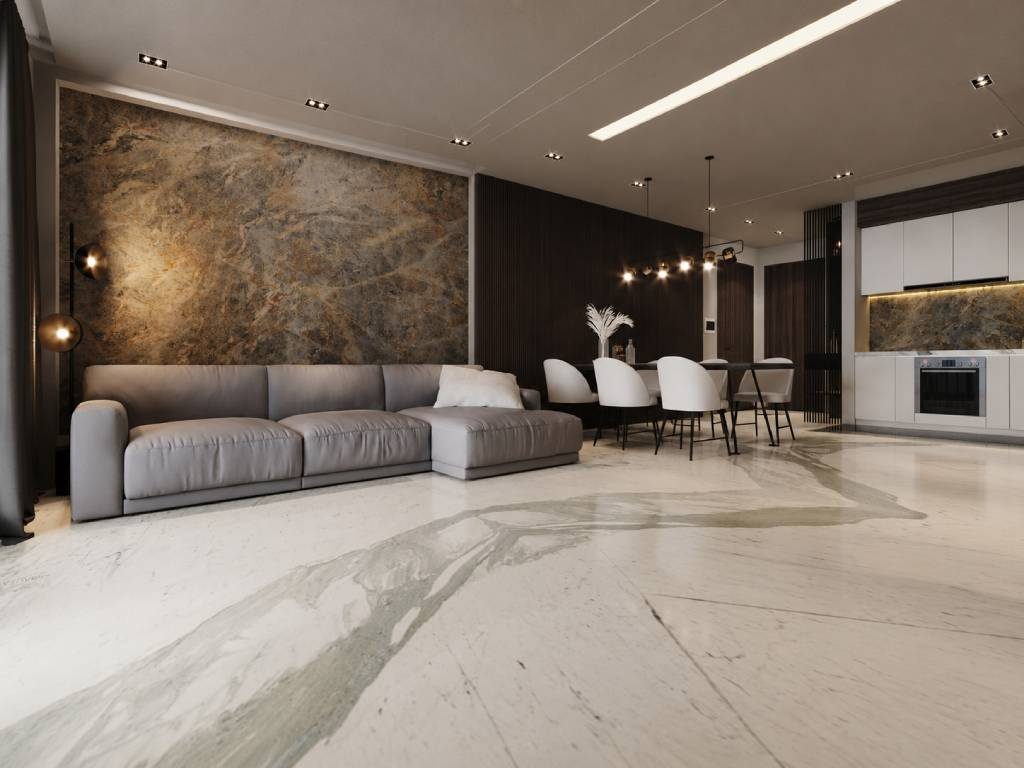
This is why Italian Statuario marble is often chosen from the Statement Collection and used in spaces that are meant to stand out. A grand floor. A statement wall. A bathroom that feels more considered.
Why Statuario Marble is Seen as a Luxury Choice in Interior Design
The value of Statuario marble comes from a combination of origin, rarity and visual quality. Quarried in the Carrara region of Italy, it is known for its bright white base and distinctive grey veining, which gives each slab a naturally individual character.
The finest Italian statuary marble is limited in availability, so high-quality slabs are carefully selected and often sought after by architects, interior designers and luxury homeowners. The difference is visible in the clarity of the white background, the depth of the veins and the way the pattern moves across the full slab.
Its Italian origin also adds to its design credibility. Carrara marble has been associated with sculpture, architecture and refined interiors for centuries and Statuario marble continues that legacy in contemporary homes.
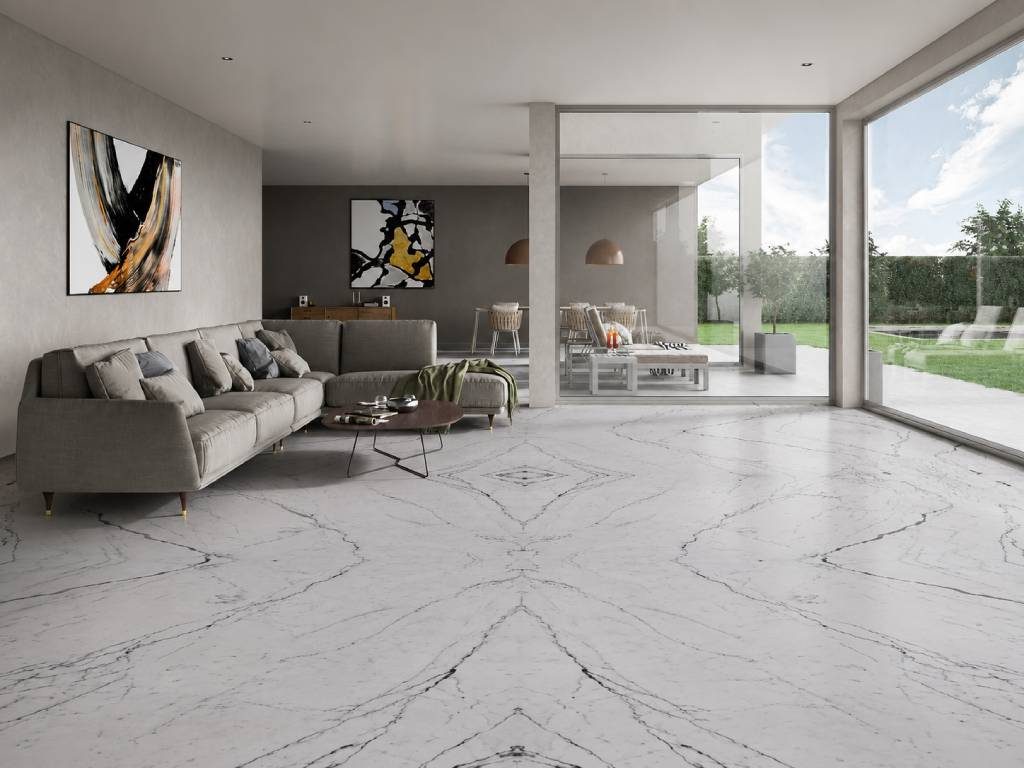
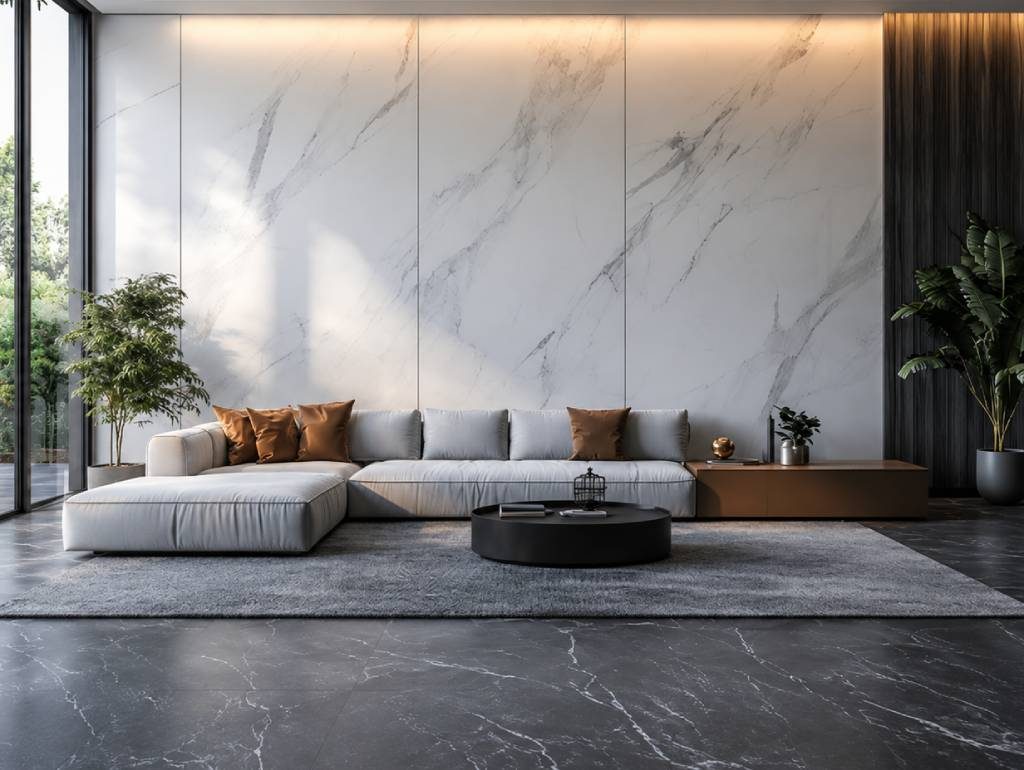
Many Statuario marble design ideas are built around areas where the full slab can be appreciated, such as living room floors, feature walls, staircases, bathroom cladding and sculptural counters. These applications allow the stone’s natural veining, scale and finish to become part of the overall design rather than just a surface detail.
Types of Statuario Marble Available in India
When people look for Statuario marble in India, they usually come across two broad options.
1. Italian Statuario Marble
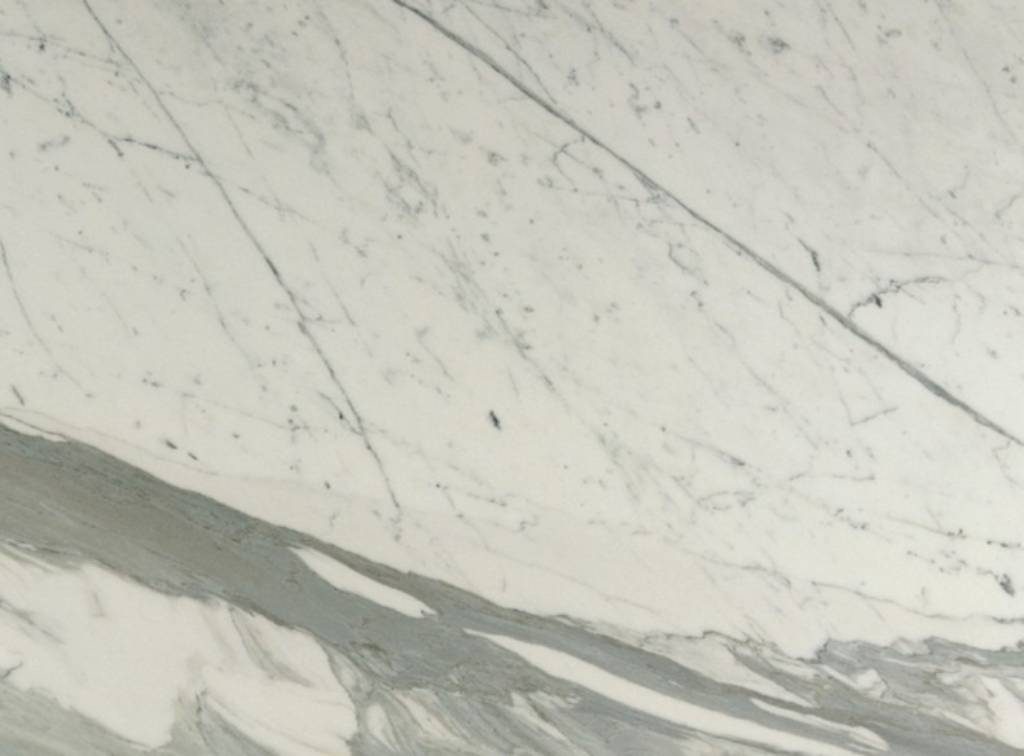
This is the original. Quarried in Italy, Italian Statuario marble has a brighter white base, stronger vein movement and a more refined finish. It is usually preferred for luxury homes, villas and interiors,.
- Indian Statuario Marble
Indian Statuario marble is inspired by the Italian look and is usually more budget-friendly. It can work well for many interiors, but the difference often shows in the whiteness, depth, vein clarity and finish.
With Statuario marble, even small visual details can change the final effect.
Italian Statuario Marble vs Indian Statuario Marble
When comparing Italian and Indian options, the main difference is usually seen in origin, whiteness, vein clarity, finish and overall slab quality. This table gives a quick overview before you decide which type of Statuario marble suits your space better.
| Factor | Italian Statuario Marble | Indian Statuario Marble |
| Origin | Italy, especially Carrara | India |
| Appearance | Bright white base, bold grey veins | Softer white tone, gentler veins |
| Finish | High polish, refined surface | Moderate polish depending on grade |
| Price | Premium | More budget-friendly |
| Use Case | Luxury villas, statement interiors | General interiors |
For high-end homes, Italian Statuario marble usually delivers stronger visual depth and impact. Indian options work well when you want a similar look in a more practical way.
Variations Based on Veining, Color Tone and Finish
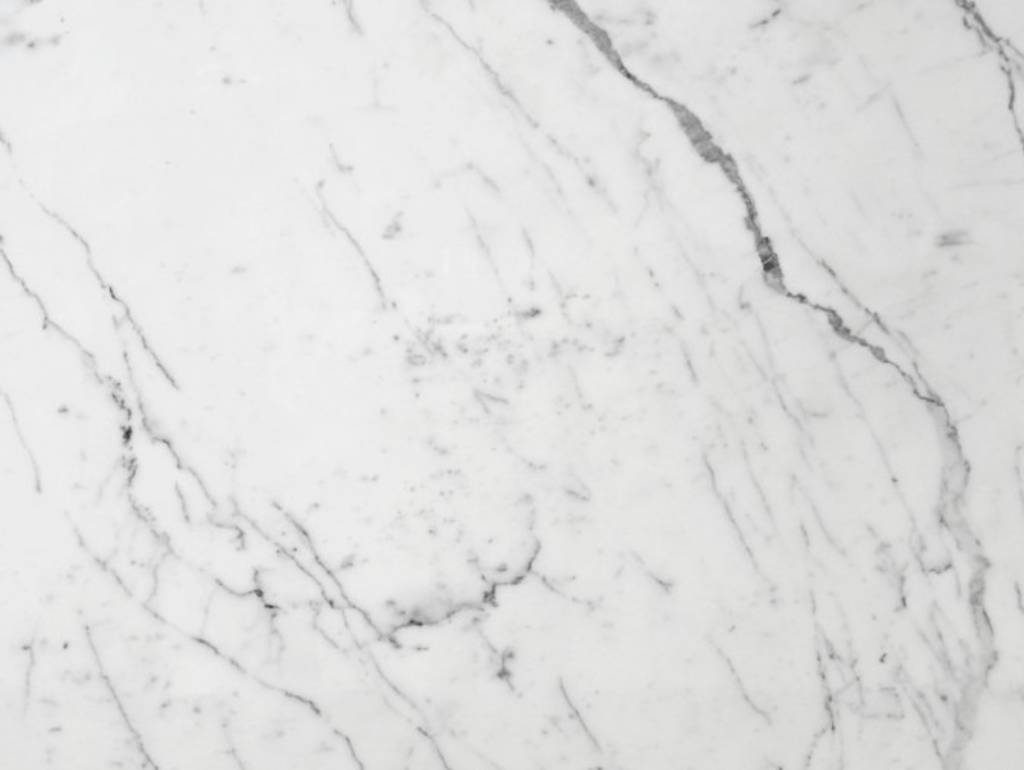
No two slabs of Statuario marble are exactly alike, so selection should be based on the full slab rather than a small sample. The main things to check are:
- Veining: Some have thick, sweeping grey veins, others have finer, more restrained movement. Bold veining works nicely with feature walls, bookmatched panels and big floors. For locations where you want a more subtle, seamless look, it’s best to use more delicate veining.
- Colour tone: The white base might be brilliant and crisp or slightly warmer. Higher grade slabs usually have a better white backdrop which provides better contrast for the grey veins and a more sophisticated look on the surface.
- Finish: Statuario marble has a polished finish that gives it a reflective surface and is ideal for formal living rooms, foyers and statement spaces. A honed finish has a more subdued look and is commonly used in bathrooms, vanities or in places where a softer surface appearance is required.
Before finalising a slab, view it under natural and artificial light. Step back, check the vein movement across the entire piece and make sure the colour tone works with the flooring, walls, woodwork and lighting in your home.
Where Can You Use Statuario Marble in Interiors?
The beauty of Statuario marble design ideas lies in how versatile the stone can be.
For flooring, Statuario marble creates a grand, seamless look. It works beautifully as italian marble for living room spaces, entrance foyers and luxury residences where the floor is part of the design story.
For walls and feature panels, Statuario marble bookmatch slab design ideas can be especially striking. When two slabs mirror each other, the veins meet like natural artwork. This works well for TV walls, double-height walls and statement backdrops.
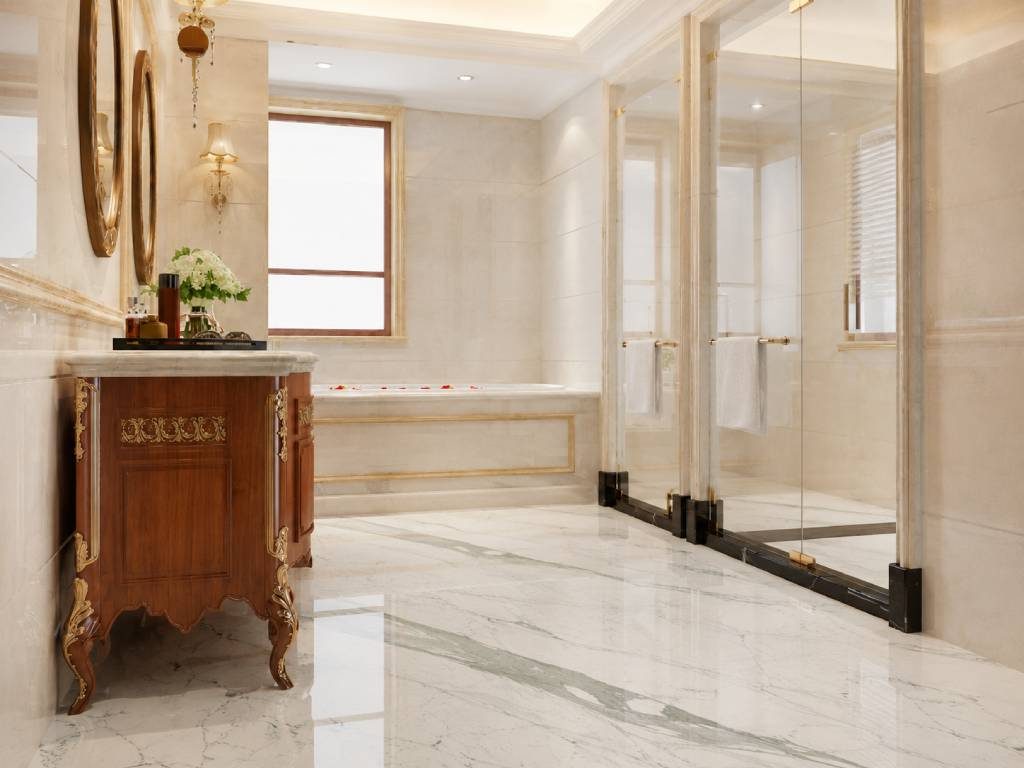
In bathrooms, Statuario marble brings brightness and calm, while softer applications are inspired by Flaunt collection of marble which create an equally elegant and understated look. Vanity backsplashes, shower walls and cladding look refined without feeling overdone.
It also works beautifully for staircases, counters and sculptural installations. This is why Statuario marble for luxury villa interiors remains such a strong choice. Villas usually offer the scale and light that allow the stone to be experienced properly.
Pros and Cons of Choosing Statuario Marble
Before choosing Statuario marble, it helps to look at both its visual impact and its practical needs. The same white base, grey veining and polished finish that make it ideal for luxury floors, foyers, bathrooms and feature walls also call for careful installation, regular sealing and gentle maintenance.
Pros
- Statuario marble has a dazzling white foundation with natural grey veining, so every slab has its distinct pattern and movement.
- It is perfect for luxury homes, villas, foyers, living rooms, baths and feature walls where the stone can be seen at scale.
- If you are looking for premium natural stone, its relevance over time is guaranteed because it does not depend on short-lived trends.
- Good slabs of Italian Statuario marble take on a wonderful polish and can give homes a clean, sophisticated look.
Cons
- Statuario marble needs regular care and should be cleaned with mild, pH-neutral chemicals and kept free of any acid or abrasive cleaners.
- Requires regular sealing to help reduce stains and gives better protection to the surface.
- Unlike granite, marble is a softer material, so use caution while moving furniture and sharp things, as it can scratch easily if handled roughly.
- Cutting, matching, polishing and laying must be done by skilled craftsmen, especially when working with huge slabs or bookmatched designs.
Statuario Marble vs Other Popular Marble
A common question is, what is the difference between Statuario marble and Calacatta marble?
| Marble Type | Look | Veining | Price | Use |
| Statuario | Bright white | Bold and dramatic | High | Statement interiors |
| Carrara | Light grey-white | Soft and feathery | Moderate | Subtle spaces |
| Calacatta | Warm white | Thick and artistic | Premium | Feature surfaces |
Carrara feels more subtle. Calacatta is often warmer and more artistic. Statuario marble sits beautifully between the two. It has enough drama to make a statement, but still feels balanced.
How to Choose the Right Statuario Marble for Your Space
Choosing Statuario marble is less about picking a colour and more about understanding how the full slab will sit within your home. Its white base, grey veining, scale and finish can look very different depending on the room, lighting and placement. That is why the selection should always begin with the full slab, not a small sample.
-
- Natural light brings out the white base and grey vein contrast. View the slab under both natural and warm indoor lighting before finalising it.
-
- Softer veins work well in minimal spaces, bathrooms and vanities. Bolder patterns suit larger interiors, feature walls, floors and staircases where the slab has enough room to be appreciated.
-
- With Italian statuary marble, supplier credibility is important. If you’re wondering how to identify original Statuario marble, look for natural variation, depth, irregular veining and a refined finish. The slab should look natural, not repetitive.
-
- Understanding how natural stones for interior design interact with surrounding materials can also help create a more cohesive and balanced interior.
- Choose a slab you can imagine living with for years. The right one should feel suitable for the scale, usage and design language of your home.
Mistakes to Avoid When Buying Statuario Marble
Even a high-quality slab can fall short if it is selected in isolation, placed in the wrong light or installed without precision. Before you finalise Statuario marble, it helps to know what can affect the final look once the stone enters your home.
- Do not choose Statuario marble from a small sample alone. A sample can show the colour, but it will not show the full vein movement, slab scale or overall visual balance.
- Check the slab in different lighting conditions before finalising it. The same stone can look different under showroom lighting, natural daylight and warm home lighting.
- Verify the origin if you are paying for Italian Statuario stone. Ask about the source, slab quality and finish, especially when the stone is being positioned as premium Italian marble.
- Avoid using it across every surface in a compact space. In smaller rooms, one well-chosen wall, floor or vanity can often create a stronger result.
- Pay close attention to installation quality. Cutting, matching, polishing and finishing are as important as slab selection and poor workmanship can reduce the impact of even the finest slab.
This is also where expert curation makes a difference. With a stone like Statuario marble, the choice is rarely made by appearance alone. The origin, slab size, vein direction, polish, thickness and intended application all need to work together.
At The Quarry Gallery, these details are assessed before a slab is recommended, so homeowners and designers can choose with more confidence and fewer surprises during installation.
Is Statuario Marble Worth the Investment?
If you want a home that feels refined, memorable and deeply considered, Statuario marble is worth it.
As one of the world's Rare and Precious Collection of marble, Statuario marble continues to be valued for its exceptional character, rarity and timeless appeal.
More than anything, it changes how a space feels. The way light moves across it. The way the veins guide the eye. The way the room suddenly feels complete.
For luxury homes and villas, Statuario marble for luxury villa interiors remains one of the most graceful choices. It feels classic, current and quietly grand, making it one of the best marble from the Quarry Gallery’s Celebrity Collection
FAQs
Use gentle cleaners, soft cloths and regular sealing. Avoid harsh or acidic products.
Prices vary by quality, thickness, finish and origin. Statuario marble sits in the premium range.
Yes, Statuario marble works beautifully for flooring, especially in living rooms, foyers and low to medium traffic areas.
“Statutory marble” is usually a misspelling. The correct term is Statuario marble.
Statuario marble has a brighter white base and bolder grey veining. Carrara has softer tones and finer veins.
Premium Italian stones like Statuario marble and Calacatta are considered among the finest globally.
In India, Rajasthan has the biggest number of marble reserves. Statuario marble is imported from Italy.