Natural Stone for Villas: Choosing the Right Material for Luxury Living
Posted on by The Quarry
Stone often determines how a villa is experienced before the furniture arrives. Its scale, colour and finish influence spaces ranging from an entrance foyer to a poolside terrace.
Choosing Natural Stone For Villas therefore requires more than selecting a slab that looks impressive on its own. This guide explains how marble, granite, limestone and travertine perform across different applications, helping you match the material to the architecture, climate and way the home will be used.
Why Natural Stone Is the Preferred Choice for Luxury Villas
Architects favour natural stone because it gives large homes visual continuity and stands up to years of use. Every slab carries its own veining, mineral movement and tonal variation. Among the natural stone materials used in high-end villas, the right choice can connect interiors, façades and landscapes with ease. Natural Stone For Villas also allows finishes to vary without losing material consistency.
Major benefits include:
- Individual character: No two slabs are the same, so surfaces can feel customised.
- Long life span: When installed, stone can last for decades if sealed and maintained properly.
- Design versatility: Polished, honed, brushed and textured finishes are ideal for indoor and outdoor zones.
- Material continuity: Related stones can move from a floor on the inside to a balcony or façade.
- Long-term value: A well-selected stone remains in style as furnishings change.
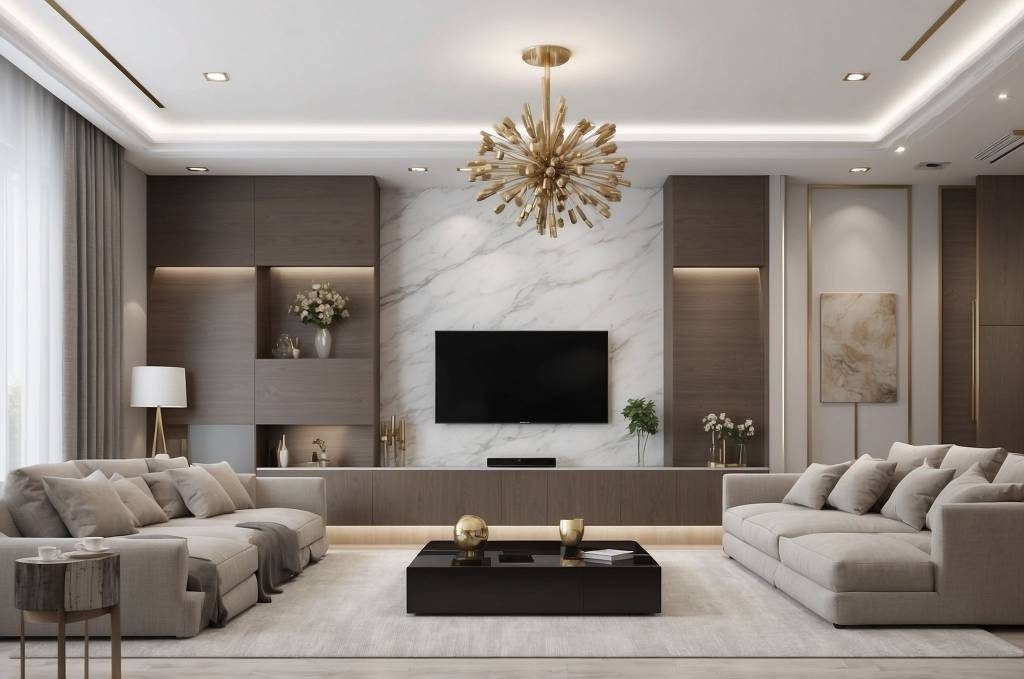
Best Natural Stones for Villa Design
The best natural stone for luxury villas depends on where it will be installed and how much movement, moisture and weather exposure the area receives. Natural Stone For Villas works best when each material is assigned a role suited to its strengths.
Marble
Marble brings depth and refinement to entrance halls, living-room floors, staircases, bathrooms and feature walls. Pale varieties can open up large interiors, while richly veined stones are better reserved for focal surfaces.
For villa flooring with Italian marble and natural stone, review slabs together so colour, vein direction and transitions between rooms are planned before cutting.
When selecting a variety for a specific room, comparing the different types of marble by colour, veining and application can help create a cohesive interior scheme.
Granite
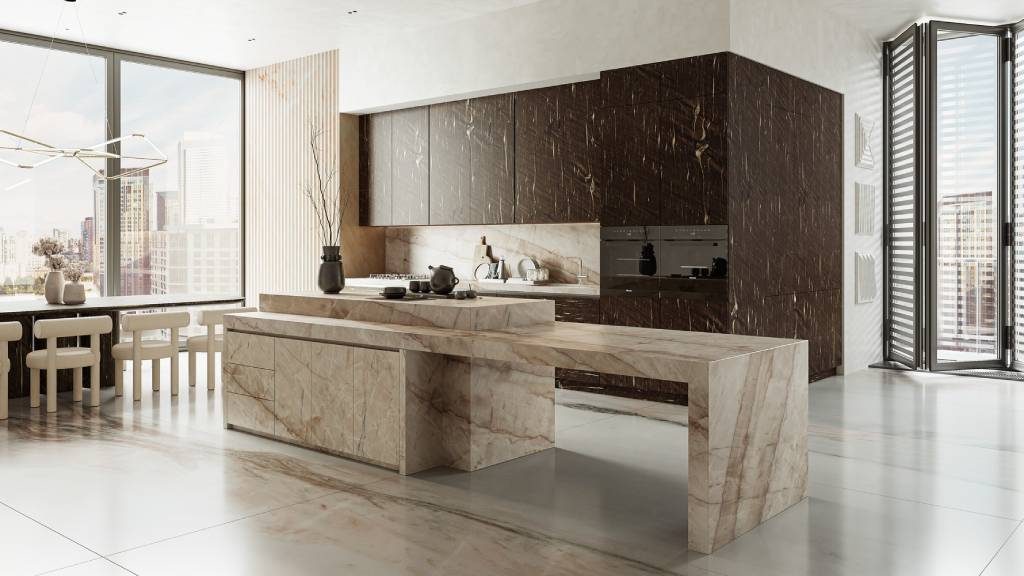
Granite is dense, durable and suited to kitchens, utility zones, outdoor counters, driveways and heavily used areas. Its resistance to impact and changing weather makes it practical for active family homes. A honed or textured finish improves grip where the surface may become wet.
Limestone
Limestone has a naturally weathered appearance that complements Mediterranean, rustic and contemporary architecture. It works well for internal walls, low-traffic floors, courtyards and exterior elevations. More porous varieties require correct sealing and considered placement.
Travertine
Travertine is recognised by its linear movement and small natural voids. It suits patios, pool decks, garden walls and shaded outdoor lounges. Filled and honed travertine is easier to maintain indoors, while textured finishes offer better grip outside.
Where to Use Natural Stone in a Villa
A large residence rarely needs one stone everywhere. Considered schemes use a primary material for continuity, then introduce a contrasting farmhouse stone or expressive marble where the architecture calls for emphasis.
Villa Flooring
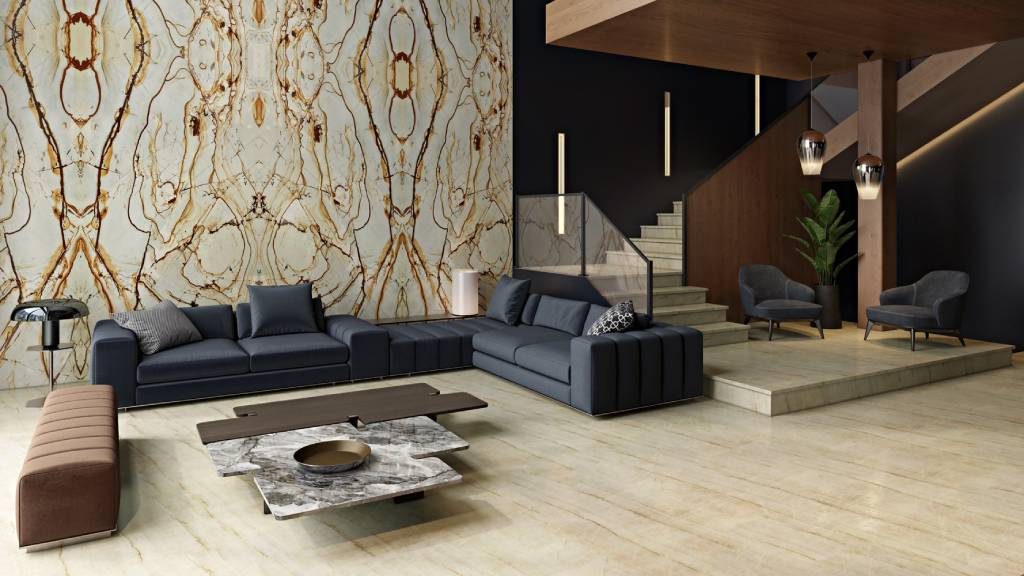
For indoor and outdoor natural stone flooring for villas, choose the finish as carefully as the stone. Polished marble suits formal living and dining rooms, while honed or brushed surfaces are more practical near entrances, balconies and pool areas. Floor thickness, substrate preparation and movement joints should be resolved before installation.
Exterior Cladding
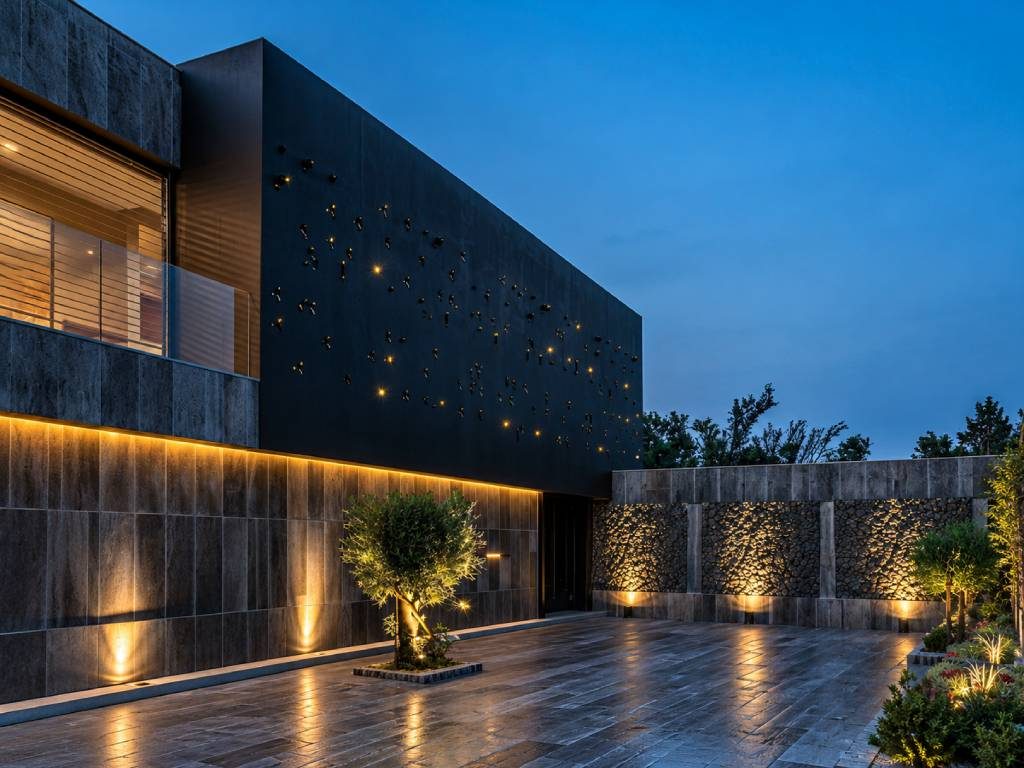
Well-planned natural stone cladding for villa exteriors gives the façade depth and protects surfaces around entrances, columns and boundary walls. Granite, selected limestone and other dense stones are commonly used, with fixing and drainage details planned for the building’s height and exposure.
Feature Walls
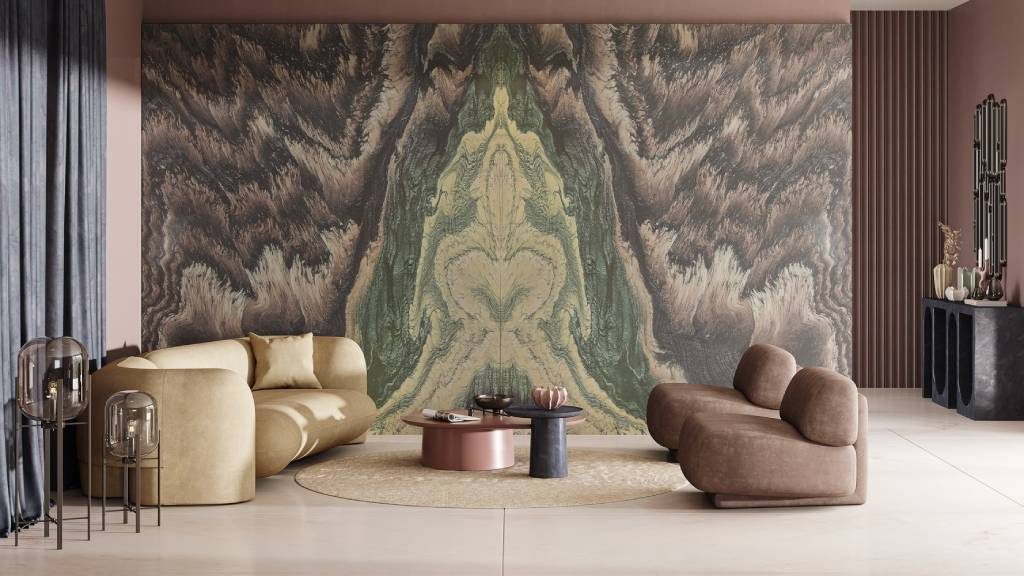
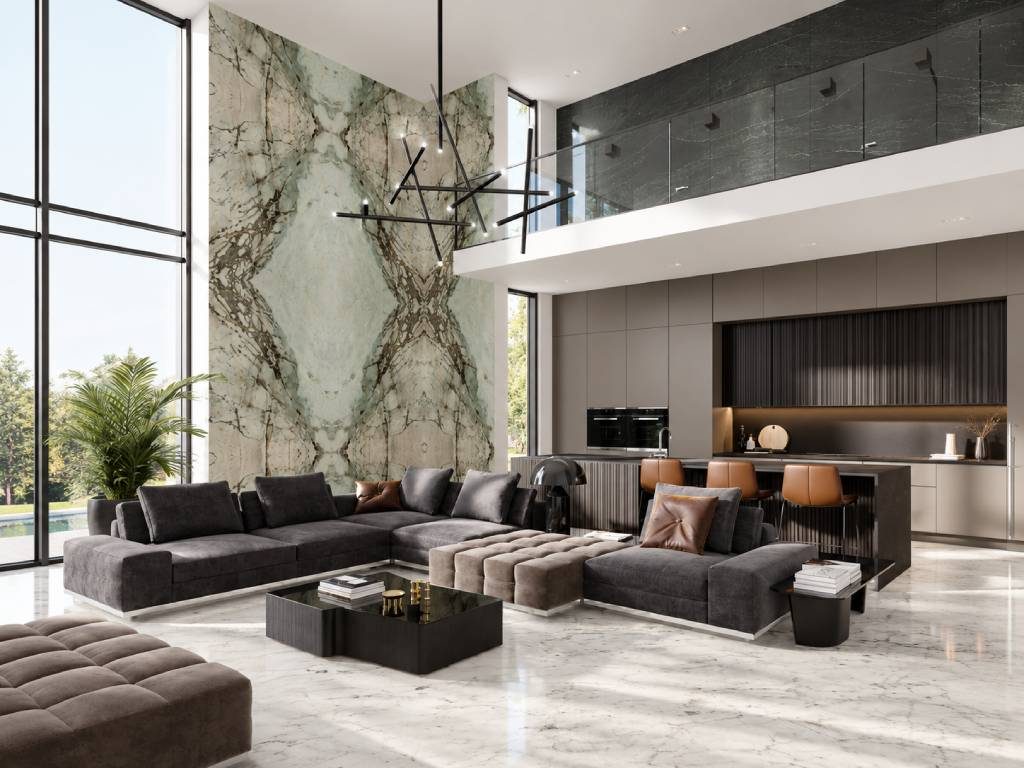
A full-height marble wall can define a double-height living room, foyer or staircase without additional ornament. Bookmatching works best where the wall can be viewed from a distance, while smaller patterns suit bedrooms and bars. Warm, angled lighting reveals the surface without creating glare.
Before finalising the layout, understanding bookmatched marble walls and floors can help you plan how adjoining slabs will align to create a continuous, mirrored pattern.
Outdoor Spaces and Landscapes
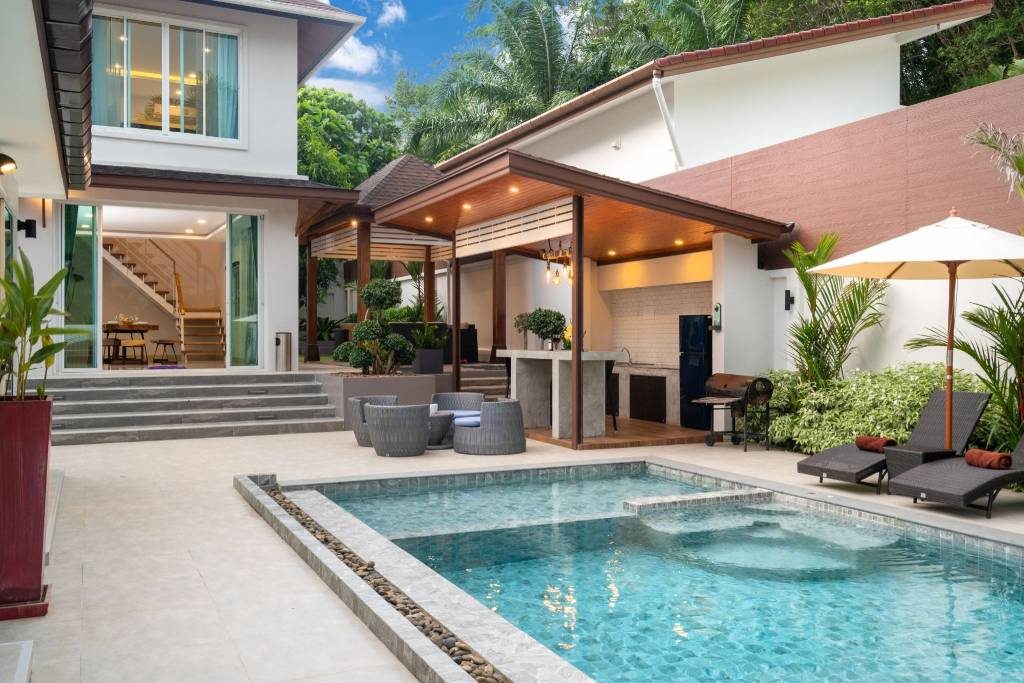
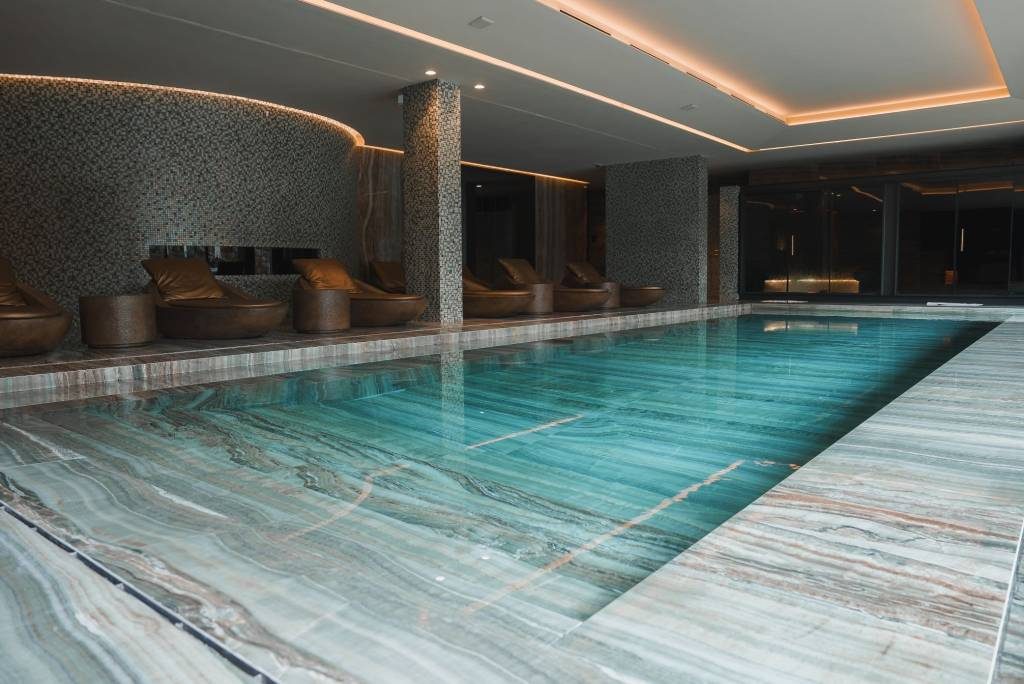
Pathways, patios, pool surrounds and garden walls require weather-resistant natural stone for villas with a finish that supports grip and drainage. Granite and textured limestone work well for open spaces; travertine is fine for sheltered terraces. A locally familiar farmhouse stone can connect the villa naturally to its landscape.
Choosing natural stone for outdoor spaces also involves considering how the material responds to changing weather, moisture and regular foot traffic.
Selecting Natural Stone Based on Climate and Lifestyle
Before you approve any stone for villa interiors or exteriors, this is important to consider:
- Climate: In warmer climates lighter stones absorb less visible heat. In areas with considerable rains concentrate on grip and drainage.
- In high-traffic kitchens, entryways and family spaces, choose heavier materials.
- Maintenance: Check sealing frequency, stain resistance and repolishing needs before making a choice. Reviewing practical marble maintenance requirements can help you understand the care different surfaces need over time.
- Children & Pets Do not use highly polished stone in wet or high traffic areas.
- Indoor-outdoor connections: Choose complementary tones rather than insist on the same finish throughout.
- Slab availability: Order sufficient material from one lot to ensure uniformity on huge areas.
Marble and Granite for Villa Floors
You can use marble or granite for villa flooring depending on the location and the amount of care you can reasonably give to the surface.
Understanding where to use marble versus granite makes it easier to match each material to the room’s traffic levels, exposure and maintenance requirements.
| Consideration | Marble | Granite |
| Look | Formal Character and Expressive Veining | Granular movement and Grounded look |
| Durability | Will do nicely indoors if properly cared for | High impact and heavy use resistance |
| Maintenance | Needs sealing and pH neutral cleaning. | Usually easier to maintain |
| Weather resistance | Best utilised outside in a selective manner | Suitable for outdoor exposure |
| Best uses | Foyers, living rooms, bedrooms and formal spaces | Service areas, entrances & kitchens, outdoor floors |
In more formal environments, marble has more visual movement and brilliance. Granite is more practical for high-traffic or exposed zones. Many villas use both, allowing each material to perform where it is strongest.
Tips for Using Marble in a Villa Without Overdoing It
Choose one principal focal area. Use marble on a foyer floor, staircase wall or living-room backdrop, then keep surrounding finishes restrained.
- Pair it with warmer materials. Timber, bronze, brass and textured fabrics balance extensive stone surfaces.
- Plan veining across the full elevation. Review slab layouts before cutting, especially for double-height walls and bookmatched installations.
- Keep adjoining stones related. When combining marble with a farmhouse stone, repeat a shared undertone so the transition feels deliberate.
- Use lighting to reveal the surface. Grazing light brings out texture, while diffused light keeps polished floors comfortable to view.
- Vary the finish, not the material. A polished interior floor and honed veranda can create continuity while meeting practical needs.
- Protect long-term performance. Use pH-neutral cleaners, wipe spills promptly, seal as recommended and place pads beneath heavy furniture.
Careful marble slab selection is especially important for large elevations, where differences in veining and tone can affect the finished composition.
For Natural Stone For Villas The Quarry begins with the experience of seeing whole slabs and learning how they will travel over a room, wall or facade. Picking the appropriate one is a matter of balancing visual character with installation planning and routine upkeep.
FAQ
Begin with the application, then assess climate, traffic, maintenance, finish and slab size. Review full slabs and design transitions between floors, walls and outdoor areas prior to approval.
Think about durability, porosity, slip, sun and rain exposure, sealing, veins, slab availability and architecture compatibility. Installation know-how is equally vital.
Marble is used for formal interiors, while granite is best for high traffic and exposed spaces. Limestone and travertine work well with warmer architectural styles. Strong villa schemes assign each stone according to location.
Marble is suited for living rooms, foyers and bedrooms. Granite is good for entrances, kitchens and outdoor floors. Polished surfaces serve dry interiors best, while honed or textured finishes offer better grip.
Dense granites are among the most reliable choices for exposed facades and outdoor flooring. Some limestones and travertines also work well with the right type, finish, fixing system and sealing system.
When veining, light reflection and a formal finish are priorities, Marble is perfect. Granite is more resistant to impact and easy to maintain. Choose according to traffic, exposure and appearance.
Granite, selected limestone and travertine are widely used outdoors. Choose a textured or honed finish, check the stone’s porosity and ensure correct drainage for the local climate.