Marble flooring is often one of the most defining choices in an interior. If you’re wondering how to choose marble for flooring, start by considering the room, the stone’s veining and colour, its finish, and the level of maintenance it requires. Some varieties have fine, understated veining, while others feature more pronounced patterns that become a focal point across a floor. The scale and direction of these patterns can also influence how the flooring relates to the surrounding interiors.
The right choice comes down to balancing appearance with practical considerations. Understanding the differences between marble types, comparing polished and honed finishes, and considering the needs of each room can make the selection process easier. The following 20 marble floor design ideas for homes explore different approaches to using marble, with guidance on choosing the stone, selecting a suitable finish and caring for it over time. At The Quarry, we encourage every client to view and compare real slabs before committing, a principle that runs through the advice below.
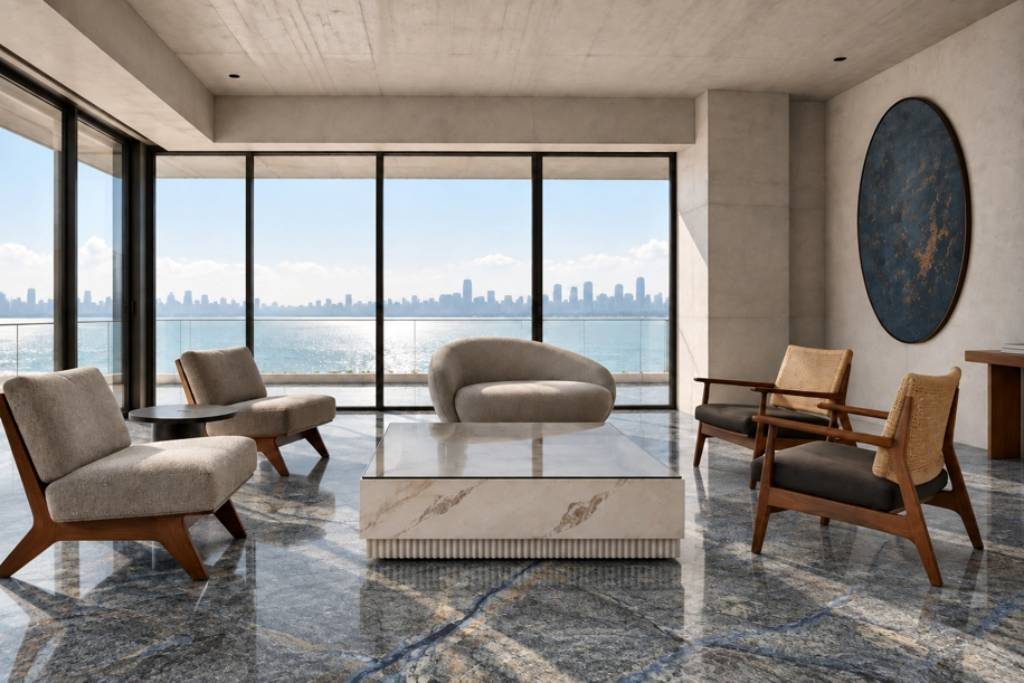
Marble Floor Design Ideas for Every Style of Interior
The best marble for home flooring depends on the room. Soft-veined whites such as Carrara suit bedrooms and passageways; bold Calacatta, Statuario and Arabescato suit large living rooms and entrances; warm Crema Marfil suits rooms with limited daylight; and dark Nero Marquina works best in spacious, well-lit areas. In kitchens and bathrooms, choose a honed or textured finish for better grip.
The table below summarises all 20 designs covered in this guide.
| # | Design | Best Room | Vein Intensity | Maintenance |
|---|---|---|---|---|
| 1 | Carrara | Living rooms, bedrooms, passageways | Soft, fine | Moderate: light surface shows stains |
| 2 | Calacatta | Large living areas | Bold | Moderate: light surface shows stains |
| 3 | Statuario | Open-plan living, statement floors | Bold, dramatic | Moderate: light surface shows stains |
| 4 | Crema Marfil | Warm interiors, rooms with limited daylight | Subtle | Low to moderate: beige tone is forgiving |
| 5 | Nero Marquina | Entrances, spacious rooms | High contrast | Higher: shows dust and water marks |
| 6 | Astilla | Larger rooms with timber and earthy tones | Medium | Moderate |
| 7 | Arabescato | Living rooms, formal entrances | Bold, flowing | Moderate: light surface shows stains |
| 8 | Green marble | Dining rooms, feature areas | Varies by stone | Moderate |
| 9 | Blue marble | Feature areas, formal sitting rooms | Varies by stone | Moderate |
| 10 | Pink marble | Bedrooms, dressing areas | Subtle to medium | Moderate |
| 11 | Black and white | Foyers, formal living spaces | Graphic pattern | Higher: contrast shows dust and marks |
| 12 | Herringbone | Corridors, entrances | Depends on stone | Moderate: more joints to keep clean |
| 13 | Geometric with inlays | Dining rooms, foyers | Pattern-led | Moderate: many joints |
| 14 | Brass or metal borders | Hallways, transitions | Pattern-led | Higher: metal needs compatible cleaners |
| 15 | Book-matched | Large living rooms, foyers | Bold, mirrored | Moderate |
| 16 | Medallion | Entrance foyers, formal living rooms | Pattern-led | Moderate |
| 17 | Dual-tone | Hallways, entrances, open-plan homes | Two-tone | Moderate |
| 18 | Textured finish | Bathrooms, areas that need grip | Muted | Moderate: texture can hold dirt |
| 19 | Minimal vein | Pared-back interiors | Minimal | Moderate: light surface shows stains |
| 20 | Matching feature wall | Bathrooms, bedrooms | Depends on stone | Moderate |
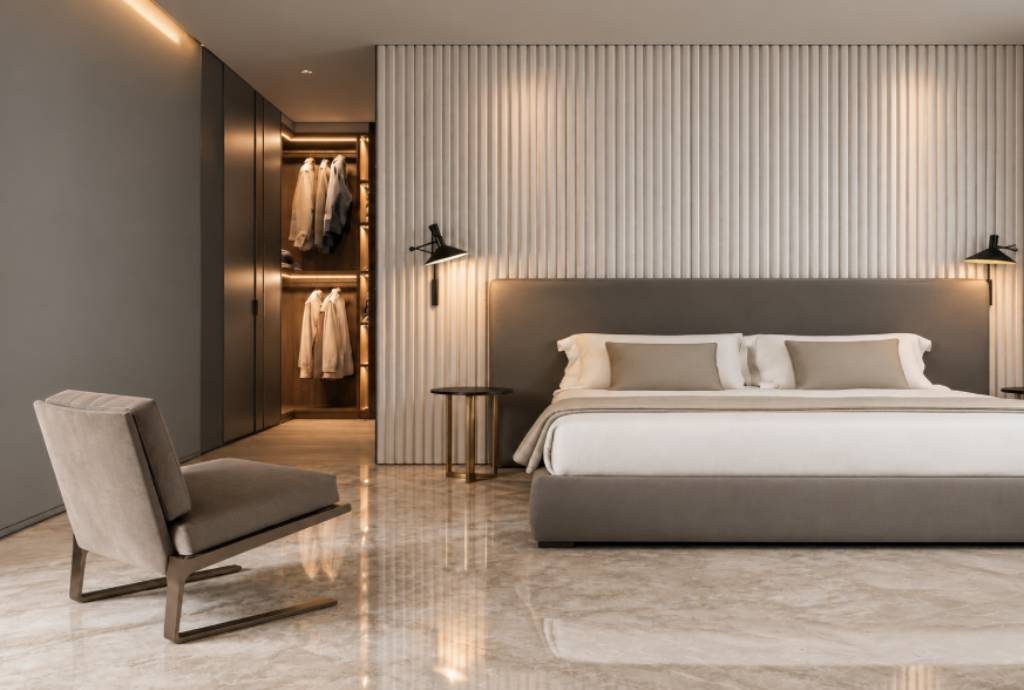
Marble Flooring Designs by Marble Type
The variety you choose sets the floor’s base colour and veining. These ten options range from classic Italian whites and Spanish beige and black stones to coloured marbles.
1. Carrara Marble Floor Design
Carrara marble brings a softer touch to a room, with its pale grey-white background and fine grey veining. In living rooms, bedrooms and passageways, it offers detail without drawing too much attention to the floor. Larger slabs allow the veining to carry gently across the space, while warm wood and understated furnishings complement its cooler tones. If you’re considering Carrara for your home, look at the actual slabs before making a choice. The veining can vary from piece to piece, and seeing how the patterns sit together will help you decide how the finished floor should look.
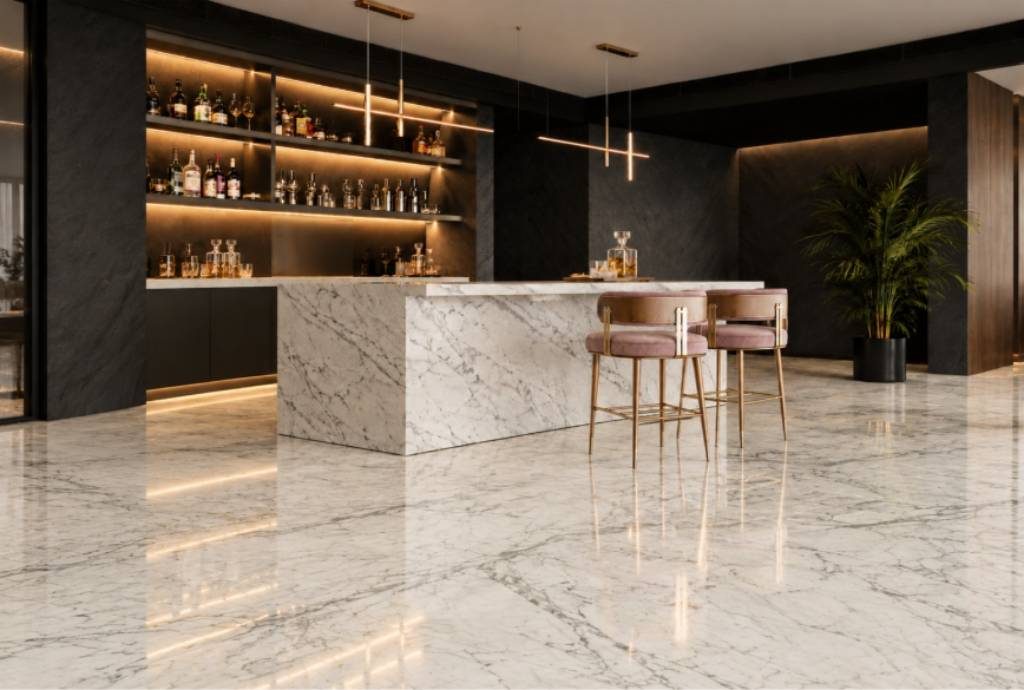
2. Calacatta Marble Floor Design
Calacatta marble has a bright white background with bold veining in grey or warm gold tones, giving it more drama than Carrara. It can give a large living area a strong visual focus, particularly when the pattern runs across generous slab sizes. Since the veining is naturally expressive, keep surrounding finishes restrained. To compare the visual differences between the three Italian whites, see our guide to Statuario vs Calacatta vs Carrara marble.
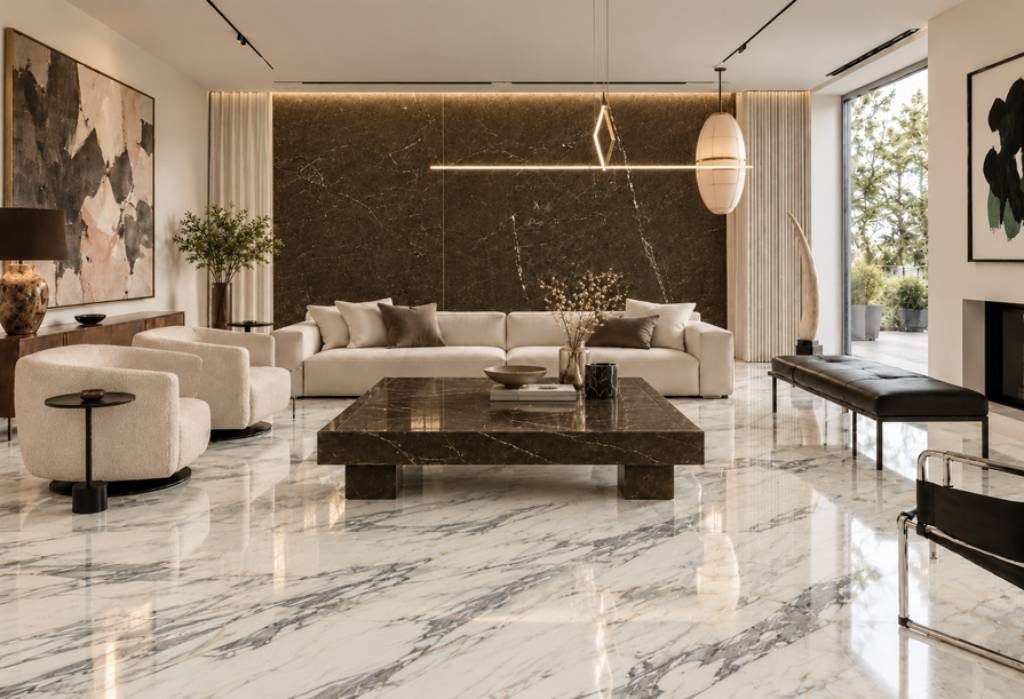
3. Statuario Marble Floor Design
Statuario marble has a brilliant white background, whiter than Carrara’s, with dramatic, well-defined grey veining. It is also rarer than Carrara, which is why it is often chosen for floors intended as a home’s principal material feature. Before committing to a large installation, review multiple slabs together to understand how their patterns relate. This is especially important in open-plan rooms, where differences between adjoining pieces are more visible.
4. Crema Marfil Marble Floor Design
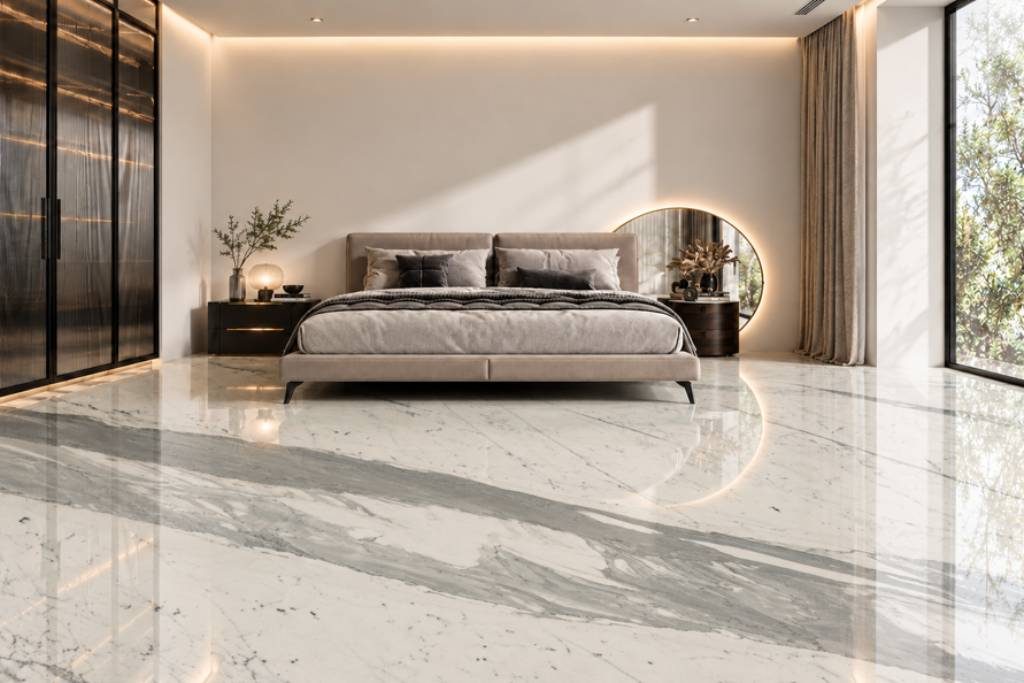
Crema Marfil brings beige and cream tones to the floor, making it a useful option for warm, neutral interiors. It pairs well with timber furniture, bronze details, textured fabrics and walls in off-white or sand shades. In a marble floor design for home interiors with limited daylight, a lighter beige stone can introduce warmth without relying on a strong pattern.
5. Nero Marquina Marble Floor Design
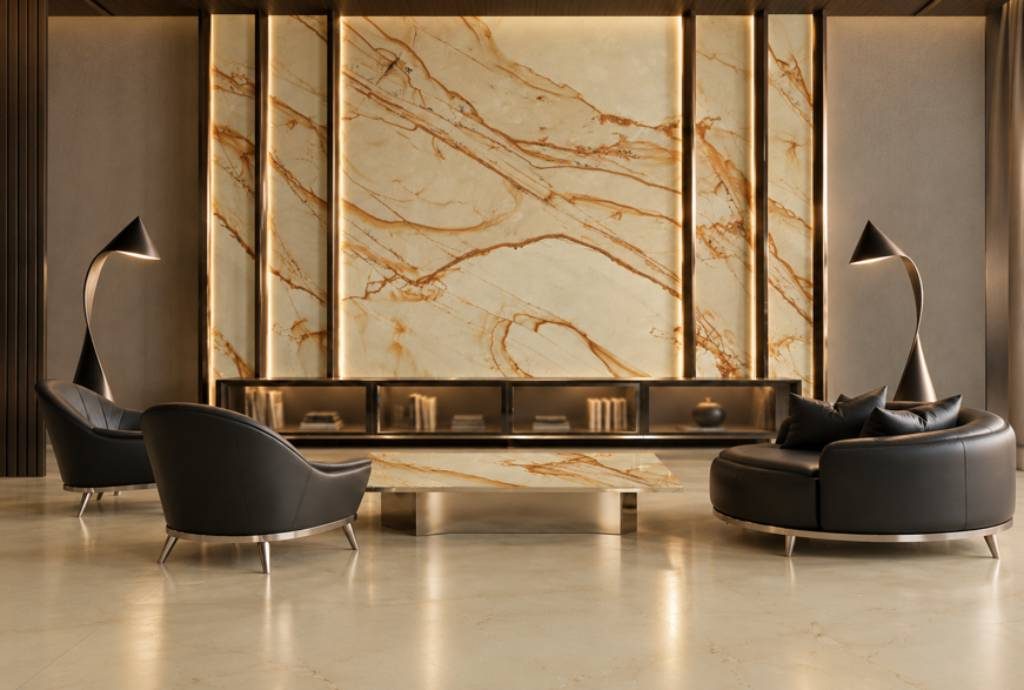
With its dark background and contrasting white veins, Nero Marquina creates a graphic effect. It can be used throughout a spacious room or in selected areas such as an entrance, where the contrast establishes a clear point of arrival. Nero Marquina’s deep black surface and fine white veining create a striking contrast, particularly in rooms with lighter walls and furnishings. Good lighting helps bring out the contrast between Nero Marquina’s black background and white veining, making it a great choice for interiors that favour strong, graphic details.
6. Astilla Marble Floor Design
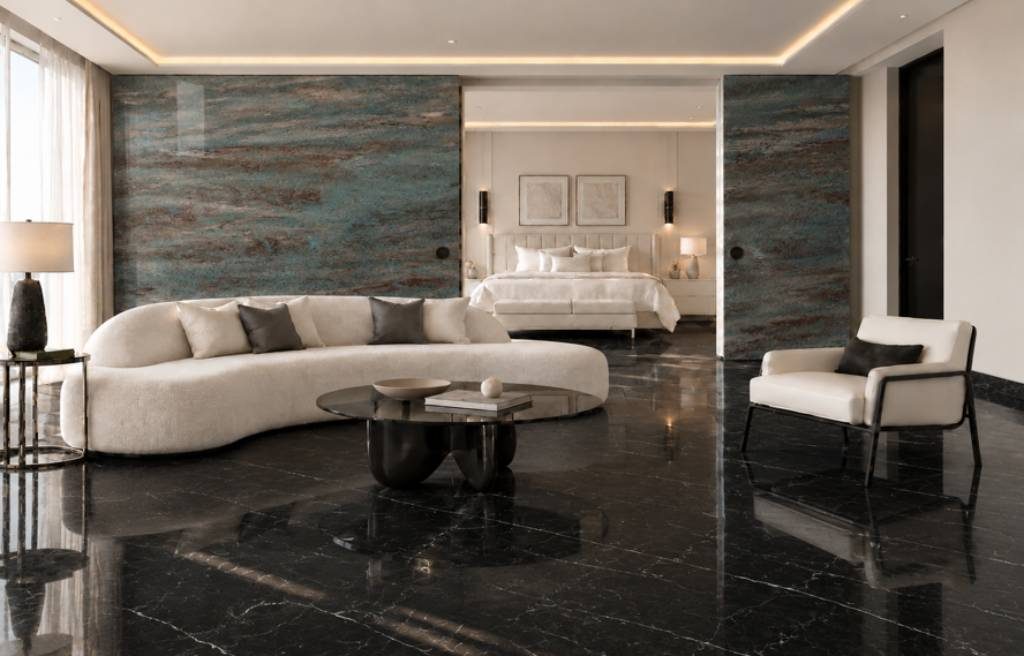
Astilla marble’s warm, earthy tones can anchor interiors built around timber, leather, bronze and natural colours. It is worth considering for larger rooms where a warmer floor colour can sit comfortably alongside the furniture and wall finishes. Request samples or view the slabs in person to assess the stone’s specific variation, since appearance can differ between selections.
7. Arabescato Marble Floor Design
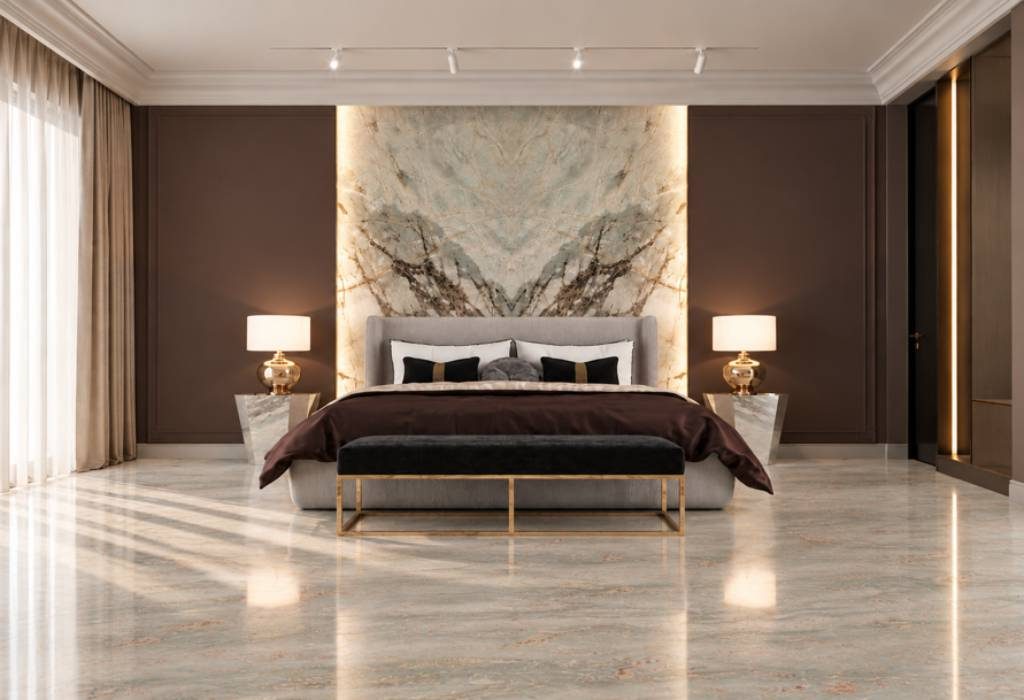
Arabescato marble is known for its pronounced, flowing veining against a light background. The pattern can become a defining feature across a living room or formal entrance. For a more coherent result, plan the slab layout before installation, paying attention to how veins meet at joints and how they relate to the room’s main sightlines.
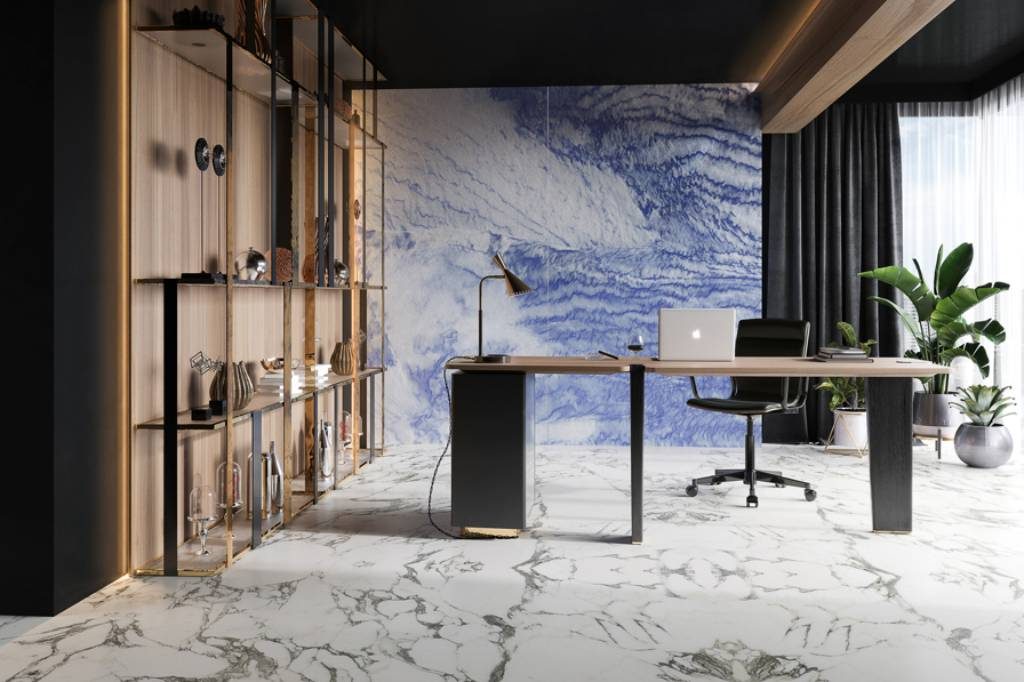
8. Green Marble Floor Design
Green marble offers an alternative to familiar white and beige palettes. Depending on the stone, its colour may range from muted green to deeper, more varied tones. It can be paired with neutral walls, walnut or teak finishes, and carefully selected brass or bronze accents. A calm surrounding palette helps the stone remain legible without making the room feel overly busy.
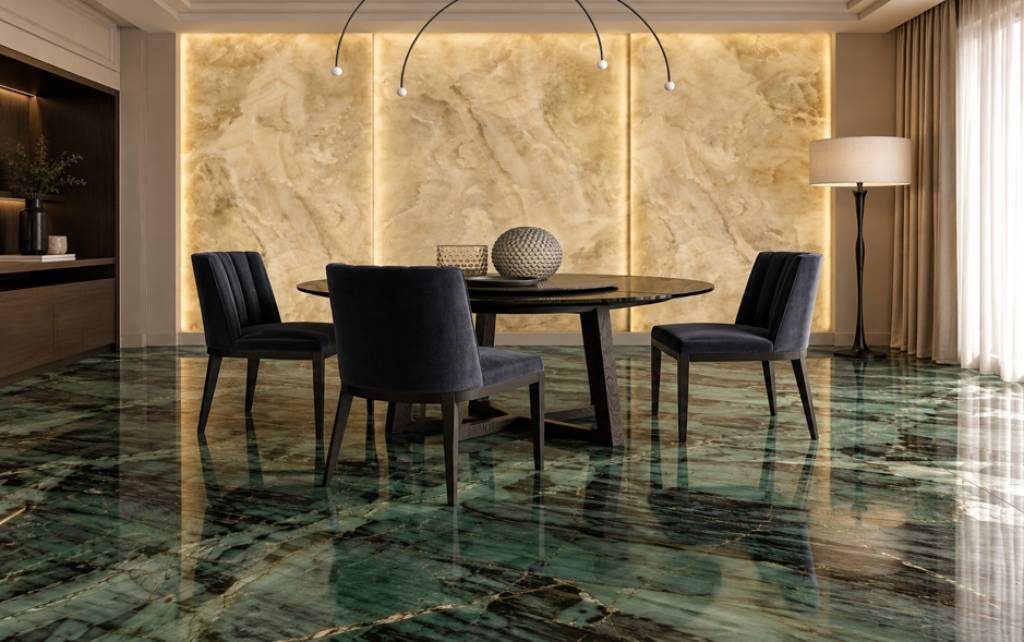
9. Blue Marble Floor Design
Blue marble introduces colour while retaining the variation associated with natural stone. It can work in a feature area, a formal sitting room or a carefully planned transition between spaces. Consider the undertone of the stone alongside wall colours and artificial lighting; a sample viewed only in a showroom may look different under the lighting conditions at home.
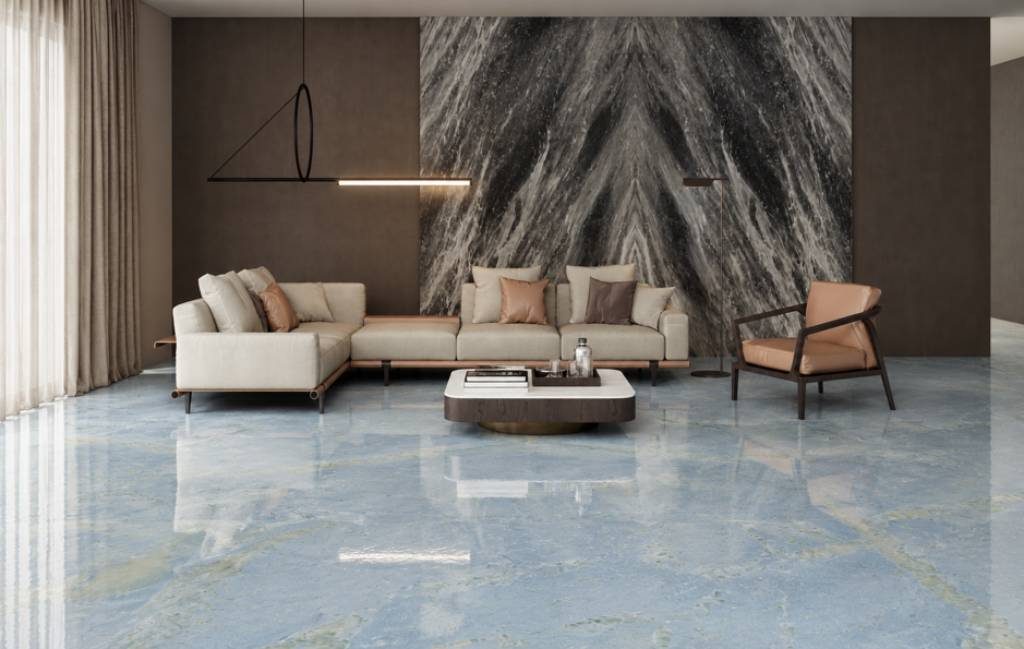
10. Pink Marble Floor Design
Pink marble can bring a softer colour note to a bedroom, dressing area or intimate sitting room. Pale pink varieties can sit alongside cream, taupe and light timber, while stronger tones may benefit from simpler furniture and fewer competing patterns. Using the stone over a defined area can be an effective way to introduce colour without allowing it to dominate the entire interior.
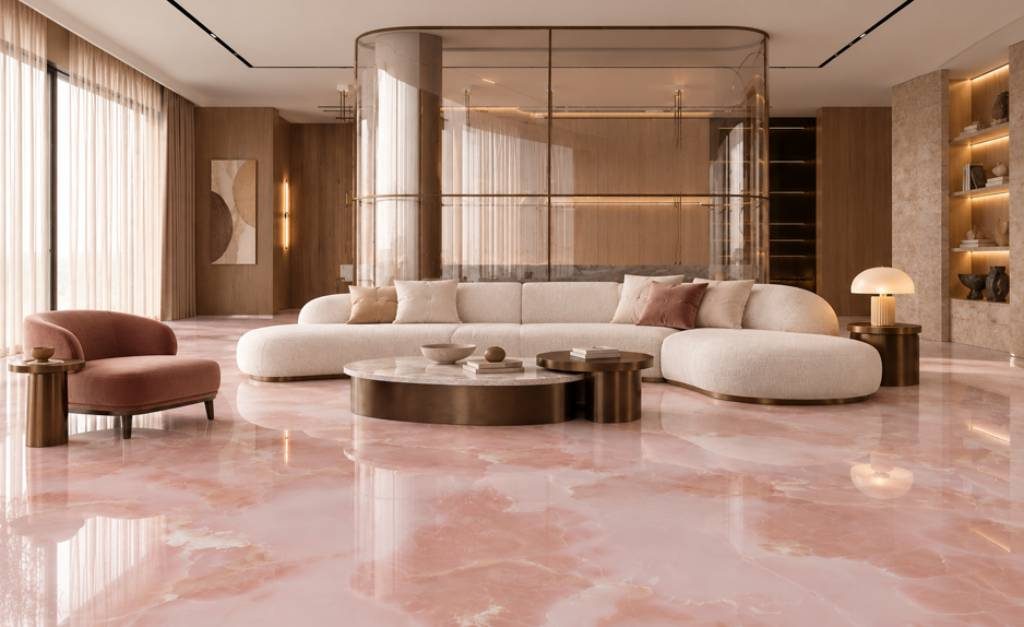
Marble Flooring Designs by Pattern and Layout
Layout can change a floor as much as the stone itself. These designs use cutting, contrast and placement to create pattern, and most need careful planning before installation.
11. Black and White Marble Floor Design
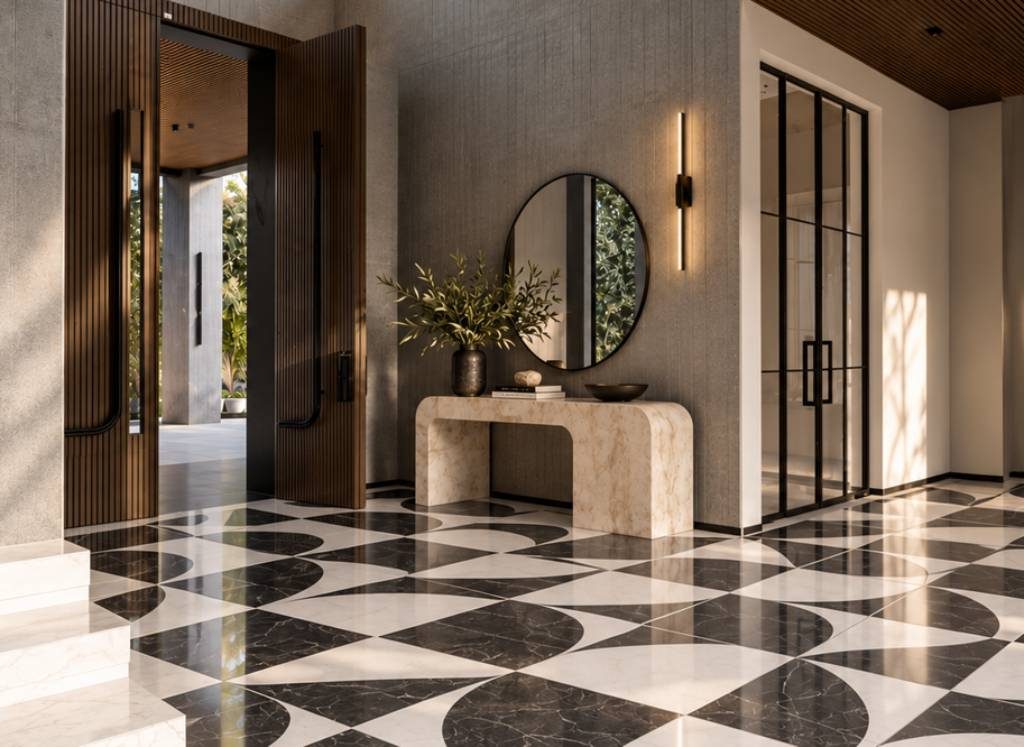
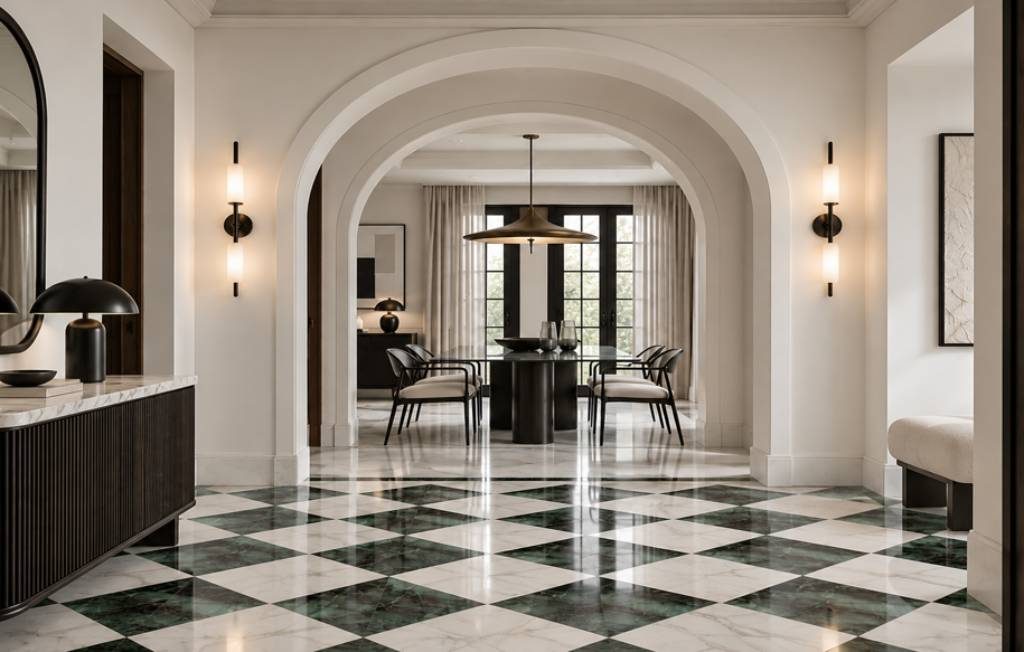
A black-and-white scheme creates a clear, graphic pattern. Alternating squares, borders or contrasting bands can define a foyer or formal living space. The success of this marble floor pattern design depends on proportion: small, busy motifs can overwhelm a compact room, while larger geometric layouts often need enough floor area to read clearly. Mock up the pattern before installation.
12. Herringbone Marble Floor Design
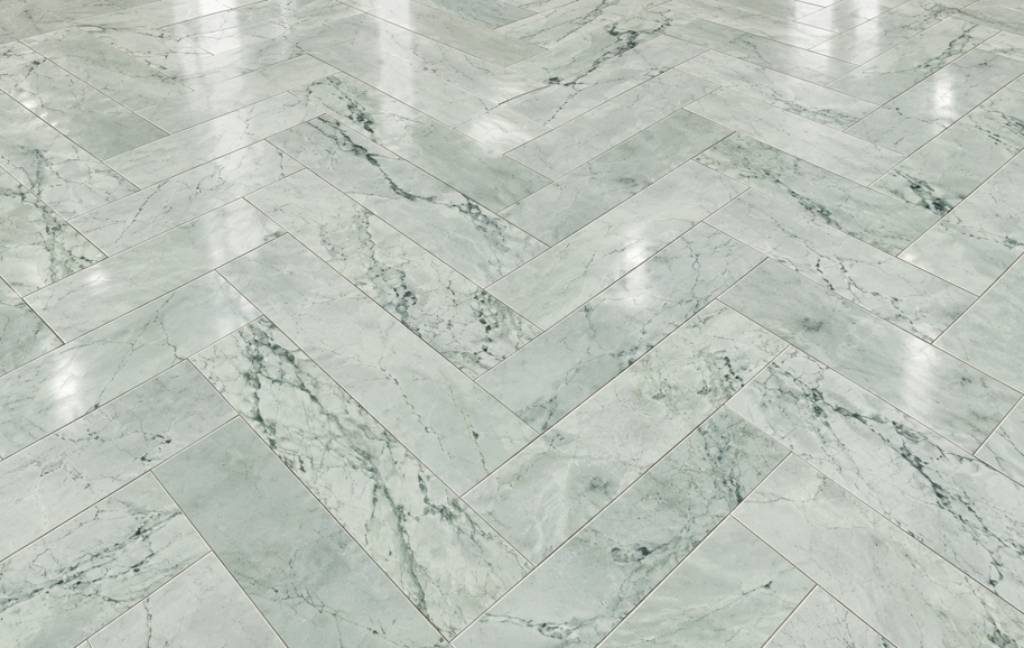
Herringbone uses rectangular pieces arranged in a repeated zigzag. The directional pattern adds detail without requiring multiple colours or ornate motifs. It can work in corridors, entrance areas and rooms where the flooring needs a sense of movement. Confirm piece dimensions, joint spacing and alignment with the installer, since small inconsistencies become noticeable across a repeating layout.
13. Geometric Marble Floor Design With Inlays
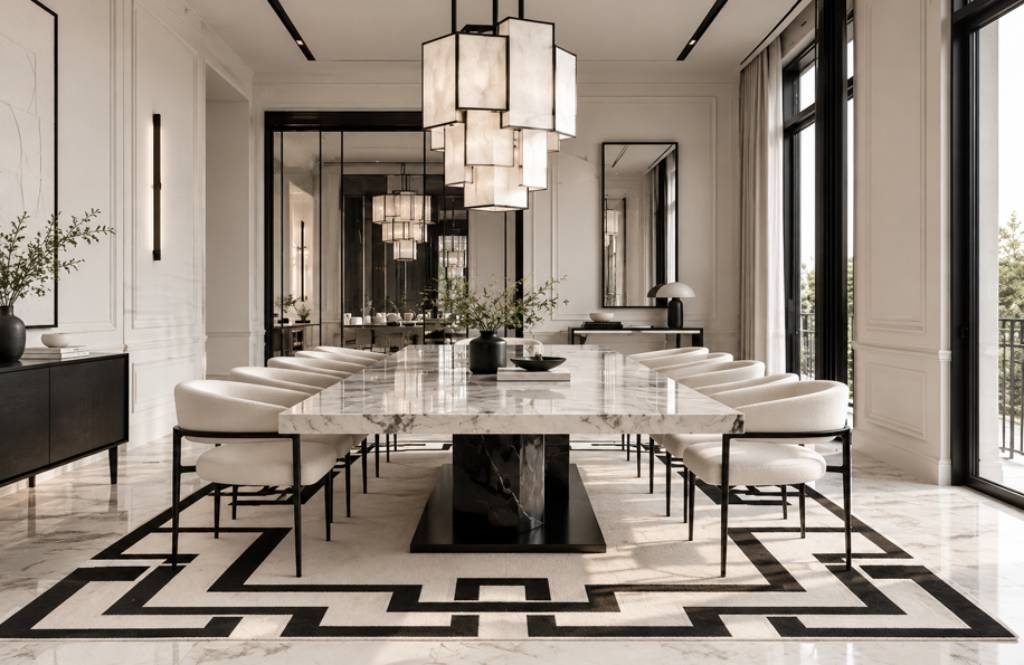
Geometric designs use shapes such as diamonds, squares or polygons to create a more intricate floor. Marble inlays in a contrasting colour can define a central motif or outline a room’s perimeter. These designs require careful planning and precise cutting. Keep the pattern in proportion to the room, and coordinate it with furniture placement so important parts of the design are not hidden.
14. Marble Floor Design With Brass or Metal Borders
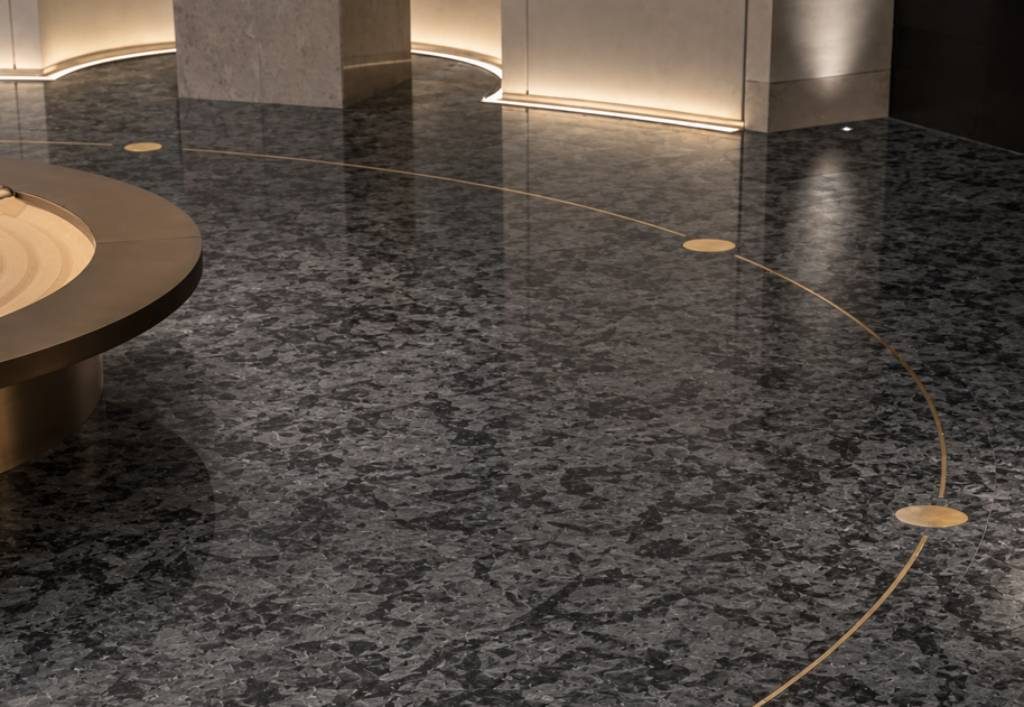
Thin brass or other metal borders can separate marble sections, frame a central area or mark a transition between materials. The detail is most effective when it has a clear purpose in the layout rather than being added as decoration alone. Confirm how the metal will be installed, how its height aligns with the floor, and how it will respond to cleaning and everyday use.
15. Book-Matched Marble Floor Design
Bookmatching places consecutive slabs cut from the same block side by side, with one flipped, so the veining mirrors along the joint like the pages of an open book. On a floor, the effect can create a central composition or a strong visual axis through a larger room. Slab selection and sequencing need to happen before installation; the pattern cannot be improvised reliably once laying begins. Read the bookmatched marble guide for more on planning this approach.
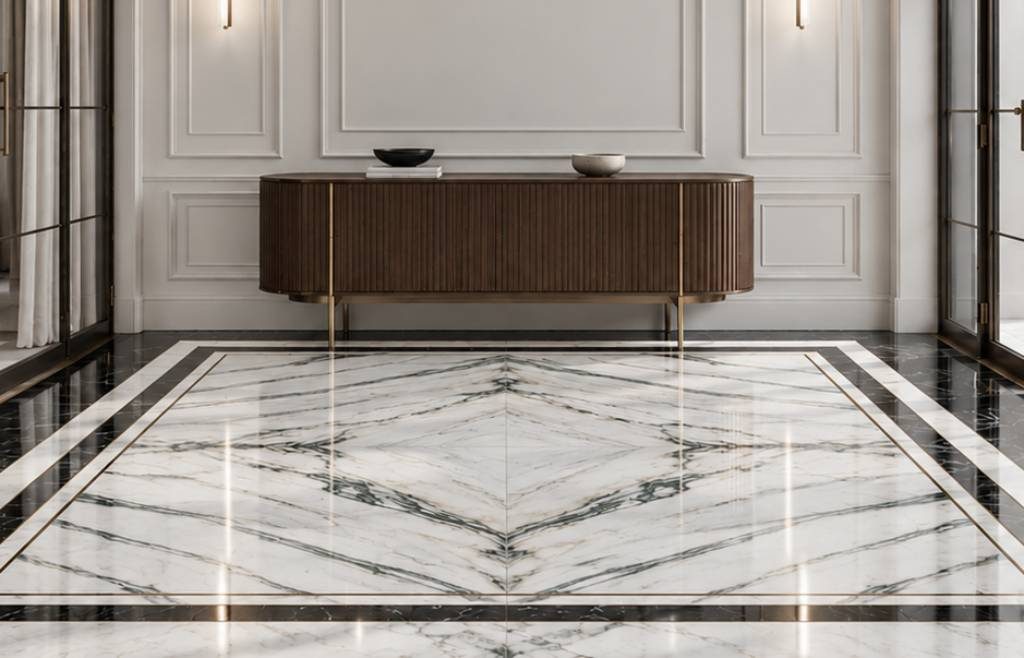
16. Marble Medallion Floor Design
A marble medallion uses a circular or decorative motif as a focal point. It can be positioned in an entrance, at the centre of a formal living room or within a larger open space. The surrounding floor should give the medallion enough visual room. Its size and placement should be decided in relation to the room’s dimensions, doorways and furniture plan.
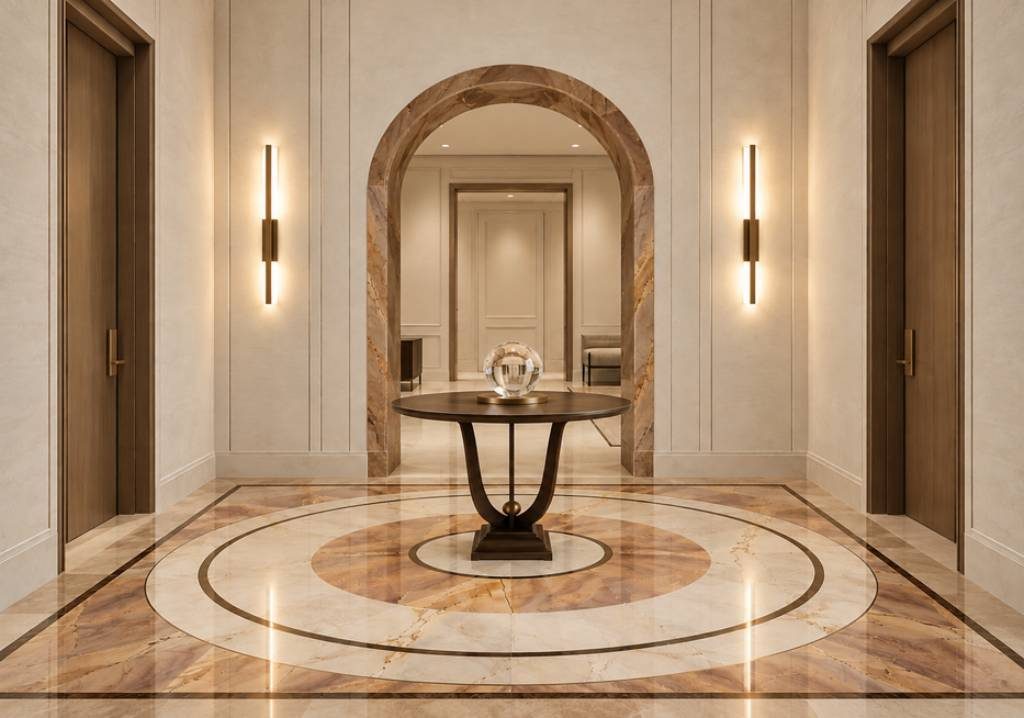
17. Dual-Tone Marble Floor Design
Pairing two marble colours can add definition to a floor. A dark marble border around a lighter floor creates a framed effect, while combining two tones in different sections can help distinguish areas such as an entrance and a living room. The key is to choose colours that complement the interior and a layout that works with the proportions of the space.
Marble Flooring Designs by Finish and Style
Finish and vein pattern decide how a floor feels to live with every day. These final ideas focus on surface, restraint and continuity.
18. Textured Marble Floor Design
Textured marble, such as a brushed or leathered finish, has a tactile surface with a low sheen. It is different from honed marble, which is smooth and matte. A textured finish softens reflections, can make subtle variations in colour and veining more apparent, and offers more grip underfoot than a polished surface. It may be worth considering for bathrooms and other areas where traction matters, but slip performance still needs to be assessed for the specific stone and intended use.
19. Marble Flooring With a Minimal Vein Pattern
A stone with relaxed veining can suit interiors where furniture, art or architectural details provide the main points of interest. Large-format pieces and carefully planned joints can help the floor read as a continuous surface. This approach is particularly useful when choosing a white marble flooring design for a home with a pared-back palette, although the stone’s natural variation should still be reviewed before purchase.
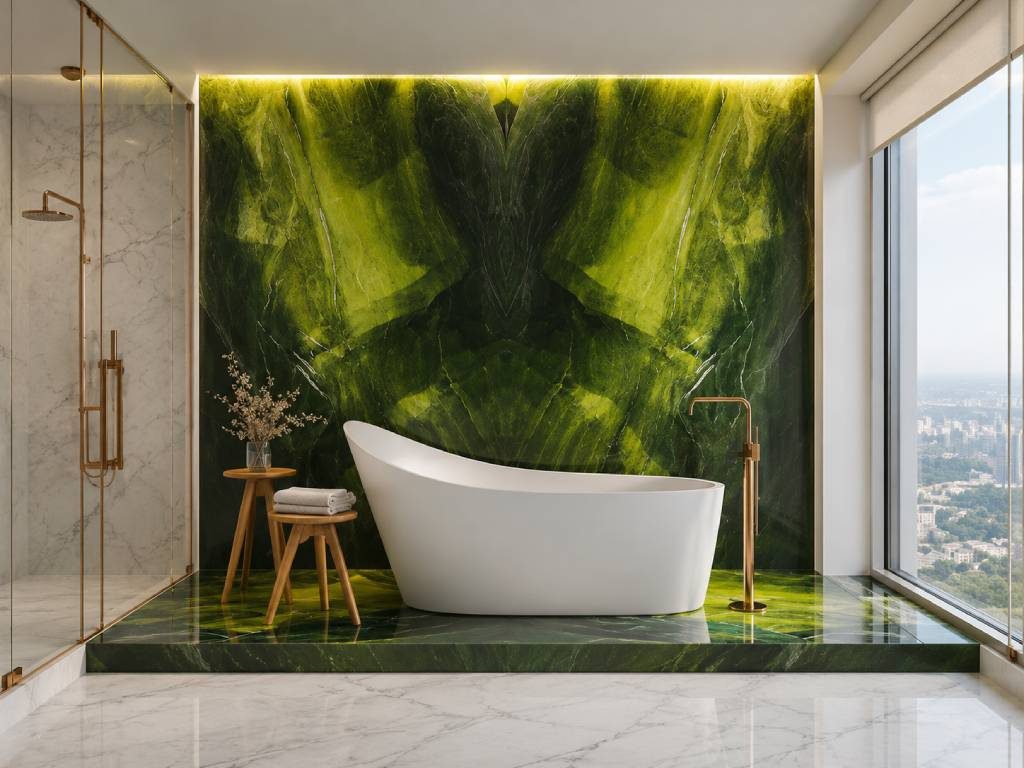
20. Marble Floor Design With a Matching Feature Wall
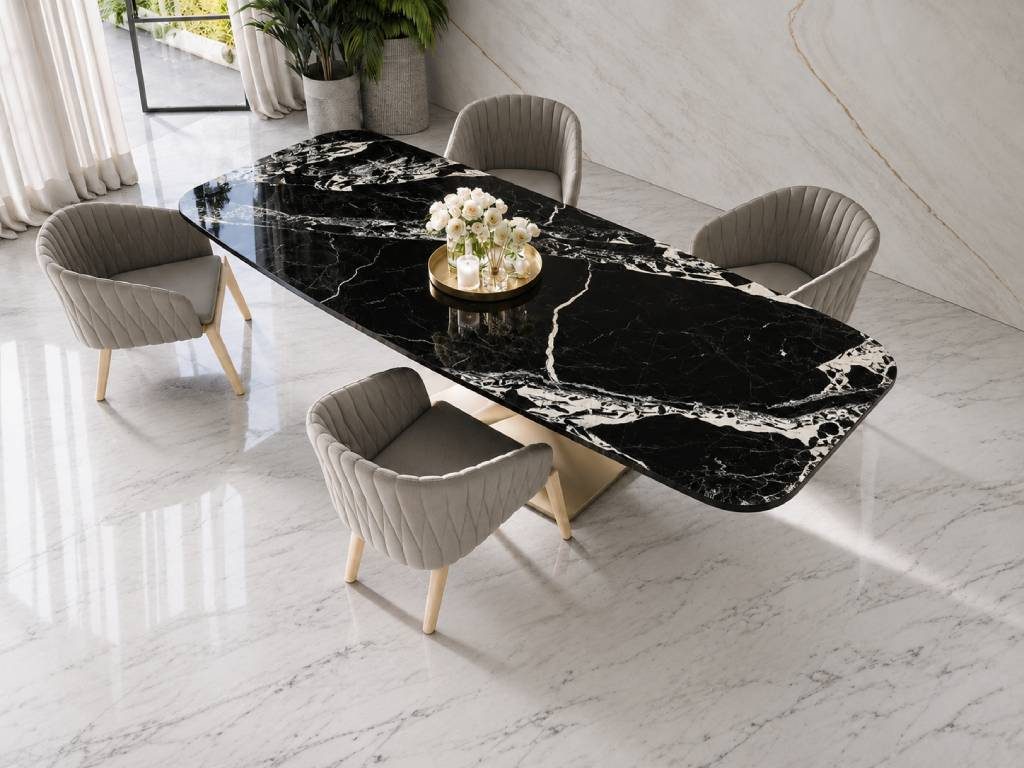
Carrying the same marble from the floor onto a feature wall creates a continuous, enveloping effect. It works particularly well in bathrooms and bedrooms, where the stone can wrap the wall behind a bath or bed and read as a single composition. Choose slabs from the same block so colour and veining stay consistent across both surfaces, and plan how the veining will meet at the floor-to-wall junction before cutting.
How to Choose Marble for Your Floor
The right stone depends on the room as much as personal preference. Before making a selection, consider:
- Colour and veining: View several slabs together and assess the background, vein direction and degree of natural variation.
- Room dimensions: Strong patterns need enough space to read clearly; subtle stones can work well in compact rooms.
- Lighting: Check the stone in daylight and under the artificial lighting planned for the home.
- Use and traffic: Entrances, kitchens and frequently used living areas need a realistic cleaning and maintenance plan.
- Slab consistency: Confirm the thickness, finish and appearance of the material being supplied. This is also a useful point to review when learning how to check Italian marble quality.
- Overall palette: Coordinate the floor with cabinetry, walls, furniture, metal finishes and adjoining materials.
Italian vs Indian Marble
Italian varieties such as Statuario, Calacatta and Carrara are prized for their bright backgrounds and expressive veining. Indian marble offers a local alternative with a long architectural history: Makrana marble from Rajasthan, the stone used in the Taj Mahal, was recognised as a Global Heritage Stone Resource by the International Union of Geological Sciences in 2019, the first stone from India to receive the status. Indian marble is generally more affordable, while Italian marble is usually chosen for its distinctive veining and finish.
Whichever you choose, compare the actual slabs. Natural stone varies from block to block, and the exact selection shapes the finished floor. At The Quarry, we recommend viewing slabs side by side before you commit; our Flaunt Marbles, Celebrity Marbles and Statement Marbles collections are a good place to start comparing colours, veining and patterns for your space.
Which Marble Finish Works Best for Flooring?
There is no single best finish; it depends on the room. Polished marble suits living rooms, bedrooms and foyers, where its gloss brings out the veining. Honed marble suits kitchens and bathrooms, as its matte surface offers better grip and disguises minor marks. Textured finishes, such as brushed or leathered marble, work best in wet or outdoor-adjacent areas that need extra traction.
| Finish | Look | Slip Resistance | Maintenance | Best For |
|---|---|---|---|---|
| Polished | High gloss; brings out veining | Lowest; slippery when wet | Shows etch marks, water spots and scratches most clearly | Living rooms, bedrooms, foyers |
| Honed | Smooth, matte, low reflection | Better than polished; varies by stone | Disguises minor wear; can absorb stains more readily, so sealing matters | Kitchens, bathrooms, busy areas |
| Textured (brushed or leathered) | Tactile, low sheen | Highest of the three | Texture can hold dirt; clean with a soft brush | Wet areas, outdoor-adjacent spaces |
A polished surface reflects light and brings out the veining, making it a popular choice for living rooms and entrance halls. If you prefer a more muted look, a honed finish offers a smooth, matte appearance with less reflection, while textured finishes have a more tactile surface for areas where additional grip is needed.
Does Marble Flooring Scratch Easily?
Yes, more easily than granite. Marble is made mostly of calcite and rates about 3 on the Mohs hardness scale, so everyday grit and dragged furniture can mark it. Polished marble also shows water spots and etch marks more visibly, while honed and textured finishes tend to disguise minor wear. Consider how the room is used, how much natural light it receives and how much upkeep you’re comfortable with.
Choosing a Marble Finish for Indian Homes
In Indian homes, consider the climate as well as the look. Polished marble can become particularly slippery when wet, which matters in bathrooms, balconies and entrances, especially during the monsoon. Honed finishes may offer better traction, but slip resistance varies by stone and surface treatment. Before making a selection, ask your stone supplier and installer about the slip resistance of the specific marble and finish.
Marble Flooring Maintenance and Care
Marble needs consistent care rather than heavy maintenance: regular sweeping, a pH-neutral cleaner and prompt cleanup of acidic spills.
Knowing how to clean marble flooring starts with understanding how the stone responds to everyday dirt, moisture and cleaning products. Dust and grit can act as abrasives underfoot, while acidic substances such as lemon juice and vinegar can etch calcium-based stones. A simple routine helps protect the surface:
- Dust-mop or sweep regularly to remove grit.
- Clean with a pH-neutral product intended for natural stone and a soft mop.
- Wipe spills promptly, especially acidic liquids and substances that may stain.
- Avoid abrasive pads, acidic cleaners and unverified household cleaning mixtures.
- Ask a stone professional whether sealing is appropriate for the selected marble and follow their maintenance guidance.
- Use protective pads beneath furniture and lift heavy objects rather than dragging them across the floor.
Over time, marble may develop small changes in its surface and appearance. These are part of living with a natural material, and consistent care helps prevent staining, etching and unnecessary wear. In humid or coastal cities, wipe away standing moisture promptly, particularly during the monsoon.
FAQs
Yes. Marble can be combined with timber, metal detailing or other flooring materials. Plan transitions carefully so levels, joints and finishes align, and use contrasting materials to define areas where there is a clear design reason.
Yes. Marble works in bedrooms with both warm and cool palettes. Lighter stones can keep the room feeling open, while beige or darker varieties can create a more grounded scheme. Rugs can introduce softness underfoot.
Yes, provided the selected stone, finish, installation and maintenance plan suit the conditions. Entrances and busy circulation areas need regular removal of grit and prompt cleaning of spills. Ask a stone professional to advise on the specific application.
Sweep or dust-mop regularly, clean with a pH-neutral natural-stone cleaner and wipe spills promptly. Avoid acidic products and abrasive tools. Ask your stone supplier about sealing and any care requirements specific to the selected marble.
Yes. Marble can suit living rooms because it offers natural variation in colour and veining, with finishes ranging from reflective to subdued. Choose the stone and finish according to the room’s traffic, lighting and maintenance needs.
Costs depend on the marble variety, slab selection, thickness, finish, cutting, installation complexity and maintenance. As a broad guide, Indian marble can start at around ₹80–100 per sq ft, while Italian marble typically starts from about ₹150 per sq ft, with premium varieties such as Statuario and Calacatta costing considerably more. Decorative patterns and inlays add labour and material costs, so compare the complete installed cost rather than the stone price alone.
White marble can make a room feel bright and give the floor a clear, continuous appearance. Its veining may be subtle or pronounced depending on the variety. Review actual slabs and consider the household’s cleaning routine before choosing.
Current design directions include large-format slabs, book-matched layouts, contrasting borders and geometric patterns. The most suitable choice depends on the architecture and the people using the space, rather than following a trend in isolation.